





UAE asteroid belt mission enters testing phase ahead of 2028 launch
text_fields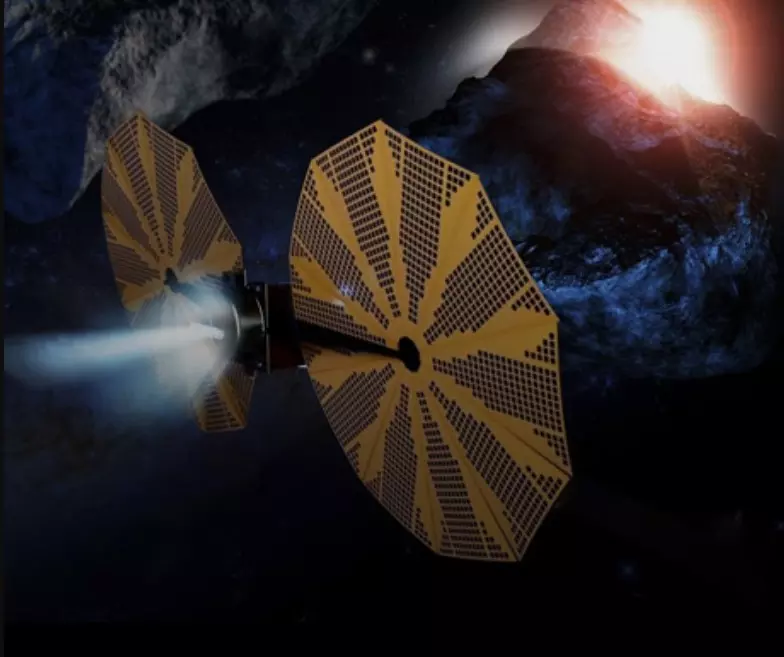

The UAE’s planned mission to the asteroid belt has moved into a new phase, with system testing now underway ahead of its scheduled launch.
Dr Ahmed Al Falasi, Minister of Sports and chairman of the UAE Space Agency, confirmed the development after meeting the Emirates Mission to the Asteroid Belt team in the United States. He described the project as the country’s most complex space mission so far.
The MBR Explorer spacecraft, named after Sheikh Mohammed bin Rashid, Vice President and Ruler of Dubai, is set for launch in 2028. The mission will cover a distance of five billion kilometres over eight years.
Plans include flybys of six asteroids, followed by the deployment of a lander to the surface of a seventh target. Officials say the mission will mark a major step for the UAE’s space program.
The update was shared during the Space Symposium 2026 in Colorado Springs, where Dr Al Falasi met engineers and researchers involved in the project.
After completing a critical design review last year, the mission has progressed to assembly, integration and testing under simulated space conditions to prepare for launch in the first quarter of 2028.
The program brings together teams from several UAE institutions, including the UAE Space Agency, Mohammed bin Rashid Space Centre, Technology Innovation Institute, Sharjah Space and Astronomy Centre, Khalifa University and New York University Abu Dhabi.
At the end of the visit, Dr Al Falasi raised the UAE flag alongside members of the mission team, marking the country’s continued involvement in the project.