















Trump to end war without reopening Hormuz, ask Arab countries to foot bill
text_fields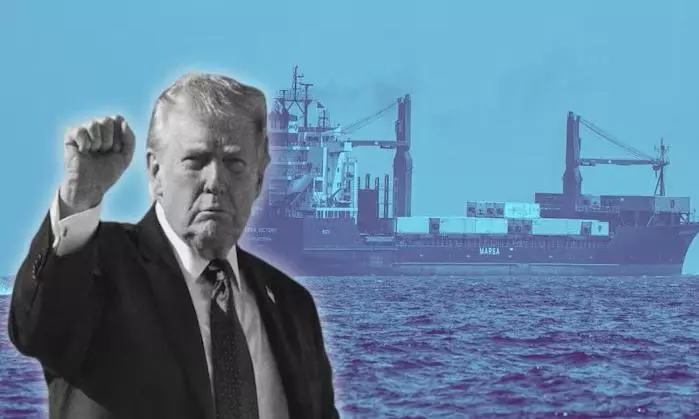

Mired in the war with Iran with no discernible blueprint for its end, Donald Trump is said to be searching for a way to conclude it, even if it leaves the Strait of Hormuz shuttered, while a US–Israel strike pounded an ammunition depot in Isfahan, and Washington proposed pursuing Arab countries to pay for the war, which critics say began under pressure from Benjamin Netanyahu’s government in Israel.
Trump willing to end campaign despite Hormuz closure
A report in The Wall Street Journal, citing administration officials familiar with deliberations inside the White House, said the American president has informed aides that he would be prepared to conclude the military campaign against Iran even if maritime traffic through the Hormuz passage remains largely obstructed.
According to the report, officials are studying military contingencies designed to reopen the narrow sea lane through which a substantial share of the world’s oil exports passes, although the president’s immediate focus appears to be terminating hostilities first and addressing the blockade later, while the Pentagon estimates that a full-scale naval and aerial operation to restore passage could require between four and six weeks of sustained military engagement.
Allies may be tasked with reopening Strait
Another possibility under discussion involves delegating the responsibility of reopening the waterway to allied powers, including Gulf monarchies and members of NATO, thereby shifting the operational burden away from the United States while maintaining pressure on Tehran through a coalition framework.
US–Israel strike hits Isfahan facility
Even as these deliberations continue, American and Israeli forces reportedly struck an Iranian ammunition depot near the Badr airbase in Isfahan early Tuesday using 2,000-pound bunker-buster bombs, a strike that officials said triggered a chain of secondary explosions across the surrounding defence complex.
Footage circulated by Trump on Truth Social appeared to show successive blasts illuminating the night sky, although the video was posted without context and could not be independently verified, while officials cited by The Wall Street Journal described the target as a military-linked facility associated with Iran’s defence infrastructure.
Netanyahu floats non-military energy alternatives
Meanwhile, Netanyahu suggested in remarks to Newsmax that long-term solutions to the disruption in global energy routes may not necessarily require prolonged military operations, arguing instead that supply corridors could be reconfigured to bypass the Hormuz chokepoint altogether.
Regional diplomacy intensifies
Diplomatic manoeuvring has also intensified as regional powers including Pakistan, Egypt, Saudi Arabia and Turkey convene consultations in search of a negotiated exit from the war, even while Washington simultaneously escalates rhetorical pressure on Tehran.
Trump has warned that the US could devastate Iran’s energy infrastructure and other critical facilities, including desalination plants, should negotiations collapse, although he has also asserted that back-channel discussions are under way with Iranian parliamentary speaker Mohammad Bagher Qalibaf, a claim the former Revolutionary Guard commander has publicly denied.
US seeks Arab funding for war
White House press secretary Karoline Leavitt indicated that the administration is considering urging Arab allies to contribute financially to the war effort, echoing the precedent of the Gulf War when coalition partners helped finance the US’ military intervention.
The suggestion that regional governments could be asked to absorb tens of billions of dollars in wartime expenditure underscores both the immense financial burden of the campaign and the uncertain strategic calculus confronting the US.