








Trump says decision on massive US attack on Iran yet to be finalised
text_fields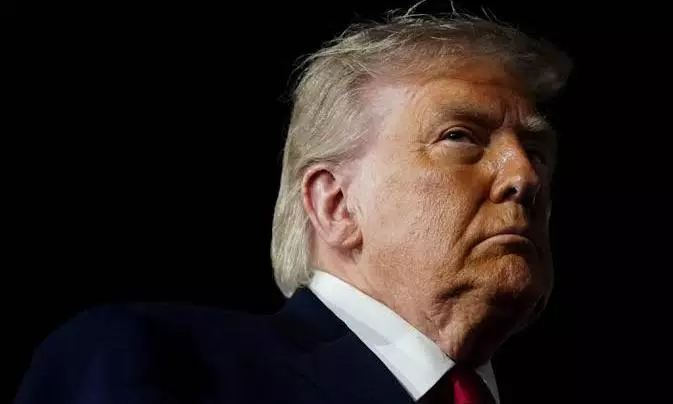

Iran faced US bombardment for the 13th consecutive night, with the latest strikes lasting about two hours, as US President Donald Trump reportedly said a massive attack, bigger than ever carried out before, was being planned although he had yet to make a decision, while oil prices surged further in the international market.
The ongoing conflict in the region has already pushed Brent crude above the symbolic $100-a-barrel mark amid growing fears that the widening conflict could severely disrupt global energy supplies.
During a talk with Axios, the US President claimed Israel's support for such an attack in no more than two minutes if requested, but expressed reliance on its own, while acknowledging the likely consequences of such an attack on Iran, saying the country was fully prepared and was a little way from making a final decision.
Hours after Trump's remarks, Iranian state media reported explosions near the strategic Strait of Hormuz in Qeshm and Bandar Abbas, as well as in Tehran and parts of the country's north-west; however, the attacks fell short of matching the scale and intensity of previous strikes carried out during the latest phase of hostilities.
Trump had earlier warned that both Iran and Yemen's Iran-backed Houthi rebels would face major military punishment for the attacks on two Saudi oil tankers in the Red Sea, Encelia and Layla, while the Houthis claimed responsibility for striking them, reportedly setting both ablaze, although no casualties were reported.
Concerns over the security of maritime transport grew following the attacks on one of the world's most vital shipping corridors, as the Bab el-Mandeb Strait links the Red Sea with the Gulf of Aden and carries around 12 per cent of global trade, while the attacks also threatened Saudi Arabia's alternative oil export route through the Red Sea, as passage through the Strait of Hormuz remains heavily disrupted.
Amid the escalating crisis, United Nations Secretary-General António Guterres warned the Security Council that the Middle East was being pushed to the "edge of the unimaginable", warning that successive military actions were creating an ever-widening cycle of violence.
Meanwhile, Britain announced its decision to temporarily withdraw diplomatic staff from Iran, Germany announced it was pulling two naval vessels from the Red Sea, and the US State Department warned American citizens in the region that flight cancellations were possible as security conditions continued to deteriorate.
Back home, Trump also faced mounting political pressure after the US House of Representatives narrowly approved a resolution seeking to halt further American military action against Iran.