









Trump’s assault on international justice
text_fields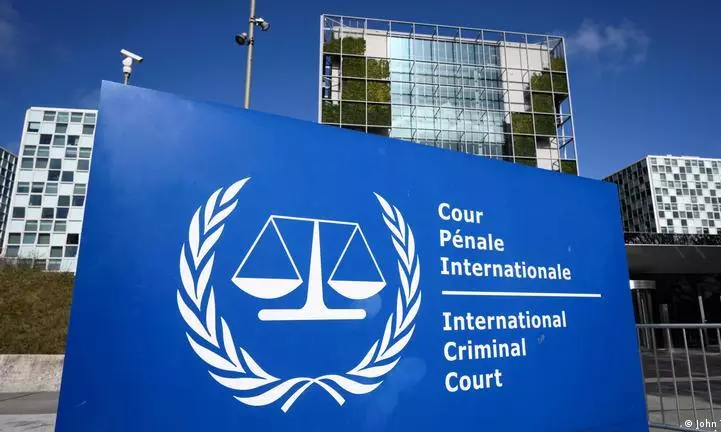

The United States helped teach the world that leaders who commit atrocities should answer to judges. It is now teaching powerful governments how to punish the judges instead.
On October 9, the Trump administration imposed sanctions on the International Criminal Court itself, escalating a campaign previously directed at its officials. The implications reach beyond any particular investigation. At stake is whether an international court can operate independently when a powerful government objects to the people it investigates.
For countries and communities that cannot rely on military strength or economic leverage, that question matters especially. International law provides imperfect protection. Weakening the institutions that enforce it leaves power with fewer restraints.
The financial measures require precise explanation. A US Treasury license permits transactions necessary to maintain or wind down the court’s operations through April 7, 2027. It expressly includes continued operations, salaries, rent and routine services. Separate licenses address specified technology, pension and detainee-related transactions. These permissions do not automatically authorize dealings with separately sanctioned officials.
The court has therefore not faced immediate financial paralysis. But essential transactions depend on exceptions a government administers to restrict its work. Banks and suppliers must assess their exposure. Uncertainty risks discouraging even permitted transactions.
A court needs investigators, interpreters, secure communications, and witness protection. Financial pressure can obstruct those functions without overturning a single judgment.
America’s relationship with the ICC shows that cooperation doesn't require membership. American officials have supported the court’s work in Darfur, Libya and Ukraine. Washington also facilitated the transfer of Congolese commander Bosco Ntaganda to The Hague after he appeared at the US embassy in Kigali.
That history matters. The court’s usefulness did not disappear when its scrutiny became politically uncomfortable. What changed was Washington’s willingness to accept whom it might investigate.
Trump’s February 2025 executive order rejected the court’s actions concerning Americans and Israeli officials. It specifically attacked the arrest warrants issued for Benjamin Netanyahu and former defence minister Yoav Gallant. The administration argued that the court lacked jurisdiction because neither the United States nor Israel had joined the Rome Statute.
Those warrants concern allegations, not convictions. The accused are entitled to challenge the proceedings, and jurisdiction must be established rather than presumed. But non-membership alone does not settle the issue.
States ordinarily exercise criminal jurisdiction over foreigners accused of crimes on their territory. The ICC’s framework likewise permits jurisdiction over qualifying crimes committed on the territory of a state party, including where the accused is a national of a non-member country. A non-party state may also accept jurisdiction through a declaration.
Whether jurisdiction exists in a particular case can involve difficult legal questions. Those objections should be pursued through the court’s legal procedures. Financial sanctions do not resolve the underlying jurisdictional dispute.
The ICC’s framework also preserves a central role for national courts. Under complementarity, genuine domestic proceedings involving the same person and substantially the same conduct can make an ICC case inadmissible. A government concerned about external scrutiny has a substantive response available: credible accountability within its own legal system.
For Indian readers, the broader issue is how power is distributed within the international system. If access to finance and technology can constrain a court, the states controlling those networks gain influence over international justice's practical reach.
Victims then face a further question beyond whether the evidence supports their claims: will the court have the means to examine them?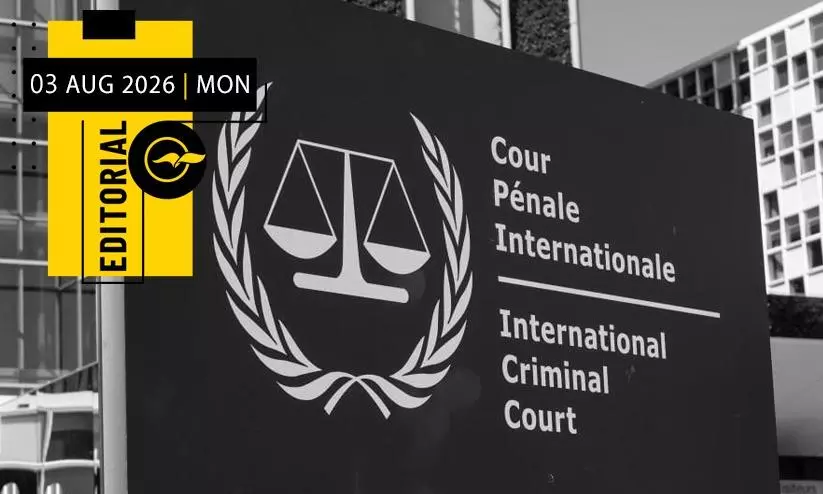
The ICC should face scrutiny itself. Its procedures, priorities and treatment of victims deserve rigorous assessment. Defending judicial independence does not require treating an institution as infallible.
Nor does it require shielding its officials. In July, the court’s governing assembly removed prosecutor Karim Khan after finding serious misconduct and a serious breach of duty. Khan has denied the sexual-misconduct allegations. His removal did not automatically invalidate arrest warrants issued by judges.
An institution must hold its own officials accountable while remaining free from external coercion. Both obligations are necessary for public confidence.
The same standard should govern support for the court. Governments cannot credibly endorse international prosecution for adversaries while seeking immunity for allies. Citizens should resist that selectivity even when it benefits a government or cause they favor.
The consequences of Washington’s approach could outlast the present disputes. Other governments can invoke the precedent when international scrutiny reaches their officials. Those seeking to escape investigation can argue that proceedings are legitimate only when their own governments consent.
America also risks weakening the credibility of its future accountability demands. Cooperation becomes harder to secure when legal principles appear to change with the suspect's identity.
Governments that defend international justice should help preserve the court’s lawful access to banking, technology and essential services. They should challenge coercive restrictions through available legal and diplomatic channels while pressing for fair proceedings and institutional reform.
Washington should contest jurisdiction through legal proceedings. Congress should scrutinize the use of emergency economic powers against international judicial institutions.
The ICC cannot eliminate impunity. Its authority and resources are limited. But disabling it would narrow victims' opportunities to obtain a hearing and widen the advantages enjoyed by those with powerful protectors.
The United States does not have to join the court to recognize that danger. Punishing judges for exercising disputed jurisdiction encourages a world in which power determines whose conduct can be examined.
Every government seeking to escape accountability has reason to welcome that world.