













Lula’s Brazil: hopes and challenges
text_fields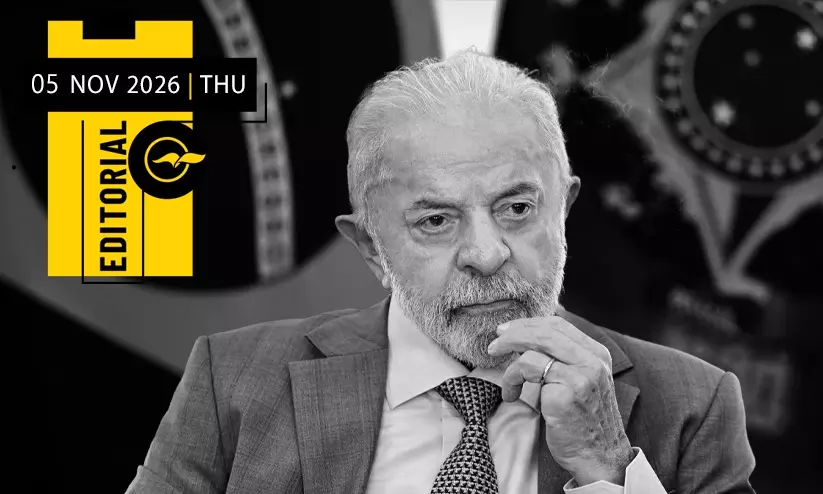

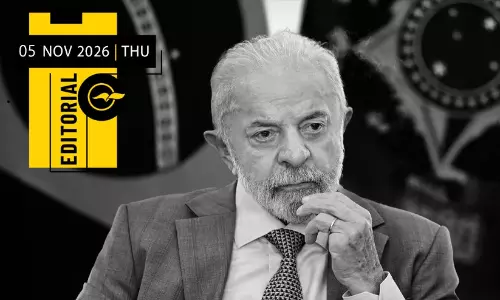
The victory achieved by Luiz Inácio Lula da Silva in the second round of the presidential election held in Brazil on the 25th of last month is celebrated for many reasons. This marks the first time in Brazilian history that a candidate who was defeated in the first round went on to win in the second. In the first round, da Silva received 45.16 percent of the vote, while his opponent — Flávio Bolsonaro, son of former President Jair Bolsonaro— won 47.03 percent. The election moved to a runoff solely because the leading candidate fell short of the required 50 percent threshold. To overcome that first-round setback, leftist activists, students, and workers mobilised forcefully behind da Silva, earning Lula 64.25 million votes (51.7 percent) against Bolsonaro's 59.82 million (48.2 percent). Observers highlight that this political comeback carries immense significance. The general consensus is that the systematic campaign — conducted scientifically, leveraging modern technology to the fullest, and propelled by the vibrant presence of youth — paid rich dividends.
Also read: Lula’s political comeback: From prison to the presidency
The 81-year-old da Silva is a strong advocate of leftist politics and an eyesore for the far-right on a global level, especially for American President Donald Trump. The haste shown to ship defeated rival Flávio Bolsonaro to America overnight and grant him asylum, despite restrictions by the Brazilian court, is part of this. Da Silva's victory must be evaluated against the backdrop of right-wing parties winning recent elections in South American countries like Argentina, Bolivia, Chile, Colombia, Ecuador, and Peru, as well as major European countries like Germany, Austria, and Italy.
Da Silva’s Workers' Party holds unmixed antagonism toward American imperialistic greed. During the election campaign itself, making an implicit reference to Trump, he made it clear that Brazil is not anyone's backyard. After all, one can recall it was Trump who dramatically snatch Nicolás Maduro in Venezuela, imprison him in America, and boast that they would now manage the country's vast oil reserves. Even though Trump likely harbors no illusions that Brazil — South America's largest economy and most populated (220 million) country— can be brought to heel so easily, what intensely provokes Trump is that Brazil can be seen at the forefront of nations in the Third World and the Global South, particularly in non-US leagues like BRICS, where Russia and China play crucial roles.
Also read: Defeated Brazilian candidate Flávio Bolsonaro, family to receive US visas amid court travel ban
Global environmental movements are likely the ones most rejoicing in da Silva's victory, while simultaneously anticipating the challenges ahead. Brazil's primary stance will stand in sharp opposition to figures like Trump, who treat the environment with utter contempt and argue that global warming is mere pseudo-logic. Nearly half of the world's remaining tropical rainforests — which account for one-fifth of the globe's forested areas — are located in Brazil. This highlights the massive role Brazil must shoulder in future in environmental conservation efforts to halt deforestation.
If the deforestation controls announced by the Lula camp are strictly implemented, deforestation in the Amazon can reportedly be brought down to zero by 2030. Alongside this, reductions can also be made in the consumption of fossil fuels. In all of this, Silva faces immense challenges. In seven out of the nine states in the Amazon region, it is nominees of Bolsonaro's Liberal Party who have been elected as governors and municipal mayors. Furthermore, in the Brazilian Parliament — the National Congress — dominance is currently held by agribusiness tycoons and mining interests. They also exert substantial influence in setting the political agenda. In expanding further mining operations and industries, they claim no commitment whatsoever to nature. Their interest lies in privatising rivers and weakening environmental protections. Some observers even point out that they might venture to impeach a president who stands as an obstacle to their goals. Additionally, Trump is likely to exert pressure to divert access to Brazil's available mineral resources toward the United States rather than allowing China to dominate them. As for protection of the Amazon itself, even if Brazil takes measures to halt deforestation, the side effects of global warming may still pose a threat to the rainforests. Viewed in this light, da Silva's remaining four years will be filled with opportunities as well as severe challenges. The economic, environmental, and political future of Brazil — and indeed of the South American continent itself — depends heavily on how effectively he can confront these hurdles through planning and action executed with the same brilliance shown during the election campaign.