








Israel calls 130,000 reservists: Dual citizens could face legal trouble
text_fields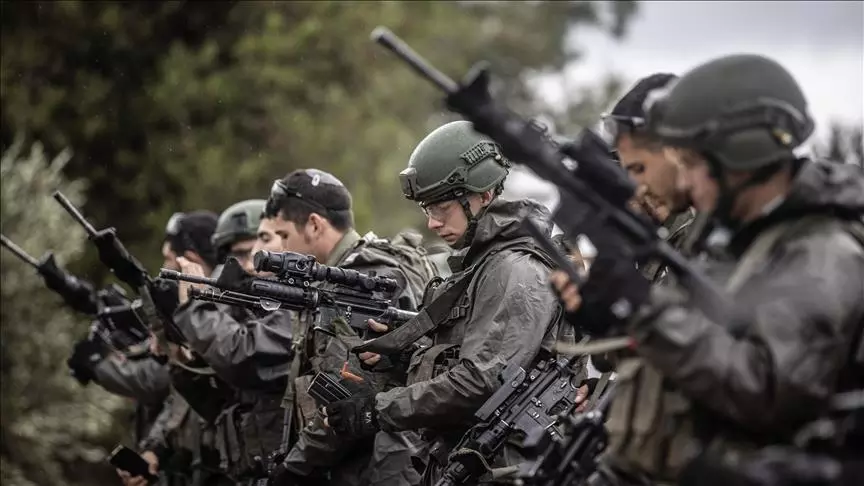

Gaza: Israel has announced the mobilisation of around 130,000 reservists for its planned military operation to take over Gaza City, with fighting expected to continue into 2026. The first group of 40,000–50,000 reservists is scheduled to report for duty on September 2. This large-scale call-up raises significant legal issues for countries that allow their dual Israeli nationals to serve in the Israeli Defence Force (IDF), whether through voluntary enlistment programs such as Mahal and Garin Tzabar, or via compulsory reserve service.
Under Israeli law, all citizens and permanent residents must serve in the IDF for 18 to 36 months, depending on age, marital status, and gender, followed by ten years of reserve duty. Dual citizens living abroad are not exempt and must settle their conscription status through Israeli consulates and embassies. Following the Hamas attacks on October 7, 2023, Israel extended compulsory service to three years, increasing the IDF to 169,500 active troops and 465,000 reservists. While many reservists reside in Israel, a significant number live overseas.
The International Court of Justice (ICJ) issued an advisory opinion in July 2024 on the legal consequences of Israel’s occupation of Palestinian territory, stating that all UN member states must refrain from assisting Israel in maintaining the occupation. The ICJ had earlier ruled that Palestinians in Gaza had a plausible right to protection from genocide. Following this, 40 independent UN experts urged states to take steps to prevent their dual Israeli citizens from serving in the IDF to avoid potential complicity in war crimes or crimes against humanity. Earlier this year, an independent international commission established by the UN Human Rights Council also recommended that UN member states investigate and prosecute alleged crimes in Gaza, either under domestic laws or through universal jurisdiction. These developments have intensified the debate over the responsibilities of countries that permit their dual Israeli nationals to enlist in the IDF.
Countries with significant Jewish populations have largely avoided restricting IDF recruitment. The United States, France, Canada, Germany, and the United Kingdom have laws against foreign enlistment but allow IDF recruitment through exemptions, treaties, or permissive interpretations. Australian law generally prohibits citizens from participating in foreign conflicts as mercenaries but permits enlistment in foreign armies. Australians joining a foreign military aligned with the country’s defence or international interests may be allowed by the Attorney General, though the Criminal Code Act of 1995 forbids entering foreign military zones where designated terrorist organisations operate. South Africa bans its citizens from participating in foreign wars without permission and has explicitly threatened to prosecute those who join the IDF, though enforcement has been rare and selective.
Civil society groups have also become active. In Canada, the Royal Canadian Mounted Police confirmed in June that it was investigating possible war crimes in Gaza, which many interpreted as targeting dual-national IDF reservists. In May 2024, the Hind Rajab Foundation, a Palestinian advocacy group in Belgium, submitted evidence to the International Criminal Court (ICC) alleging war crimes by some 1,000 IDF soldiers, including dual citizens. A related complaint was filed against Dutch-Israeli soldiers, and in April 2025, UK advocacy groups submitted evidence to the Metropolitan Police war crimes team targeting ten British nationals for alleged war crimes and crimes against humanity. In Australia, the Australian Centre for International Justice has been monitoring around 20 dual nationals who served in the IDF, prompting the government to caution Australians considering foreign military service to “carefully consider their legal obligations and ensure their conduct does not constitute a criminal offence.”
All ten countries surveyed — the US, UK, Canada, France, Germany, Australia, Brazil, Argentina, Russia, and South Africa — are parties to the Geneva Conventions, the Convention against Torture, and the Genocide Convention, which oblige member states not only to punish violations but also to prevent them. Israel’s mobilisation of 130,000 reservists significantly increases the likelihood that more dual nationals could become involved in operations condemned by the UN and ICJ as unlawful. For dual citizens, this carries profound risks, including participation in a prolonged conflict and potential exposure to future prosecution for grave crimes. For states, the stakes are equally high: inaction or silence may constitute complicity in genocide. Governments now face the urgent question of whether they will uphold their legal obligations, warn their citizens about the risks of fighting in Gaza, and investigate and prosecute violations where necessary.