















Iran to tighten grip on Hormuz: US, Israel shut out, transit fee for others amid Trump threat
text_fields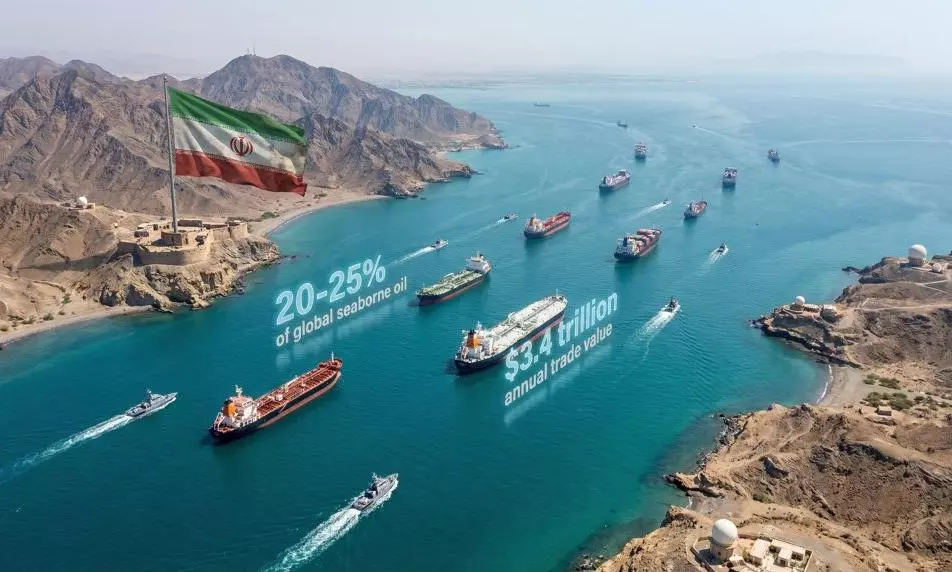

In response to Donald Trump’s threat of obliterating Iran’s power plants over the failure to reopen the Strait of Hormuz by Tuesday, Iran’s Revolutionary Guard Navy (IRGC) said the strait would unlikely return to normal henceforth, particularly for the United States and Israel, amid moves to draft legislation to levy transit fees on countries and limit access to those complying with US sanctions on Iran.
The statement, issued amid intensifying military brinkmanship, underscored that Iran had entered the final stages of operational preparations for what officials characterised as a “new order” in the Gulf, even as parliamentary committees accelerated deliberations on a bill designed to restructure navigation protocols, reinforce sovereignty claims, and recalibrate maritime access for states deemed hostile or sanction-compliant.
Iranian state media indicated that the proposed framework envisaged transit levies payable in the national currency, alongside categorical prohibitions on American and Israeli vessels, and conditional limitations targeting countries enforcing unilateral sanctions against Tehran.
The legislative draft further outlined provisions concerning maritime security coordination, environmental safeguards, and legal synchronisation with Oman, thereby signalling a broader institutionalised attempt to reconfigure the governance architecture of one of the world’s most consequential energy corridors, while oil markets reacted nervously to the escalating rhetoric and potential supply disruptions.
Trump, meanwhile, escalated tensions through an expletive-laden warning, asserting that Tehran faced devastating strikes on critical infrastructure should it fail to reopen the strait, even as he simultaneously hinted at the possibility of negotiations and suggested that the United States might consider forceful control of regional oil resources if diplomacy faltered.
The American president also described the rescue of a wounded officer following the downing of a US F-15E fighter in south-west Iran, an incident that intensified hostilities and triggered a two-day search involving American commandos and Iranian forces operating in close proximity.
Iranian authorities circulated images purportedly depicting aircraft wreckage, yet refrained from disputing the rescue operation, while diplomatic intermediaries reported indirect message exchanges, including communications routed through Pakistan, though Tehran maintained it had not entered formal peace talks and expressed apprehension that negotiation overtures could expose officials to targeted attacks.
Parliament speaker Mohammad-Bagher Ghalibaf warned that Washington’s “reckless moves” risked igniting region-wide conflagration, arguing that continued escalation would drag the US into protracted instability, while critics in Washington condemned Trump’s rhetoric as inflammatory and destabilising.
Crude oil prices surged in early trading, with benchmark indices climbing above $110 per barrel, reflecting market anxieties over potential disruptions to global energy flows.