












World needs "global workforce," says S Jaishankar amid H-1B visa controversy
text_fields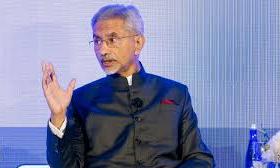

External Affairs Minister S Jaishankar has said that the world today requires a global workforce, stressing that many countries cannot meet workforce demands solely through national demographics.
His remarks come as US President Donald Trump pushes a hardline stance on immigration, including a new USD 100,000 fee on H-1B visas. The fee largely impacts Indian professionals, who make up the majority of beneficiaries of these temporary work permits.
Speaking at the event ‘At the Heart of Development: Aid, Trade, and Technology’ hosted by the Observer Research Foundation (ORF) on the sidelines of the UN General Assembly, Jaishankar said, “Where that global workforce is to be housed and located may be a matter of a political debate. But there's no getting away. If you look at demand and you look at demographics, demands cannot be met in many countries purely out of national demographics.”
“This is a reality. You cannot run away from this reality. So how do we create a more acceptable, contemporary, efficient model of a global workforce, which is then located in a distributed, global workplace? I think this is a very big question today which the international economy has to address,” he said.
Jaishankar said new trade arrangements will emerge as part of this re-engineered world. “Countries will make decisions which they may not have made in other circumstances, countries which today will feel the desire, sometimes even the compulsion, to have new partners and new regions,” he added.
He noted that despite obstacles, trade eventually finds a way. “It is easier to trade today for physical and digital reasons, as there are better roads, shipping, and much smoother trade interfaces than ever in human existence,” he said.
The minister stressed that technology, connectivity, and workplaces are evolving rapidly. “We are going to end up in a very different world in a very short term,” he said, calling the current global atmosphere “very turbulent.” He underlined that large nations must build stronger capacities to become more self-reliant, adding that this is “very much” India’s focus.
On multipolarity, Jaishankar said it has to be built through national capacities and experiences. He highlighted India’s Digital Public Infrastructure (DPI) as an example. “There are many other societies who find the Indian model of DPI frankly far more absorbable, relevant, transposable than a European model or an American model of how to run a more digital life,” he said.
Reflecting on the changing world order, Jaishankar said unpredictability has become a defining feature. “When you predict something like that, people say, okay, so you predict what that means. Now, by the very definition of unpredictability, you don't know what you're heading towards. It's not an extrapolation of what has been there in the past. Clearly, it's disruptive,” he said.
He appeared to reference Trump’s second term, noting how quickly policies have shifted. “But what we are seeing is - terms are different. Times are different. A few months make a difference. A few weeks make a difference,” he said.
On supply chains, Jaishankar said the world had been focused on production risks in recent years. But now, he warned, there is also uncertainty around market access. “So you worry about over-dependence on markets just as you worry about over-dependence on supplies or over-dependence on connectivity,” he said.
“In a sense, almost the entire economic chain has become far more riskier or far more difficult to assume in many ways,” he said.
He concluded that the key challenge in global diplomacy is to “de-risk, hedge, become more resilient, and safeguard against unforeseen contingencies.”