















Uttar Pradesh covers Masjids with tarpaulin ahead of 'Juta Maar Holi'
text_fields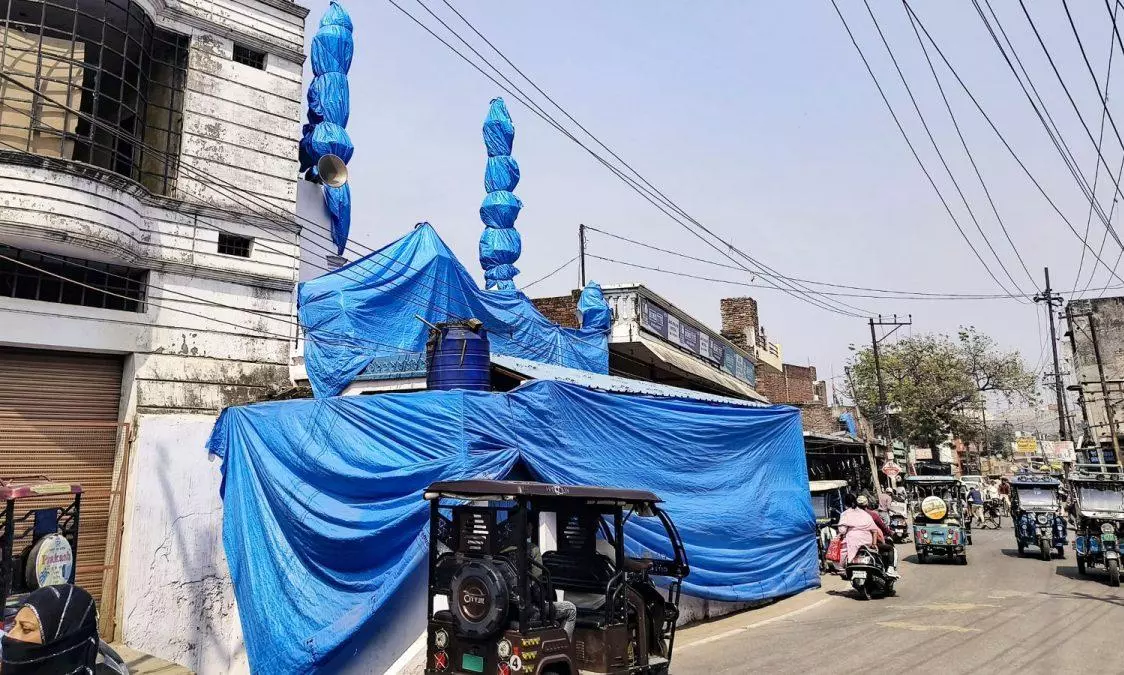
Representational image (PTI photo).

Shahjahanpur/UP: Authorities in Uttar Pradesh’s Shahjahanpur have stepped up security and precautionary measures ahead of the town’s centuries-old ‘Juta Maar Holi’ procession, covering 48 mosques and mazars along the eight-kilometre route with thick plastic sheets and deploying additional forces to ensure a peaceful celebration
The annual event, held on Holi, features a man dressed as a British-era ‘Laat Sahab’ riding a buffalo cart while revellers hurl shoes and sandals at him in a symbolic act steeped in local tradition. The procession, which begins with prayers at the Phoolmati Devi temple, winds through the city as residents play with colours and shower flowers. It concludes with a ceremonial stop at the city police station, where the ‘Laat Sahab’ is saluted.
Last year, minor incidents were reported when footwear and bottles were thrown at police personnel, prompting a mild lathi charge. Superintendent of Police Rajesh Dwivedi said security this year will be increased by nearly one-and-a-half times. The deployment includes four Additional SPs, 13 Circle Officers, over 300 Sub-Inspectors, 1,200 constables, 500 Home Guards, four companies each of the Provincial Armed Constabulary and Rapid Action Force, and a National Disaster Response Force team. More than 200 magistrates will oversee the arrangements, and over 100 solar-powered CCTV cameras have been installed along the route.
Additional District Magistrate Rajneesh Kumar Mishra said 148 lanes opening onto the route will be barricaded to prevent sudden crowd surges. The procession has been divided into seven zones with sector and sub-sector monitoring. Preventive actions, including externment of identified individuals, have also been undertaken.
Local leaders across communities expressed confidence that the festival would remain harmonious, noting that Hindus and Muslims traditionally participate together. Historians trace the procession’s origins to 1728, later formalised under British rule in 1859. Renamed ‘Laat Sahab’ in 1988, the tradition has continued for decades, with a 1990 High Court plea seeking a ban dismissed in recognition of its long-standing cultural significance.