





US engagement with Jamaat-e-Islami in Bangladesh may worsen India–US ties
text_fields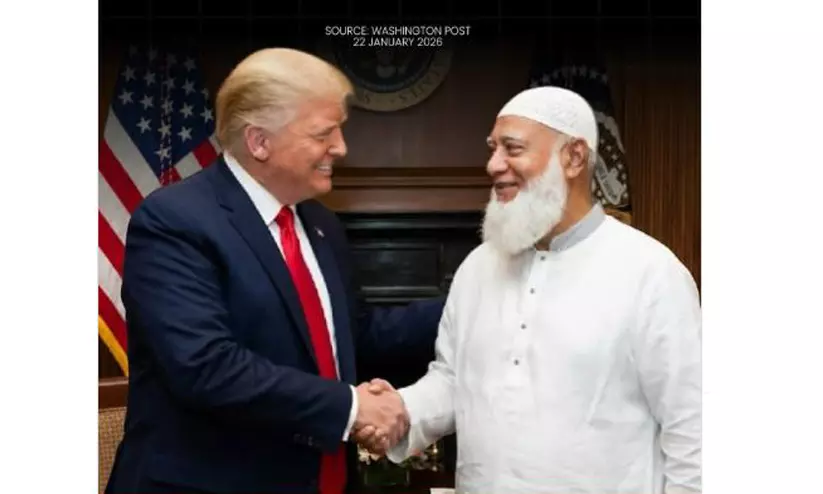

The Washington Post report suggesting potential US–Jamaat-e-Islami cooperation in Bangladesh, which indicated that a US diplomat was engaging with the Islamic movement and wished the party to perform well in the upcoming national elections, may come as unwelcome news for India and could further complicate already delicate India–US relations.
According to the report, the outreach was disclosed during a closed-door interaction in December between a US diplomat posted in Dhaka and a group of Bangladeshi journalists, where the diplomat reportedly acknowledged what was described as an “Islamic shift” in Bangladesh’s politics and indicated that Washington anticipated Jamaat-e-Islami performing better than in previous elections.
Audio recordings of the interaction, reviewed by the newspaper, suggested that the diplomat viewed engagement with Jamaat as a pragmatic response to changing political realities rather than an endorsement of the party’s ideology.
The diplomat, whose identity was not revealed, was reported to have encouraged journalists to engage with Jamaat leaders and even include representatives of its student wing, Islami Chhatra Shibir, in mainstream media discussions, signalling a willingness by Washington to open informal channels with a party that had long remained controversial both domestically and internationally.
Bangladesh is scheduled to hold national elections on February 12 under an interim administration led by Nobel laureate Muhammad Yunus, and surveys cited by the Post indicated that Jamaat-e-Islami could emerge just behind the Bangladesh Nationalist Party, which is widely regarded as the frontrunner.
The US Embassy in Dhaka later sought to downplay the significance of the interaction, describing it as a routine, off-the-record exchange and reiterating that Washington does not support any particular political party, according to The Indian Express.
Jamaat-e-Islami, which had opposed Bangladesh’s 1971 liberation war and remained barred from politics for years, re-entered the political mainstream after the removal of former prime minister Sheikh Hasina in August 2024, and it has since attempted to rebrand itself by emphasising governance and anti-corruption narratives, TIE report suggested.
During the meeting, the diplomat reportedly dismissed concerns that Jamaat would impose Islamic law if it came to power, arguing that US economic leverage would act as a strong deterrent against any such move.
Analysts cited by the Post noted that increased US engagement with Jamaat could alarm New Delhi, which has historically viewed the party with deep suspicion due to its pro-Pakistan stance and its role during the 1971 war.
India has also expressed concerns over minority safety and political stability in Bangladesh following Hasina’s ouster, and with Jamaat poised to gain electoral ground, Washington’s reported outreach adds a fresh layer of uncertainty to regional politics and to the evolving dynamics of India–US ties.