














Tamil Nadu will continue two-language policy, says TVK govt
text_fields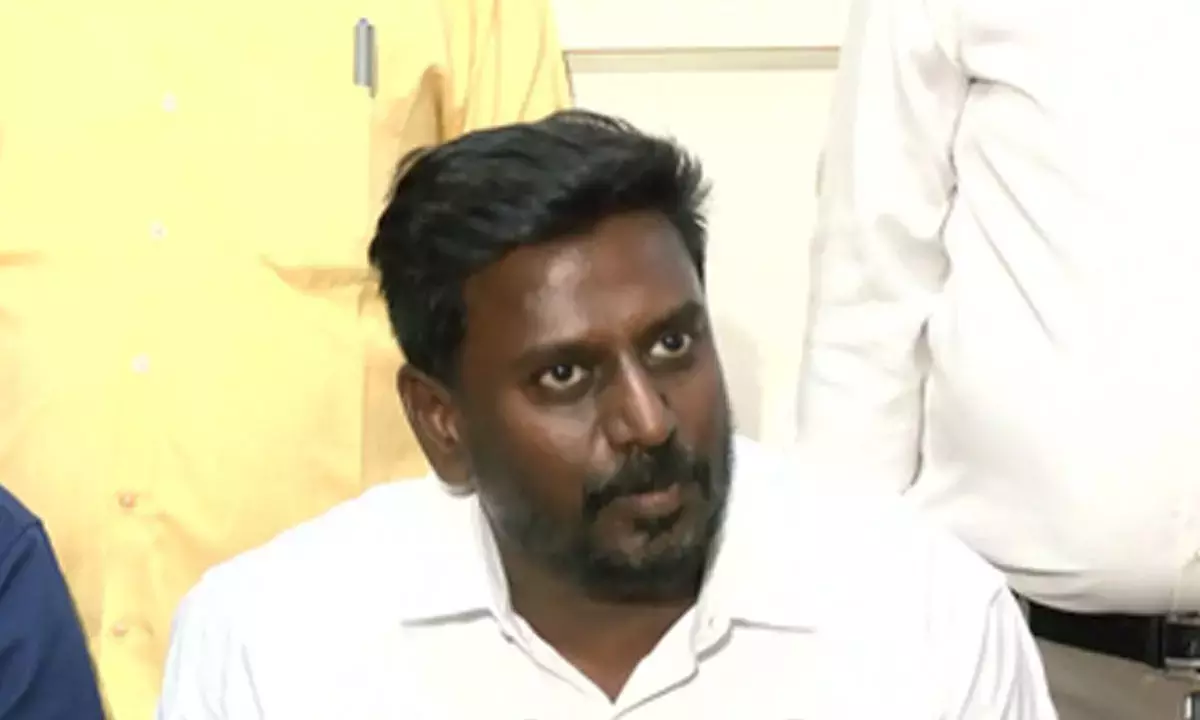

Chennai: The Tamilaga Vettri Kazhagam government in Tamil Nadu, led by Chief Minister Joseph Vijay, has reaffirmed its commitment to the state’s long-standing two-language policy, ruling out any shift to a three-language policy in schools.
Speaking to reporters in Chennai on Tuesday after his first review meeting with senior officials of the School Education Department, School Education Minister Rajmohan said the policy of teaching Tamil and English would continue under the current administration.
“English seems to be enough, and TVK will not yield to any form of indirect pressure,” the Minister said, asserting that there would be no compromise on the party’s principles and ideology.
Rajmohan stated that Tamil would remain the primary language for communication within the state, while English would continue to serve as the language for global engagement and opportunities outside Tamil Nadu and abroad.
Describing the two-language system as the declared ideology of the TVK government, the Minister said the policy reflected both cultural identity and practical empowerment for students.
His remarks came amid renewed pressure from the Union government to implement the three-language formula through centrally sponsored initiatives such as the PM Schools for Rising India (PM SHRI) scheme.
Asked whether Tamil Nadu would join the PM SHRI programme in its current form, Rajmohan said the state government would first assess whether the conditions attached to the scheme aligned with Tamil Nadu’s educational priorities and objectives before taking a final decision.
The Minister also criticised the delay in the release of Sarva Shiksha Abhiyan funds, claiming that Tamil Nadu had not received SSA funds for the past two years.
“We have not received the SSA funds for the past two years, which is a huge tragedy for the students and the education sector,” he said, adding that the funds were meant for students and not officials.
At the same time, Rajmohan reiterated that the state government would not give in to “indirect pressure” over language policy matters.
Highlighting the rationale behind the two-language formula, the Minister referred to former Singapore Prime Minister Lee Kuan Yew, saying he transformed Singapore into a leading global nation by using English to connect with the world.
Rajmohan added that women’s rights and the rights of the soil formed the core ideology of the TVK government.
With IANS inputs