
















Supreme Court cites extrajudicial confession as weak evidence
text_fields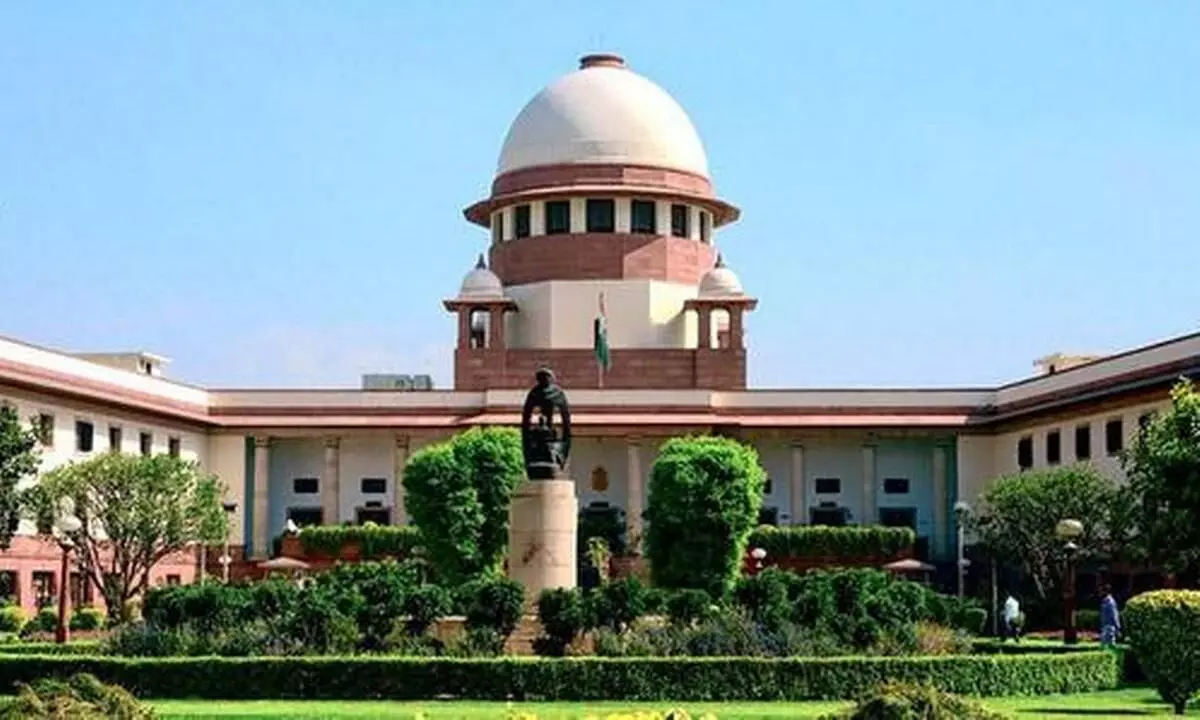

New Delhi: A majority of the Supreme Court held on Monday that extra-judicial confessions are inadequate evidence, and convictions based solely on them without additional evidence would be unjust.
As part of the acquittal and reinstatement of an army officer in a corruption case, justices L Nageswara Rao and BR Gavai made the observation.
Police officers are not required to listen to extra-judicial confessions.
"It could thus be seen that the extrajudicial confession is a weak piece of evidence. Unless such a confession is found to be voluntary, trustworthy and reliable, the conviction solely on the basis of the same, without corroboration, would not be justified," the bench said.
Cross appeals were heard by the top court against the orders and judgments rendered by the Armed Forces Tribunal, Regional Bench, Kochi.
According to Section 7 of the Prevention of Corruption Act, 1988, read with Section 69 of the Army Act, 1950, the tribunal set aside the judgment of conviction. An order was issued by the General Court Martial (GCM) to remove cashiers from service and to serve one year of rigorous imprisonment.
He was sentenced to forfeit his seniority of rank of Major after being convicted under Section 63 of the Army Act.
Furthermore, the AFT ordered that the officer be reinstated in service without pay or allowances for the period he was out of service, as well as without any break in service.
During various recruitment rallies at various locations, the prosecution alleged that the officer made medical clearance decisions for some candidates based on false medical reports.
The GCM's conviction is basically based on the officer's confessional statement, which in this case is totally unsubstantiated.
Agrawal, the lawyer for the officer, argued that the confessional statement made by his client was not voluntary. The top court agreed with him.
"We are unable to accept the contention urged on behalf of the Union of India that the AFT is not entitled to reappreciate the evidence. Such reappreciation of evidence is permissible to find out if any findings of the court martial arelegally not sustainable due to any reason," the bench said.