












SC calls for ‘Balance’ on fake news rules; Centre says comedy, satire not targeted
text_fields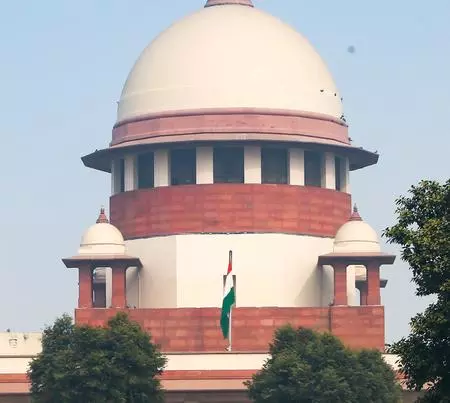

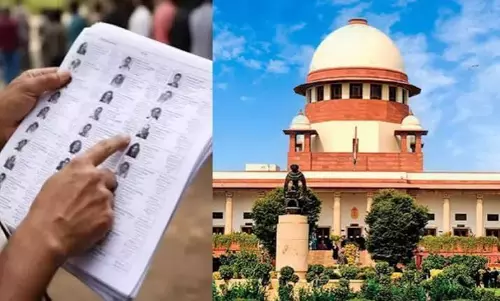
New Delhi: During a hearing on March 10, the Supreme Court of India considered petitions related to the Union government’s Fact-Check Unit (FCU) under the IT Rules, with petitioners questioning who has the authority to determine whether online content is fake or misleading.
The case was brought by the Editors Guild of India and stand-up comedian Kunal Kamra. During the proceedings, they argued that the rules lacked clarity on who would decide whether digital content qualifies as misinformation.
The court also declined to stay the earlier ruling of the Bombay High Court, which had struck down the notification establishing the FCU under the Press Information Bureau, The Wire reported.
While hearing the matter, the bench led by Chief Justice Surya Kant observed that the issue raises significant constitutional concerns. The court indicated that the case involves striking a balance between protecting the country from misinformation online and preserving citizens’ right to free speech.
Representing the Union government, Solicitor General Tushar Mehta argued that the government’s intention behind the IT Rules was not to curb humour, satire or criticism. Instead, he suggested that the aim was to address fake or fraudulent news. When asked about identifying misinformation, Mehta reportedly remarked that authorities recognise such content when they see it.
The FCU, announced through a government notification in March 2024 under the Press Information Bureau, has faced widespread criticism from media organisations. According to reports, the unit was intended to act as a deterrent against the spread of misinformation relating to the functioning of the central government.
In September 2024, the Bombay High Court invalidated the notification after petitions were filed by the Editors Guild and Kamra. The court ruled that the amended 2023 IT Rules were unconstitutional and violated constitutional guarantees including Article 14 (right to equality), Article 19 (freedom of speech and expression), and Article 19(1)(g) (freedom to practise a profession). It also held that the terms “fake”, “false” and “misleading” were vague because they lacked clear definitions, adding that the government could not act as the sole authority deciding what constitutes truth.
The Centre subsequently challenged this decision before the Supreme Court.
During the hearing, senior advocates Arvind Datar and N. H. Seervai, appearing for the Editors Guild, the Association of Indian Magazines, the News Broadcasters and Digital Association and Kamra, questioned how such a unit could be constituted merely through a notification and asked who would be responsible for operating it. They suggested that the High Court had only directed the government to frame clearer rules.
The bench, however, also expressed concern about the potential damage caused by misinformation online. The Chief Justice observed that unverified digital content could harm individuals and even affect national interests. At the same time, the court stressed the need for clear guidelines while cautioning that placing the entire responsibility on the state without holding those spreading misinformation accountable would require careful consideration.