



















Saudi warns US against Hormuz blockade over Bab al-Mandeb shutdown fears
text_fields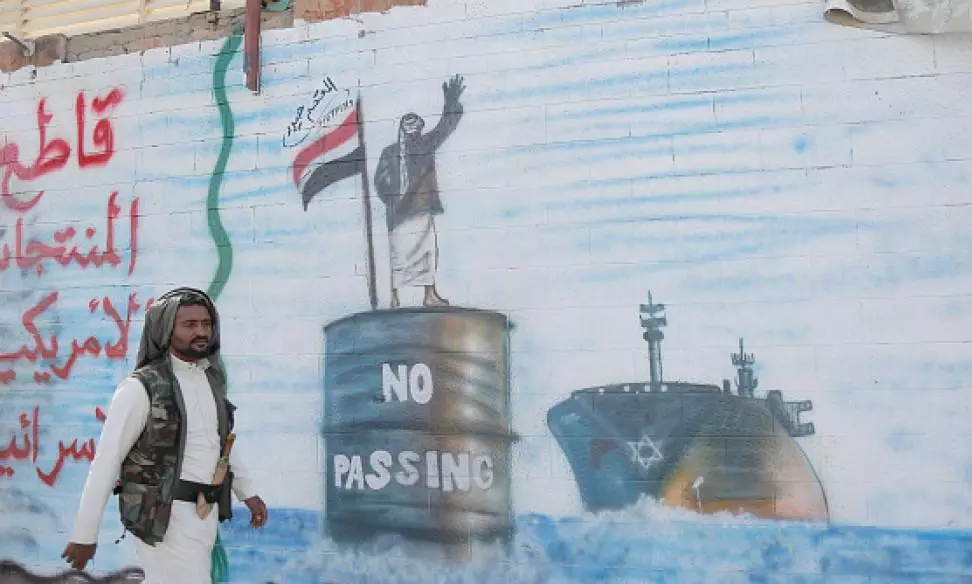

As the US announcement of its blockade of the Strait of Hormuz to exert pressure on Iran to kneel before the US laid the groundwork to end the war, Saudi Arabia, one of the key partners of the US in the Middle East, warned the US about a possible repercussion from Iran that could eventually prompt it to shut the Bab al-Mandeb, the Red Sea chokepoint through which Saudi exports have been routed since Iran’s embargo of Hormuz.
The blockade, operationalised following inconclusive negotiations in Islamabad and reinforced by Donald Trump’s threats of intensified bombardment, is calibrated to suffocate an already debilitated Iranian economy; however, Saudi Arabia has intimated that such economic strangulation could provoke asymmetric countermeasures, according to The Wall Street Journal.
Iran’s earlier closure of Hormuz, effected through targeted strikes on commercial vessels, had already expunged nearly 13 million barrels per day from global supply chains, catapulting crude prices beyond the $100 threshold, while compelling Saudi Arabia to recalibrate its export by diverting crude across its desert expanse to the Red Sea terminal at Yanbu.
This logistical workaround, though momentarily efficacious, remains acutely vulnerable to disruption should Bab al-Mandeb be rendered impassable.
Bab al-Mandeb, an 18-mile maritime corridor bridging Yemen and the Horn of Africa, constitutes the southern ingress to the Suez Canal route, thereby rendering it indispensable to transcontinental trade between Asia and Europe; its interdiction would not merely constrict Saudi exports but would convulse global shipping arteries with cascading economic repercussions.
Despite the US’s insistence, articulated by administration officials, that the blockade is intended to preserve the free flow of energy and forestall Iranian coercion, regional interlocutors have underscored the paradox inherent in such a posture.
The spectre of escalation is further compounded by Iran’s reliance on its Yemeni allies, the Houthis, whose demonstrated capacity to disrupt Red Sea shipping during prior conflicts renders them an expedient instrument for retaliatory manoeuvres.
Although Saudi officials have reportedly extracted assurances from the Houthis against targeting the kingdom or its vessels, they have concurrently acknowledged the volatility of the situation, cautioning that such guarantees remain contingent and reversible under escalatory pressure from Iran.
Analysts have posited that Iran could recalibrate its response by weaponising maritime chokepoints indirectly, including through the imposition of transit constraints or disruptions calibrated to mirror American restrictions on Iranian oil flows.
Amid this fraught strategic impasse, Gulf states, while unwilling to acquiesce to a post-war order wherein Iran retains leverage over Hormuz, are nevertheless exerting diplomatic pressure on Washington to revert to negotiations