








Samastha pleads for early decision in Waqf case; seeks SC stay on encroachment, demolitions
text_fields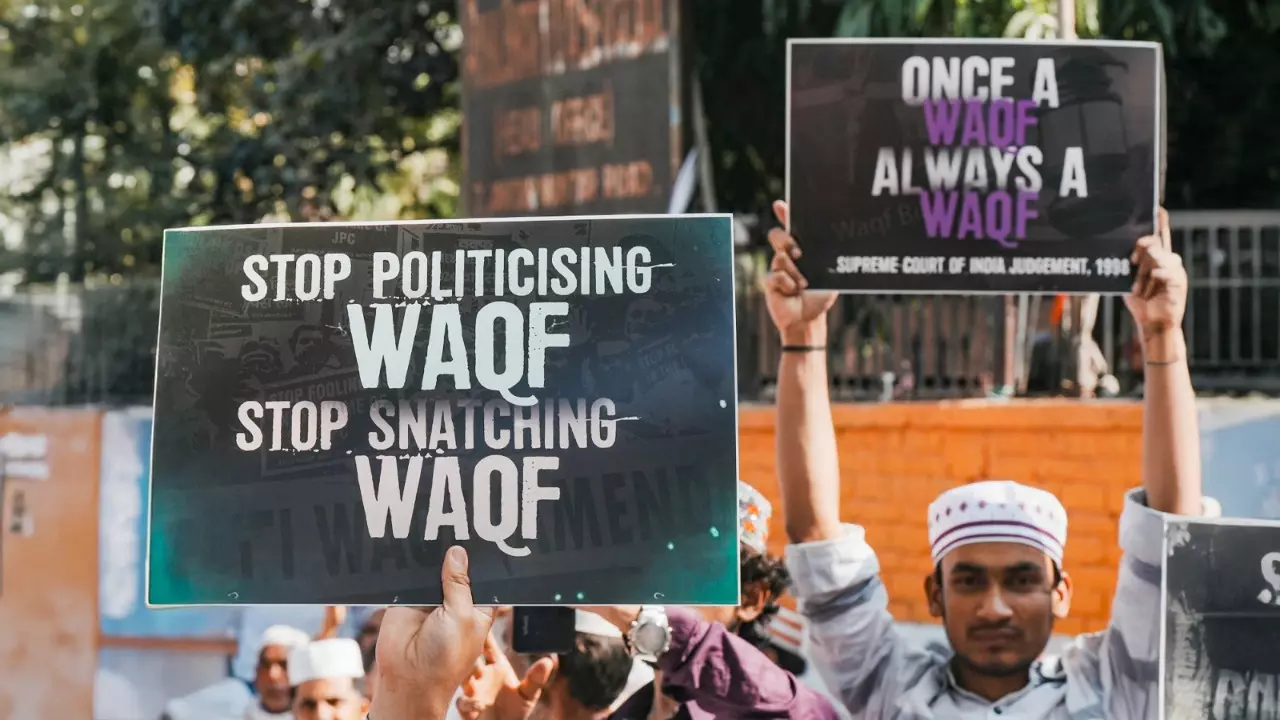
People protesting against the Waqf Amendment Act. (Photo: PTI/Representative Image)

Samastha Kerala Jamiyyathul Ulama, the body representing a major part of Muslims in Kerala, has approached the Supreme Court seeking interim protection of status quo in Waqf properties and urging an early decision in the case, now that the hearing has been completed for several months.
The petition pointed out that when the case challenging the Waqf amendment act is pending with the apex court, in many states Waqf plots are being confiscated and the structures standing on Waqf property being demolished.
Arguments on the petitions challenging the Waqf amendment act were completed in May and the case was reserved for judgment. During the hearing, at the time when notices were issued to the parties, the Centre had assured the court that until the judgement was given by the court, the status quo would continue and no Waqf property would be confiscated or demolished.
But the assurance given by the Centre is not being honoured, as in several states, widespread encroachments are being reported, the petition points out.
When in last April the highest court considered the petitions against the Waqf Amendment Act, it had issued interim orders that status quo would continue. Consequently on April 17, the Centre assured the court that until May 5, Waqf properties would not be denotified or appointments made to central Waqf councils or state Waqf boards.
The petitions considered by the top court were those filed by President of Jamiat Ulama e-Hind, Arshad Madani, SDPI National Vice President Mohammed Shefi, AIMIM MP Asaduddin Owaisi, Delhi MLA Amanatullah Khan, Association for Protection of Civil Rights (APCR), Samastha Kerala Jamiyyathul Ulama, Anjum Kadari, Advocate Taiyyab Khan Salmani, Mohammed Faslul Raheem and RJD MP Manoj Jha.
During the hearing Solicitor General Tushar Mehta, on behalf of the government had taken the stance that Waqf does not form an inalienable part of Islamic faith. Waqf by use was a permission granted by the government, and a law passed by the government can be rescinded by the government through another law and it would not become part of fundamental right.
In reply to a query by the court, the SG replied that property under the Hindu Endowments could be used only for religious purposes whereas the Waqf property in Islamic religion could be used for purposes like schools. And that is why non-Muslims were included in Waqf board.
According to the Waqf Amendment Act, the Central Waqf Council has 22 members of which a maximum of 4 can be non-Muslims, and in state waqf boards consisting of 11 members, upto three members can be non-Muslims. Therefore, non-Muslims form a minority and it does not alter the basic character of the body. Their presence on the boards would only strengthen the secular framework, argued the Solicitor General.