















Pollution in Delhi causes 20% to 30% spike in respiratory illness
text_fields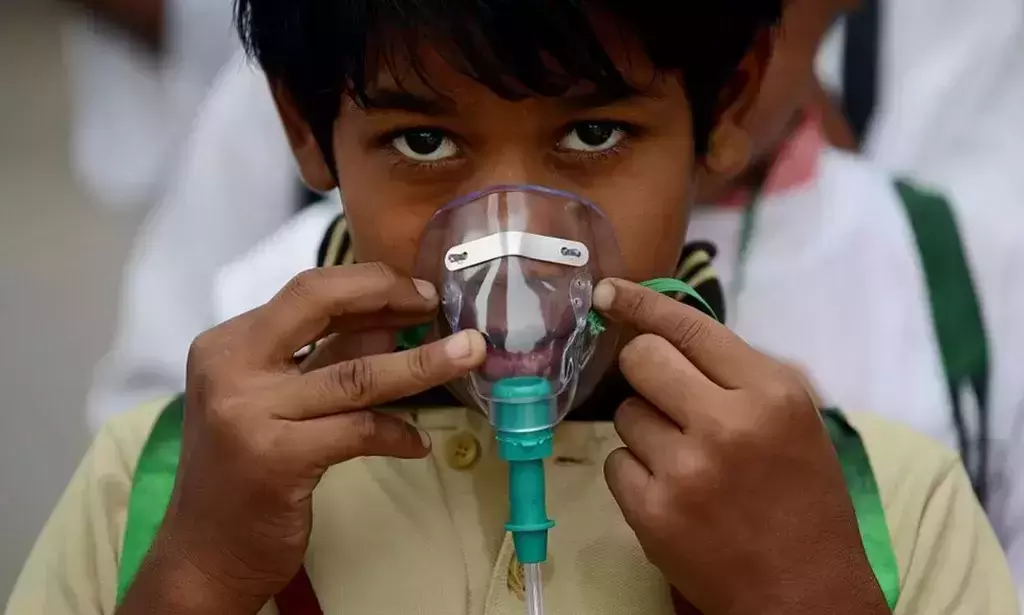
AFP photo.

New Delhi: Amid sustained high pollution levels, hospitals in Delhi are witnessing a 20-30 per cent spike in respiratory patients, including many first-time cases and young adults, PTI reported, citing doctors.
They emphasised that the ongoing pollution crisis is a serious public health risk rather than a seasonal inconvenience.
On Saturday, the city's air quality deteriorated further, slipping from the "very poor" to the "severe" category -- a level that also affects otherwise healthy individuals -- with readings crossing 400 in the red zone.
At 4 pm, the 24-hour average Air Quality Index (AQI) stood at 431, according to the Central Pollution Control Board (CPCB).
An AQI between 0 and 50 is considered 'good', 51 and 100 'satisfactory', 101 and 200 'moderate', 201 and 300 'poor', 301 and 400 'very poor' and 401 and 500 'severe', according to CPCB.
Similar to winters in the several past years, Delhi continues to choke due to the toxic air, with pollution levels reported above 300 on most days. As a result, hospitals across the city are reporting a sharp rise in patients with respiratory distress, chest tightness and persistent cough.
Doctors said pollution levels worsen each year, and the number of people affected by poor air quality is steadily increasing.
Several doctors in Delhi said outpatient departments and emergency rooms have recorded a 20-30 per cent increase in patients presenting with acute and subacute respiratory symptoms over the past few weeks, coinciding with the prolonged high pollution levels.
"There is a distinct rise in patients coming in with cold, cough, breathlessness and chest tightness, which can be directly attributed to the poor air quality around us. The increase is nearly 15-20 per cent compared to earlier weeks," Dr Avi Kumar, senior consultant pulmonologist at Fortis Hospital, Okhla, said.
What is worrying, he added, is the severity and persistence of symptoms.
"Many patients have relentless symptoms that are not settling despite routine treatment. They are requiring higher doses of steroids and prolonged medication. Another distinct feature is the number of new patients -- people who have never had respiratory issues before. Youngsters playing outdoors are also affected," he said.
The polluted air is not a singular threat; a dangerous mix of PM2.5, PM10, nitrogen oxides, ozone, sulphur dioxide and hundreds of toxic chemicals released from vehicular emissions, industrial activity and waste burning compounds the crisis.