












Javed Akhtar criticises reception for Taliban foreign minister in India
text_fields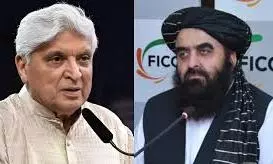

Screenwriter and lyricist Javed Akhtar has condemned the reception given to Afghan Taliban Foreign Minister Amir Khan Muttaqi during his visit to New Delhi, saying he “hangs his head in shame.”
Muttaqi is on a six-day visit to India, the first by a Taliban leader since the group seized power in Afghanistan in 2021.
Akhtar expressed his dismay on X, writing, “I hang my head in shame when I see the kind of respect and reception has been given to the representative of the world's worst terrorists group Taliban by those who beat the pulpit against all kind of terrorists.”
He also criticised the Darul Uloom Deoband in Saharanpur, Uttar Pradesh, one of South Asia’s most influential Islamic seminaries, for welcoming Muttaqi. “Shame on Deoband too for giving such a reverent welcome to their ‘Islamic Hero’ who is one of those who have completely banned girls education. My Indian brothers n sisters !!! what is happening to us,” Akhtar said.
Muttaqi’s visit comes after the UN Security Council’s Taliban Sanctions Committee granted an exemption to the travel ban imposed on him. He has been on the UN Security Council list since January 25, 2001, and was subject to a travel ban, asset freeze, and arms embargo.
India has not recognised the Taliban government and has advocated for the formation of a truly inclusive administration in Kabul.
The visit sparked controversy when women journalists were excluded from Muttaqi’s first media interaction in Delhi. Opposition leaders called the absence “unacceptable” and “an insult to women,” while various press bodies criticised the Afghan foreign minister. The Ministry of External Affairs (MEA) clarified that it had no involvement in organising the press event.
In response, Muttaqi held another press conference on Sunday, inviting women journalists and stating that there was no intention to exclude them. “With regards to the press conference, it was organised on short notice. A small list of journalists was finalised. It was more of a technical issue,” he said. He added, “Our colleagues had decided to send invitations to specific journalists and there was no other intention,” and emphasised that “no one's rights should be violated -- be it men or women.”