







Jamiat raises concern as SC refuses to stay ‘Waqf by user’ clause
text_fields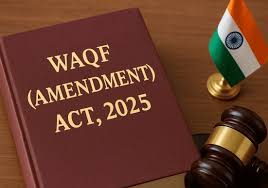

New Delhi: Prominent Muslim organisation Jamiat Ulema-e-Hind on Monday welcomed the Supreme Court’s interim order putting on hold several key provisions of the Waqf (Amendment) Act, 2025, but expressed concern over the top court’s refusal to stay the entire law, including the prospective de-recognition of ‘Waqf by user’.
Jamiat Ulema-e-Hind president Maulana Arshad Madani said the organisation would continue its legal and democratic struggle until what he called this “oppressive law” is repealed. In a post on X, Madani welcomed the decision granting interim relief on three controversial provisions of the Waqf law.
“This new Waqf law is a direct attack on the Constitution of the country, which not only guarantees equal rights to citizens and minorities but also ensures complete religious freedom. This law is a dangerous, anti-Constitutional conspiracy aimed at curbing the religious freedom of Muslims,” he said, adding that the organisation challenged the law in the Supreme Court.
“We are confident that the Supreme Court will abolish this oppressive law and grant us full constitutional justice,” Madani said. However, he expressed concern over the court’s refusal to stay the prospective de-recognition of ‘Waqf by user’.
Maulana Mahmood Madani, head of the other faction of Jamiat Ulema-e-Hind, said the apex court’s decision was somewhat satisfactory, providing partial relief in some cases. He stressed that the biggest issue remains that of ‘Waqf by user’, which he said is integral to Islamic law.
The Supreme Court, in its interim order, put on hold several key provisions of the Waqf (Amendment) Act, 2025. This included the clause requiring that only those practising Islam for the last five years can dedicate a property as Waqf. However, the court refused to stay the entire law.

A bench comprising Chief Justice B. R. Gavai and Justice Augustine George Masih observed that “presumption is always in favour of constitutionality of a statute and intervention can be done only in the rarest of rare cases.”
The apex court also paused the powers granted to a collector to adjudicate the status of Waqf properties and addressed the contentious issue of non-Muslim participation in Waqf boards. It directed that the Central Waqf Council should have no more than four non-Muslim members out of 20, and state Waqf boards no more than three out of 11.
The Centre had notified the Act on April 8, 2025, following President Droupadi Murmu’s assent on April 5. Both Houses of Parliament had passed the Waqf (Amendment) Bill, 2025, on April 3 and April 4, respectively.
With PTI inputs