















India has highest priority in its migration policy, says Germany
text_fields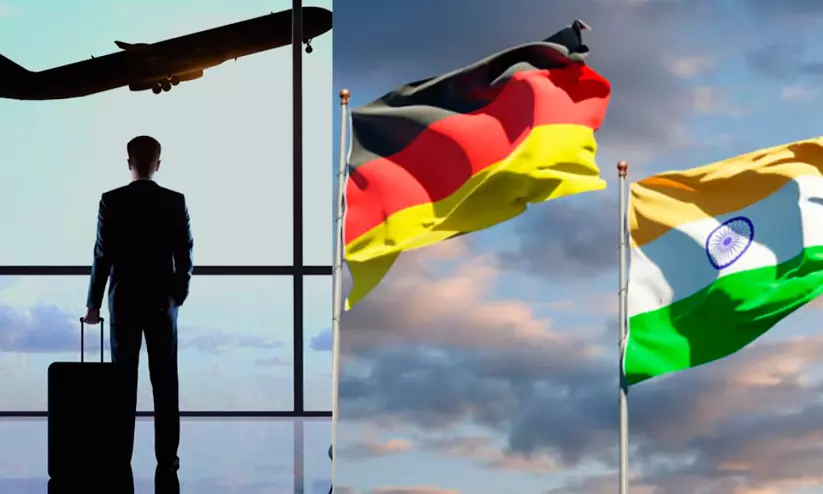

New York: Germany has identified India as the highest-priority country in its international migration policy, underlining Berlin’s growing dependence on Indian skilled workers to tackle labour shortages and strengthen its technology-driven economy. The statement was made by Florian Lodi while addressing a programme organised by the Permanent Mission of India to the United Nations on the impact of digital innovation in migration governance.
Lodi described India as one of Germany’s most important sources of skilled professionals, particularly in the science and technology sectors. According to him, cooperation between the two countries has emerged as a major success story, benefiting both Germany’s struggling labour market and India’s vast skilled workforce seeking opportunities abroad. He pointed out that Indian migrants arriving in Germany are highly qualified and that their average earnings are reportedly higher than the average income of German citizens.
The German official revealed that nearly 1,80,000 Indians contributed to Germany’s workforce in 2025 alone, marking a massive 656 percent increase over the past decade. India has now become Germany’s most significant partner in the recruitment of skilled workers, reflecting a major shift in Europe’s migration priorities.
Lodi also highlighted the importance of the Migration and Mobility Partnership Agreement signed between India and Germany in 2022. The agreement has significantly eased pathways for Indian students, researchers and professionals to enter Germany by simplifying visa procedures and accelerating degree recognition through digitalisation initiatives.
Indian students now form one of the largest groups among international students studying at German universities. More than 60,000 Indian students have reportedly been studying in Germany over the last three years, with over half of them securing employment in the country after completing their education.
The remarks come at a time when European nations are aggressively competing for global talent amid worsening labour shortages and demographic pressures, placing India’s young and highly skilled workforce at the centre of international migration and economic strategies.