











India expects 'mutual interests' in Saudi-Pakistan defence pact: MEA
text_fields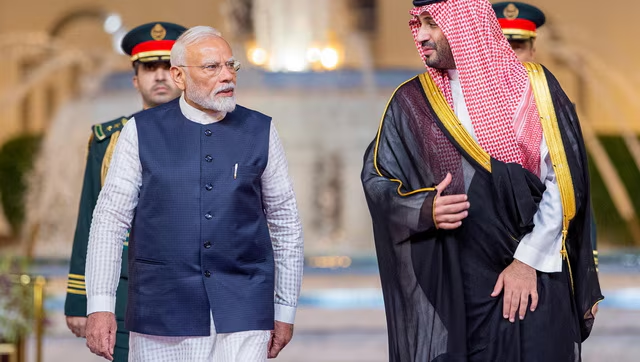

New Delhi: India expects that its mutual interests with Saudi Arabia will be considered as Riyadh enters into a defence pact with Pakistan, the Ministry of External Affairs (MEA) said on Friday.
“India and Saudi Arabia have a wide-ranging strategic partnership, which has deepened considerably over the last several years,” MEA spokesperson Randhir Jaiswal said during a press briefing. “We expect that this strategic partnership will keep in mind mutual interests and sensitivities.”
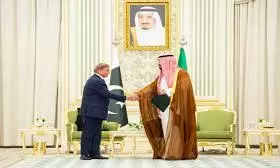
Jaiswal’s remarks came in response to a reporter’s question about the mutual defence agreement signed between Saudi Arabia and Pakistan on Wednesday. The pact stipulates that aggression against either country will be treated as an attack on both nations.
India had stated on Thursday that it is studying the implications of the agreement on its security.
An unnamed senior Saudi official told Reuters on Wednesday that the pact was “not a response to any specific country or situation” but represented “an institutionalisation of longstanding and deep cooperation between our two countries.” The official added, “Our relationship with India is more robust than it has ever been. We will continue to grow this relationship and seek to contribute to regional peace whichever way we can.”
The Saudi-Pakistan agreement follows a joint session of the Arab League and the Organisation of Islamic Cooperation held in Doha, Qatar, on September 9, convened after Israel attacked leaders of the Palestinian militant group Hamas in the Qatari capital. Hamas members had gathered in Doha to discuss a United States-backed Gaza ceasefire proposal. Arab and Islamic nations condemned the attack.
Qatar, a major US ally, hosts one of the largest American military bases in the region. Washington is also an ally of Israel and acts as a guarantor of its security.
India’s MEA on Thursday acknowledged that the Saudi-Pakistan defence arrangement had been under consideration. “We will study the implications of this development for our national security as well as for regional and global stability,” the ministry stated. “The government remains committed to protecting India’s national interests and ensuring comprehensive national security in all domains.”
The pact between Islamabad and Riyadh comes four months after a brief military conflict between India and Pakistan. Tensions escalated on May 7 when the Indian military carried out strikes, codenamed Operation Sindoor, on what it claimed were terrorist camps in Pakistan and Pakistan-occupied Kashmir. The strikes were in response to a terror attack in Pahalgam, Jammu and Kashmir, on April 22 that killed 26 people.
The Pakistan Army retaliated by repeatedly shelling Indian villages along the Line of Control, killing at least 22 civilians and eight defence personnel. While India and Pakistan reached an “understanding” on May 10 to halt firing, New Delhi has stated that Operation Sindoor remains India’s policy against cross-border terrorism. Prime Minister Narendra Modi said on May 12 that India had “only paused our retaliatory action on Pakistan’s terrorist and military infrastructures for now” and will continue to observe Islamabad’s actions.
On Friday, Pakistani Defence Minister Khawaja Asif told Geo TV that Islamabad’s nuclear programme “will be made available” to Saudi Arabia if needed under the defence pact. This marked the first acknowledgment that Pakistan would extend its nuclear umbrella to Riyadh.
Asif said, “Let me make one point clear about Pakistan’s nuclear capability: that capability was established long ago when we conducted tests. Since then, we have forces trained for the battlefield. What we have, and the capabilities we possess, will be made available to [Saudi Arabia] according to this agreement.”