










Hijab ban repeal: Hindutva group distributes saffron shawls in colleges
text_fields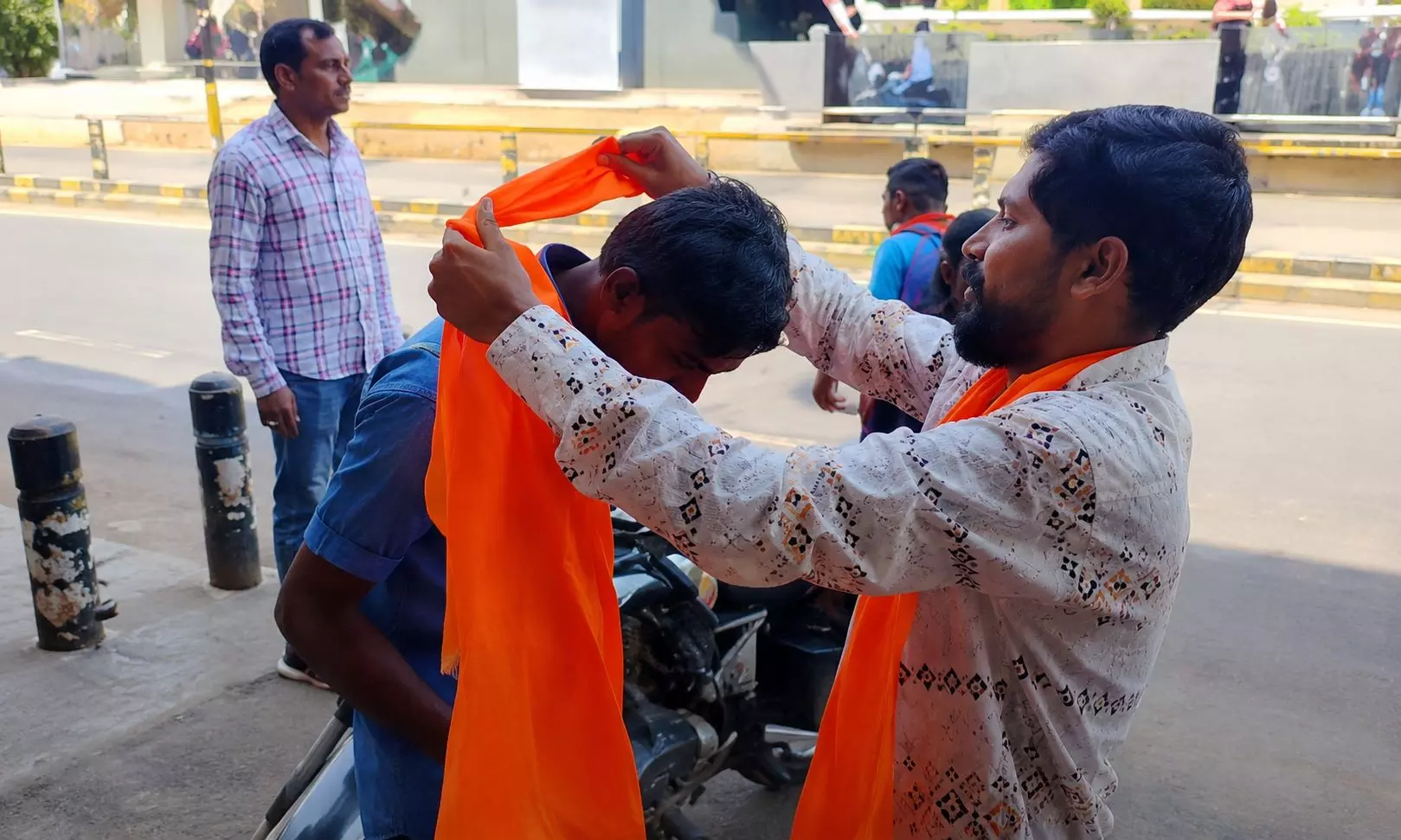

Hubballi: Hindutva organisation Sri Rama Sene has begun distributing saffron shawls to students at colleges in Karnataka’s Hubballi, escalating tensions days after the Congress government revoked a controversial 2022 BJP-era order that effectively barred hijabs in classrooms, according to a Maktoob Media report.
The campaign was carried out at several educational institutions, including Kanakadasa College, with the organisation presenting it as a response to the state government’s decision to once again permit certain faith-based symbols in schools and colleges. The revised policy allows items such as the hijab, turban and other religious markers, provided they do not interfere with discipline, safety or student identification.
The move follows repeated opposition from Sri Rama Sene and its founder, Pramod Muthalik, who had vowed to distribute saffron shawls across Karnataka if the government restored permission for hijabs. The organisation objected to the government’s decision to recognise selected religious symbols while excluding saffron shawls from the list of permitted attire.
Chief Minister Siddaramaiah had clarified that saffron shawls would not be allowed under the revised guidelines. Despite this, Sri Rama Sene proceeded with its campaign, bringing the debate back into college campuses that had witnessed intense polarisation during the hijab controversy.
The latest development has renewed concerns among critics who argue that the original hijab row was politically manufactured and amplified by Hindutva organisations and the then-BJP government. They point out that Muslim students had worn hijabs in educational institutions for years before the dispute emerged in Udupi and later expanded into a statewide political and legal battle.
Critics also cite the saffron-shawl counter-mobilisation, reported harassment of hijab-wearing students and the educational disruption faced by Muslim women as evidence that the controversy extended far beyond uniform regulations. Against that backdrop, the distribution of saffron shawls is being viewed by opponents as another attempt to inject religious polarisation into educational spaces rather than resolve longstanding concerns over students’ rights and access to education.