














H-1B visa fee hike likely to cause humanitarian consequences: India
text_fields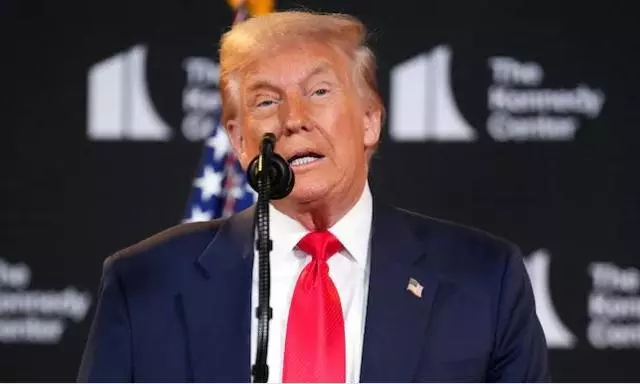

New Delhi: The Ministry of External Affairs on Saturday said the government is studying the implications of the H-1B visa fee hike alongside warning that the move could lead to humanitarian consequences in the form of disruption for families, NDTV reported.
President Trump on Friday imposed a whopping $100,000 (over Rs 88 lakh) fee annually on H-1B visa applications with the fee likely to range from $2,000 to $5,000 in accordance with employer size and other costs.
Announcing the decision, Trump claimed that the move could lead to bring in to the US ‘actually very highly skilled’, adding that the country needs ‘great workers’ which is ‘what's going to happen’.
However, India’s Foreign Ministry responded to the announcement saying that ‘The full implications of the measure are being studied by all concerned, including by Indian industry, which has already put out an initial analysis clarifying some perceptions related to the H1B program’.
H-1B visas allow companies to sponsor foreign workers with specialized skills in computer programming alongside scientists and engineers for three years which could be extended to six.
Three-quarters of recipients of 85,000 H-1B visas, awarding on a lottery system, are from India with number of applicants showing a sharp rise in recent years.
While Joe Biden administration made most of the approvals, Trump’s first term in 2018 was marked with huge rejections.
India’s Ministry of External Affairs stressed that both countries have stake in ‘innovation and creativity’ while expressed hope that two sides could ‘consult on the best path forward.
However, the White House staff secretary, Will Scharf, called H-1B visa programme one of the "most abused visa" systems in the US.
Will Scharf said that the rise in the fee would ensure that ‘the people they're bringing in are actually very highly skilled and that they're not replaceable by American workers’.
India’s Foreign Ministry, pointing to how the visa system benefited both countries in terms of development of technology innovation and economic growth, said that ‘Policy makers will therefore assess recent steps taking into account mutual benefits, which include strong people-to-people ties between the two countries’.