











Government likely to delay 25% ethanol blend in petrol amid backlash
text_fields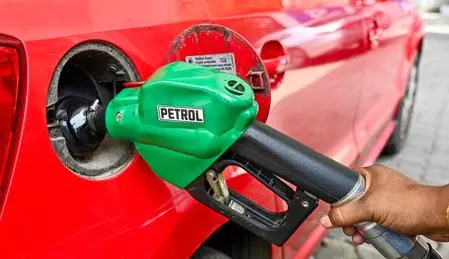
Photo: IANS

New Delhi: Amid growing criticism over the rapid increase in ethanol blending in petrol from 10% to 20% within three years, the Union government is reportedly considering delaying the rollout of E25 fuel, which contains 25% ethanol and 75% petrol.
The government had initially planned to introduce E20 fuel only by 2030, but it has already become the standard petrol variant across the country. Although no official timeline has been announced for E25, recent decisions to exempt blended fuels containing 22% to 30% ethanol from central excise duty and the notification of fuel standards for such blends by the Bureau of Indian Standards have fuelled speculation about the next phase of ethanol adoption, the Indian Express reported.
According to officials, these measures were intended to prepare the fuel and automobile ecosystem for higher ethanol blends. However, the prospect of moving beyond E20 has raised concerns among automobile manufacturers and consumers.
The rapid transition to E20 has prompted complaints from some motorists about reduced fuel efficiency and possible damage to components in older vehicles, particularly as ethanol content increases.
Sources said that a high-level government meeting held last week acknowledged the need to address these concerns scientifically. Officials reportedly suggested that original equipment manufacturers (OEMs) should respond to consumer complaints, while adding that some concerns may have been exaggerated.
Government sources indicated that policymakers believe more time is needed for the ecosystem to adapt before introducing E25. They also said there is a view within the government that the shift beyond E20 should happen gradually rather than through another accelerated transition. A senior government official was quoted as saying that feedback from vehicle manufacturers also favoured a calibrated and phased rollout of E25, particularly for existing vehicles.
The report noted that the swift transition from E10 to E20 had left many owners of older cars and two-wheelers dissatisfied, with some claiming they had not been adequately informed about the possible effects on vehicle performance.
Experts cited in the report said higher ethanol blends can reduce fuel economy, especially in vehicles that were originally designed for E10 fuel. They noted that older vehicles are generally more affected, and that performance degradation does not increase in a simple linear manner as ethanol content rises.
Automobile manufacturers have also expressed concerns that using E25 in conventional internal combustion engine vehicles, particularly older models, could increase the risk of corrosion and damage to fuel system components because ethanol absorbs moisture.
At the same time, the report highlighted that ethanol offers several advantages, including a higher octane rating, lower carbon emissions and reduced dependence on imported fossil fuels. Several carmakers told The Indian Express that they are developing engines with higher compression ratios to improve efficiency with higher ethanol blends, but emphasised that such technologies are intended for future vehicles.
The report added that the government has maintained that any rollout of higher ethanol blends would take place only after adequate testing and consultations with stakeholders.
According to the report, transitioning to E25 would require manufacturers to carry out additional engineering work on engine calibration, fuel-system durability, corrosion resistance and material compatibility, followed by regulatory certification, making a gradual rollout essential.