


















Strong El Niño could develop by late 2026, experts warn
text_fields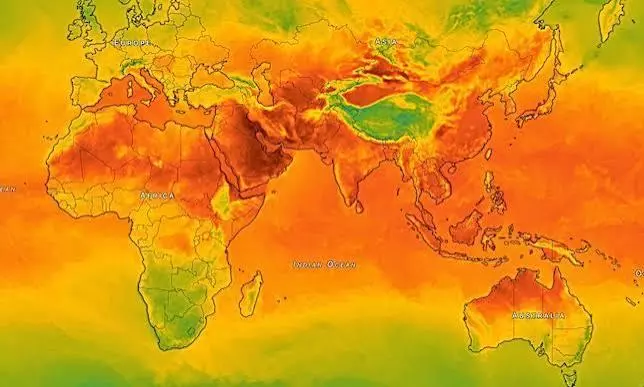

A strengthening El Niño could become one of the strongest on record by late 2026, with climate agencies and experts warning of significant impacts on rainfall, temperatures and extreme weather patterns.
Observational data and climate model projections point to a substantial build-up of heat across the central and eastern tropical Pacific Ocean.
The World Meteorological Organization has also warned of a strengthening El Niño, with peak intensity expected towards the end of the year.
Anushman, director of Water Resources at TERI, said NOAA’s latest assessment puts the probability of a very strong El Niño during the Northern Hemisphere autumn and winter at more than 90 per cent. It also estimates a 69 per cent chance that the October-December 2026 period could surpass the strength of the strongest El Niño events recorded previously.
He said the tropical Pacific was already showing substantial warming and increased subsurface heat content, while atmospheric circulation patterns were consistent with a strengthening event. November and December could see peak intensity, although its precise strength will become clearer during the peak phase.
GP Sharma, president of Meteorology and Climate Change at Skymet Weather, said rapid warming during the summer indicated that the event could become one of the strongest, or potentially the strongest, on record by late 2026 and winter 2027.
He warned of an increased risk of weaker rainfall towards the latter part of India’s monsoon, particularly in September and October, with the event potentially persisting into early spring 2027.
UN Secretary-General Antonio Guterres and WMO Secretary-General Celeste Saulo have also called for early preparations, stressing that forecasts could help governments and communities anticipate risks.
A strong El Niño can increase drought risks across parts of Asia and Australia while raising the likelihood of heavy rainfall and flooding in several regions, including parts of Africa, North America and South America.