


BJP’s Adhikari coerces Muslim migrant workers to vote for BJP with threat to their livelihood
text_fields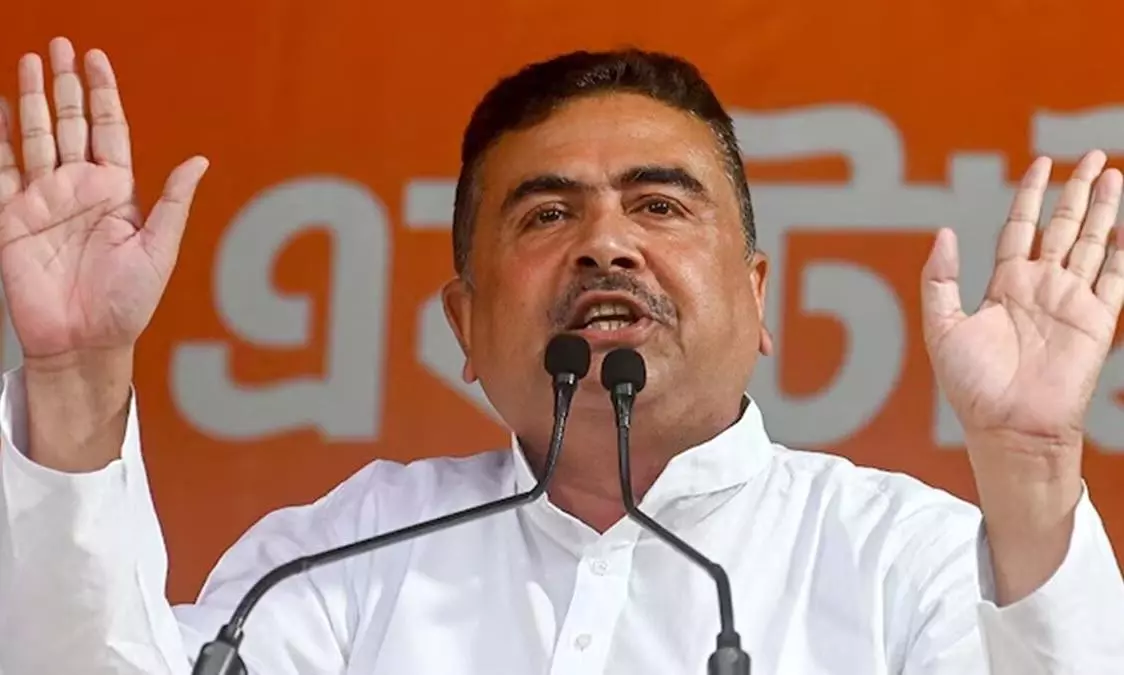

In an apparent threat to the citizens’ fundamental right to cast their vote in accordance with their independent choice, Suvendu Adhikari, the BJP’s West Bengal leader reminded Muslim migrant workers that they should remember that they have to return to BJP-ruled states for employment, and that any “mistake” could prove fatal to their livelihoods, amid intensifying controversy over the Special Intensive Revision (SIR), which has devoured a substantial segment of Muslim voter enfranchisement.
Addressing a gathering during the West Bengal electoral campaign, Adhikari, the Leader of the Opposition, invoked the economic dependence of Nandigram’s migrant labourers by brandishing the political authority of the BJP in states such as Gujarat, Maharashtra, and Odisha, thereby threatening their livelihood security in a manner widely construed as coercive.
He stated that over 30,000 migrant workers from Nandigram were employed across these states, including significant numbers of Muslim youth, and cautioned that they “could not afford to make a mistake,” while further declaring that the ruling dispensation in these regions belonged to the BJP, thus insinuating potential repercussions post-election.
The remarks, laden with undertones of intimidation and surveillance, were accompanied by an assertion that he was “writing down everything,” a phrase that has since attracted widespread criticism for its implicit suggestion of political retribution, especially in a climate already fraught with allegations of targeted disenfranchisement.
Responding, Pabitra Kar, the All India Trinamool Congress candidate from Nandigram, condemned Adhikari’s rhetoric as emblematic of a politics predicated on threats and coercion rather than democratic accountability.
Echoing this stance, party representatives indicated that the matter would be escalated to the Election Commission, contending that such statements undermine the sanctity of free and fair elections and erode the constitutional guarantee of uninhibited political participation.
The gravity of these threats is further amplified by a report from the Sabar Institute, which reveals a grotesque disparity in the recent purging of electoral rolls: a disproportionate 95.5% of the disenfranchised names in Nandigram belong to the Muslim community, despite their constituting a mere quarter of the total population.