









RSS event demands de-listing of converted Muslims from ST list
text_fields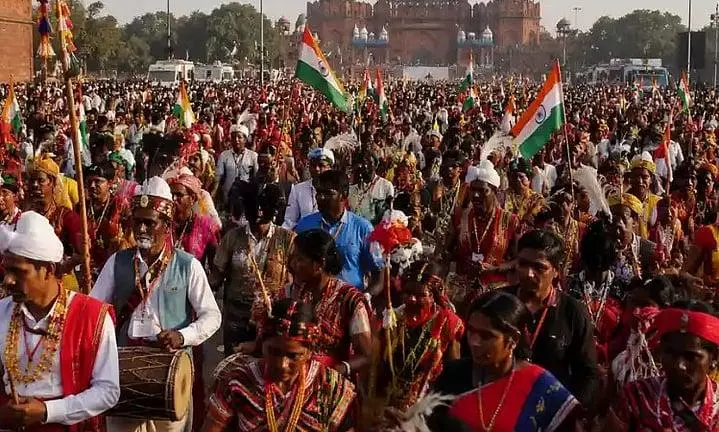

New Delhi: Members from various tribal communities from across the nation gathered at an RSS-organised event at Delhi's Red Fort grounds on Sunday, where the de-listing of converted tribals from the Scheduled Tribe category was raised, according to a PTI report.
The 'Janajati Sanskritik Samagam', organised by the RSS affiliate Janajati Suraksha Manch and allied groups, was held in the backdrop of the 150th birth anniversary year of tribal icon Birsa Munda at Red Fort grounds.
"This cultural programme is aimed at giving a major push to our long-pending demand for de-listing converted tribals from the Scheduled Tribe category. This issue goes back to the time of tribal leader Kartik Oraon ji, who raised it before the then prime minister Indira Gandhi in the late 1960s," Maalaya Jigdung of the Janjati Suraksha Manch, Assam prant, said.
Jigdung asserted that the mobilisation will help build wider national support for a constitutional amendment under Article 342.
Organisers claimed that nearly 1.5 lakh people from over 500 tribal communities across the country participated in the event.
"This has been one of our oldest demands and the core objective behind the formation of the Janjati Suraksha Manch. Through this programme, we have showcased tribal cultural identity while also strengthening our movement for de-listing," Jigdung told PTI.
The event began with cultural processions from five locations in the national capital -- Rajghat Chowk, Ramlila Maidan, Ajmeri Gate Chowk, Qudsia Bagh near Kashmiri Gate and Shyamgiri Temple near Shastri Park Bus Depot. The rallies, covering around 2.5 to 3.5 kilometres, converged at the Red Fort grounds.
Participants dressed in traditional attire carried tribal flags, beat drums and performed folk dances as they marched through Delhi's streets.
Groups from Assam, Tripura, Bihar, Jharkhand, Odisha, Andaman and Nicobar and several other states took part in the event, which organisers described as the "largest tribal cultural mobilisation of its kind".