














B'desh polls, ISI backing biggest security threat for India’s northeast: Intel
text_fields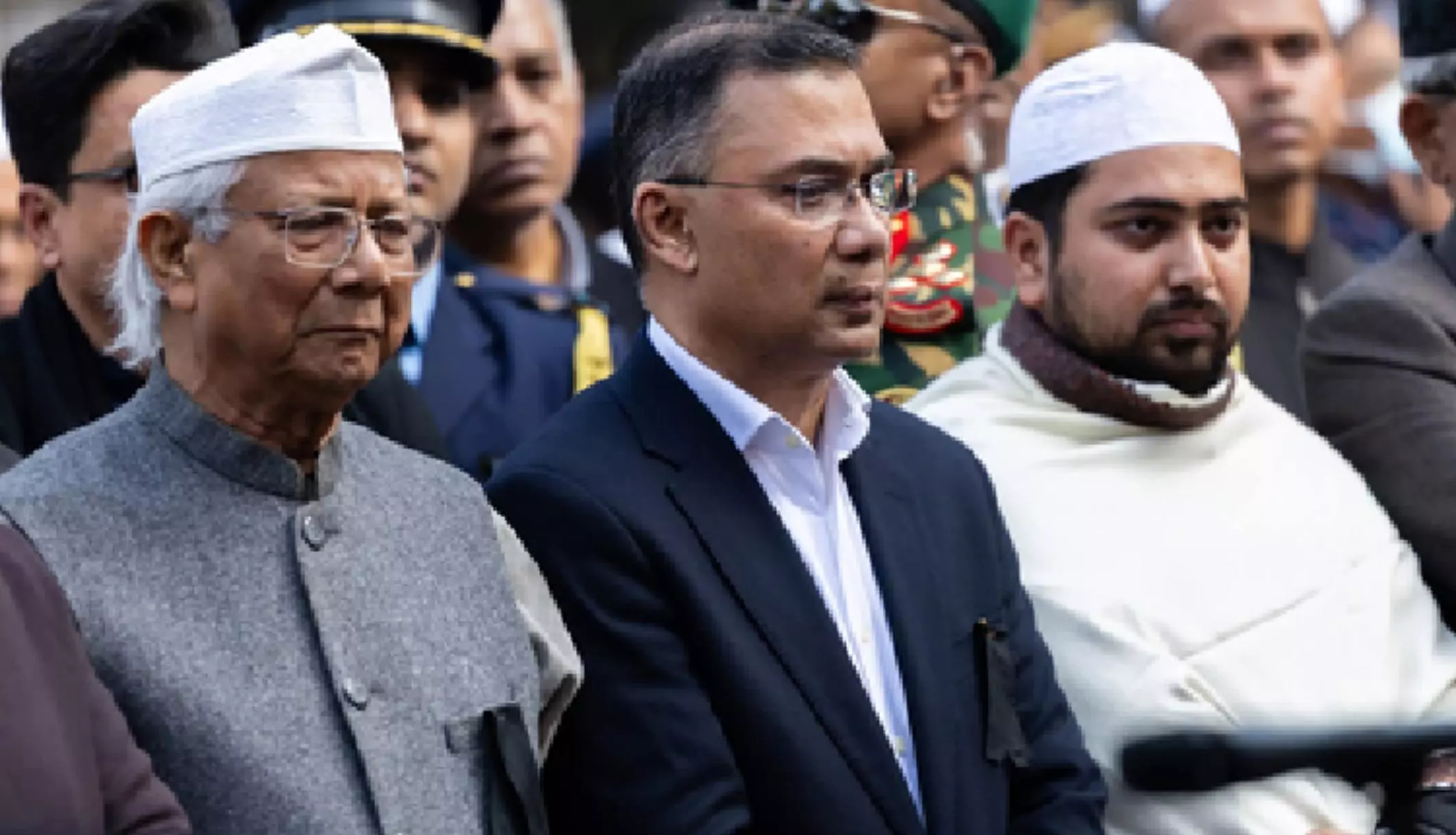

New Delhi: India’s security agencies are bracing for a challenging year amid a deteriorating situation in Bangladesh and renewed attempts by Pakistan to destabilise the country, officials said. Multiple Intelligence Bureau assessments have identified developments in Bangladesh and their spillover impact on India’s northeastern states as the most serious security concern this year.
Officials noted that elections scheduled this year in two highly unstable neighbouring countries, Myanmar and Bangladesh, could further aggravate regional security. Given the worsening internal conditions in both nations, the electoral processes are expected to be closely scrutinised internationally and could potentially trigger unrest, an official said.
India is particularly worried about the Bangladesh elections slated for February 12. With the Awami League barred from contesting, the electoral battle is primarily between the Bangladesh Nationalist Party (BNP) and the Jamaat-e-Islami, which is reportedly backed by the ISI, officials noted.
Under the regime led by Muhammad Yunus, incidents of violence against minorities have reportedly increased, with fresh cases being recorded daily. Officials said Yunus, under pressure from Jamaat-e-Islami, has adopted a noticeably friendly approach towards Pakistan, making several policy concessions, including opening sea routes and easing visa norms.

According to officials, the situation in Bangladesh poses a greater challenge than in Myanmar, where there is no significant anti-India sentiment. In contrast, Bangladesh has witnessed a growing narrative portraying India as the principal troublemaker. While Jamaat-e-Islami has long been known for its anti-India stance, the National Citizen Party (NCP) has also begun promoting similar rhetoric.
Hasnat Abdullah, a leader of the NCP, has openly threatened to provide shelter to anti-India forces. Officials said several political groups in Bangladesh believe that anti-India rhetoric could be a decisive factor in winning elections. This, they said, explains the Bangladesh establishment’s leniency towards terror outfits such as Harkat-ul-Jihadi Islamic (HuJI) and Jamaat-ul-Mujahideen Bangladesh (JMB).
Security agencies allege that these groups are being nurtured by the Yunus regime in coordination with the ISI, with the specific objective of destabilising India’s northeastern region. Yunus has also referred to the northeast as ‘landlocked’. At the same time, maps depicting a ‘Greater Bangladesh’ have surfaced on multiple occasions, developments officials described as part of a deliberate ISI strategy to foment unrest in the region.
Alongside provocative rhetoric, the ISI has reportedly intensified efforts to activate its sleeper modules in the northeastern states. Earlier this week, Assam Police busted a Bangladesh-linked terror module, arresting 11 persons. Officials said the module, activated by the ISI ahead of the elections, was tasked with executing terror strikes in the region. The group operated under the banner of Imam Mahmuder Kafila (IMK), which officials identified as a proxy of the JMB.
Intelligence Bureau officials warned that border areas would remain highly vulnerable in the run-up to elections in both Bangladesh and Myanmar. Any violence in these countries, they cautioned, could easily spill over into India’s northeastern states and West Bengal.
Officials further warned that Indian insurgent groups operating from Myanmar and ISI-backed elements in Bangladesh may attempt to infiltrate India during this sensitive period. An Intelligence Bureau official said the ISI is likely to use its proxies aggressively before formal diplomatic channels stabilise following the elections.
“There are clear indications of attempts to push lakhs of illegal immigrants into the northeastern states and West Bengal. Along with this, efforts will be made to smuggle in arms, ammunition, fake currency and narcotics,” the official said.
Another official said New Delhi would adopt a wait-and-watch approach until the electoral process concludes. Until then, securing the borders would remain the top priority to prevent the security situation within India from deteriorating, the official added.
With IANS inputs