












Audit flags 26% villages without water, Centre freezes Jal Jeevan Mission funds
text_fields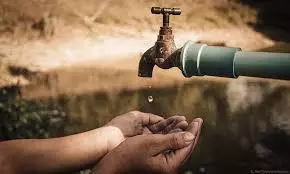

A nationwide audit of the Jal Jeevan Mission (JJM) has revealed major gaps in rural water supply, prompting the Centre to intensify monitoring and impose penalties on several states.
Ground checks conducted by 287 central officers showed that only 68% of villages covered under large water-supply schemes receive regular water.
Another 6% have irregular supply, while 26% of villages were found to be completely non-functional, raising fresh concerns about the mission’s sustainability.
The Jal Jeevan Mission, launched on August 15, 2019, aims to provide every rural household with a functional tap connection supplying 55 litres of safe drinking water per person each day. Although the original completion target was 2024, the deadline has been extended to 2028 to cover remaining households and ensure long-term upkeep.
Following the audit, Prime Minister Narendra Modi directed the Jal Shakti Ministry to take strict action against irregularities.
So far, 607 cases have been flagged across 20 states, leading to 579 departmental proceedings. Of these, 531 officials have been penalised and 12 suspended. Another 143 officials have been removed from inspection roles, and 236 contractors have been blacklisted, with 116 contracts terminated.
Nine FIRs have been filed, resulting in 19 arrests, including that of a former minister.
The Centre has imposed penalties of Rs 129.27 crore on seven states and recovered Rs 12.95 crore, freezing fresh funds until corrective action is completed.
Despite the mission’s scale, progress has been uneven.
In 2019, only 3.2 crore rural households had tap water, accounting for 16.71% of the total. Over the past five years, 12.5 crore households were added, raising coverage to 81.34%. However, the revelation that 26% of these connections are non-functional has cast doubt on the durability of the infrastructure and the quality of execution. The pace of new connections has also varied widely.
The mission saw its strongest year in 2020–21, with 3.2 crore new tap connections. In contrast, 2024–25 has recorded only 0.2 crore additions so far, marking a significant slowdown.
Seven states — Tamil Nadu, Tripura, Gujarat, Assam, Maharashtra, Karnataka, and Rajasthan — have been penalised for irregularities.
Gujarat reported the highest potential recoveries at Rs 120.65 crore, followed by Rajasthan at Rs 5.34 crore. In Uttar Pradesh, liquidated damages ranging from 0.1% to 10% have been imposed in 113 out of 119 cases, with the remaining cases seeing a reduction in contractors’ scope of work affecting between 43 and 212 villages.
The financial picture shows a similar imbalance.
While central allocations for JJM rose dramatically — from Rs 5,983 crore in 2019–20 to Rs 82,295 crore in 2023–24 — they dropped to Rs 26,164 crore in 2024–25. Utilisation has not kept pace, with states spending only 27% of allocated funds in 2021–22 and 62% in 2023–24, the highest so far.
In the current year, utilisation stands at just 3%. Combined state and central spending has touched Rs 62,905 crore, with Uttar Pradesh, Madhya Pradesh, and West Bengal leading expenditure. Puducherry and Telangana have reported no spending.
With a quarter of surveyed villages lacking a functional water supply and utilisation rates lagging sharply, the Jal Jeevan Mission faces a crucial test. The Centre’s decision to freeze funds marks a shift toward tighter accountability as the mission enters its extended phase, with the next three years likely to determine whether its ambitious vision can be realised.