



















US report shows China ran disinformation campaign against Rafale after Op Sindoor
text_fields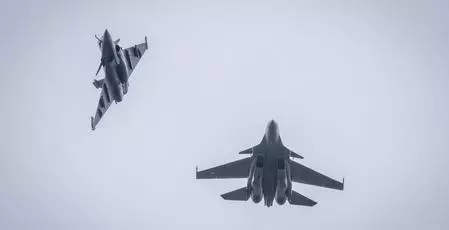

After the India–Pakistan border clashes in May that followed the Pahalgam terror attacks, China is said to have launched a disinformation effort aimed at undermining the sale of French Rafale jets and promoting its own J-35 fighters.
According to the latest report of the US-China Economic and Security Review Commission, which was presented to the US Congress on Wednesday, this campaign involved fake social media accounts circulating AI-generated images that falsely claimed to show “debris” from Rafales allegedly destroyed by Chinese weapon systems.
The commission’s annual report, which gives lawmakers a bipartisan framework for shaping US policy on China, includes 28 recommendations spanning technology, economic policy, trade, and national security. It also outlines how Beijing has used industrial strategies to gain early dominance in emerging technologies.
In the opening statement, Commission Chair Reva Price notes that President Xi Jinping has openly expressed a desire to make other nations more reliant on China, and suggests that Beijing is likely to sustain massive, distortionary policy support for strategic sectors, the Indian Express reported.
Regarding the May 7–10 confrontation between India and Pakistan, the report states that the incident drew global notice partly because Pakistan’s forces were dependent on Chinese military equipment and reportedly made use of Chinese intelligence inputs.
According to the report, the Indian Army had alleged that China provided Pakistan with real-time intelligence on Indian troop positions during the crisis and treated the confrontation as an opportunity to test its own military systems. Pakistan rejected this claim, while Beijing neither confirmed nor denied how deeply it was involved.
The document also points out that China widened its defence cooperation with Pakistan in 2025, even as its own tensions with India continued to grow. The commission cautioned that calling the episode a “proxy war” would give China too much agency in starting the conflict, but suggested that Beijing nevertheless used the situation to trial and showcase advanced weapons — something beneficial for both its border standoff with India and its ambitions in the global defence market.
The clash is described as the first time China’s newer systems — such as the HQ-9 air-defence platform, PL-15 air-to-air missiles and J-10 fighters — were deployed in active combat, effectively serving as a live test. The report adds that, after the fighting ended, China offered Pakistan a package of military hardware in June 2025, including 40 J-35 fifth-generation jets, KJ-500 aircraft, and ballistic-missile defence systems.
In the aftermath, Chinese embassies reportedly praised how well their equipment had performed in the India-Pakistan exchanges, using the narrative to push arms sales.
Citing French intelligence, the report says Beijing also ran a disinformation operation aimed at undermining the Rafale aircraft deal and promoting the J-35 instead, spreading AI-generated and video-game images of fabricated Rafale “wreckage.” As a result, Chinese diplomats are said to have persuaded Indonesia to pause a Rafale procurement already underway.