















Trump signs bill to end longest government shutdown in US history
text_fields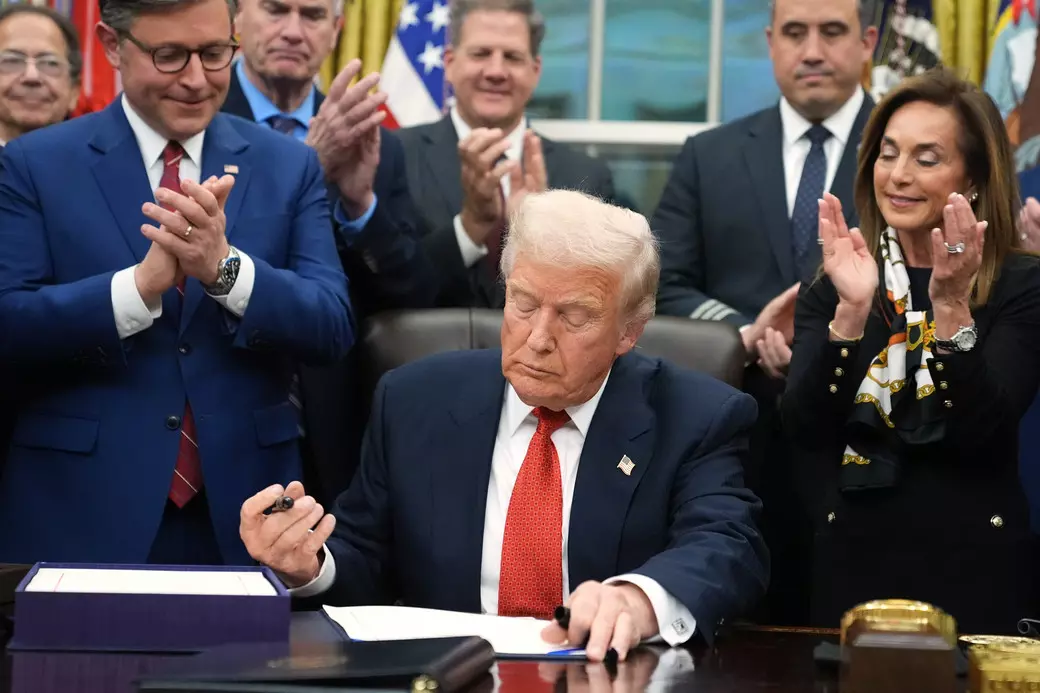

New York: The longest government shutdown in US history came to an end on Wednesday after President Donald Trump signed legislation passed by Congress to temporarily fund federal operations.
The 42-day standoff between Republicans and Democrats broke when the House of Representatives approved the bill previously passed by the Senate, ending the paralysing impasse. The measure provides temporary funding for most government operations until a full budget is passed.
The shutdown was a setback for Democrats, whose demands to extend subsidies under the Affordable Care Act (Obamacare) were not accepted. Speaking after signing the bill, Trump described it as “a great day,” hailing the Republicans’ success in pushing the legislation through Congress without yielding to Democratic demands.
The legislation had been stalled in the Senate, as the Republican majority lacked the 60 votes needed under procedural rules to move it forward. The deadlock was finally broken when eight Democrats crossed party lines to vote with Republicans, allowing the bill to reach a vote on Monday.
With the funding approved, federal operations—including air travel and food assistance programs for the needy—can resume, though it may take time for all services to become fully functional. All federal employees will receive back pay, including those who were furloughed during the shutdown. Essential workers such as air traffic controllers and airport security staff had continued working without pay.
Trump, referencing next year’s Congressional elections, warned Americans not to forget the shutdown when casting their votes. Democrats, however, expressed continued dissatisfaction. House Democratic leader Hakeem Jeffries said, “Either Republicans finally decide to extend the Affordable Care Act tax credits this year, or the American people will throw Republicans out of their jobs next year.”
Under the legislation, most federal operations will be funded through the end of the year, by which time a full budget must be approved. Certain programs, including services for retired military personnel and food assistance for an estimated 42 million Americans, will continue until September 2025.
House votes were largely along party lines, with 222 Republicans and six Democrats supporting the bill, while 209 Democrats and two Republicans opposed it.
While the shutdown may have contributed to the Republican Party’s election setbacks this month—a fact acknowledged by Trump—it also heavily impacted Democratic Party supporters who rely on federal employment and the poor who depend on government aid.
Some Democrats in the Senate, worn down by the ongoing shutdown, decided to end the stalemate. Representative Marie Gluesenkamp Perez, who broke ranks to vote with Republicans, reflected this sentiment, saying none of her constituents “would want to trade their dinner for an ambiguous [Washington] DC beltway ‘messaging victory’.” Her decision, along with others, has sparked criticism within the Democratic Party, with some blaming Senate leader Chuck Schumer for failing to prevent the defections.
Trump has also threatened to overhaul Obamacare, proposing to give subsidies directly to beneficiaries so they can choose their own insurance, arguing that current subsidies benefit insurance companies and inflate their stock prices.
The funding bill also contains a lesser-known provision making it illegal for federal prosecutors to search senators’ phone records without notice, and provides compensation of up to $500,000 for violations. This measure, retroactive to 2022, was prompted by investigations into the January 2021 Capitol protests, when prosecutors accessed phone records of several senators during the probe into the storming of Congress by Trump supporters.

With IANS inputs