









Irish supermarket staff’s protest fuels boycott Israel push in Europe
text_fields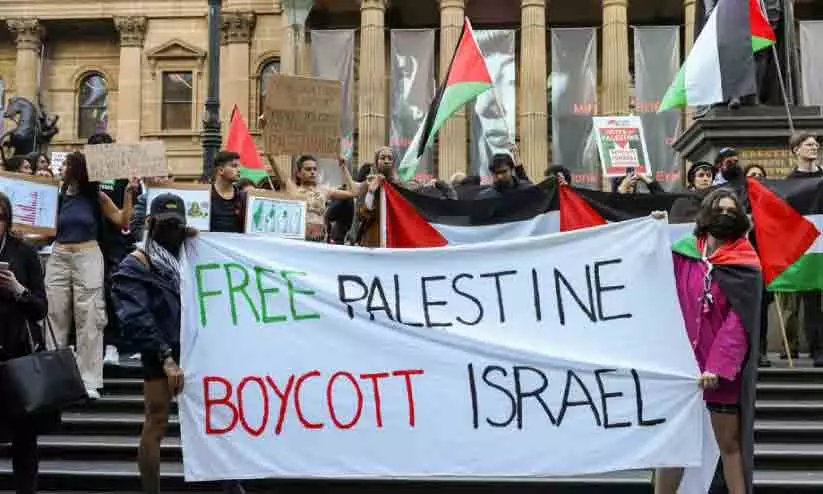

Europe: In the town of Newcastle in Northern Ireland’s County Down, a Tesco supermarket worker staged a personal protest against Israel’s war in Gaza after being deeply affected by images of devastation and reports that more than 60,000 Palestinians had been killed. Unable to reconcile his job with his conscience, he first warned customers that some produce was sourced from Israel and later refused to scan or sell Israeli-grown goods. Tesco suspended him, but following local protests and union backing, he was reinstated in January and reassigned to a role that does not involve handling Israeli products.
His case has become a flashpoint in a broader debate: can workers turn moral outrage into workplace action?
Across Europe, labour unions in Ireland, the UK and Norway have passed motions stating that employees should not be compelled to handle Israeli goods. Retail cooperatives such as Co-op UK and Italy’s Coop Alleanza 3.0 have removed certain Israeli products in protest.
Activists draw parallels with the 1984 Dunnes Stores strike in Ireland, when workers refused to handle South African goods in protest against apartheid, a campaign that helped push Ireland to ban trade with South Africa. Today, the Boycott, Divestment and Sanctions (BDS) movement, launched in 2005, calls for economic and cultural boycotts of Israel until it complies with international law.
Political pressure has led some European governments to act. Slovenia and Spain have introduced bans on imports from Israeli settlements in the occupied territories. However, Ireland’s long-delayed Occupied Territories Bill remains stalled despite parliamentary support. Meanwhile, pro-Israel groups, including B’nai B’rith International and the European Leadership Network (ELNET), have lobbied against BDS-related measures, arguing they risk legal conflicts and fuel anti-Semitism. The debate highlights growing tensions in Europe over activism, trade policy and the Israel-Palestine conflict.
Based on an Al Jazeera story