












China seeks to attract foreign tech workers, rolls out its version of H-1B visa
text_fields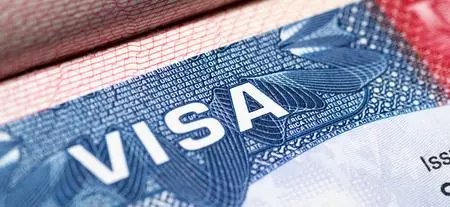

Hong Kong: Vaishnavi Srinivasagopalan, an experienced Indian IT professional with work experience in both India and the United States, has recently been exploring job opportunities in China. Her prospects have brightened with Beijing’s introduction of the new K-visa program aimed at attracting skilled professionals in science and technology.
Launched last month, the K-visa is part of China’s broader push to compete with the U.S. in attracting global talent and advancing high-end technology. The initiative also comes at a time when many skilled workers face uncertainty over the U.S. H-1B visa system, which has become more restrictive under President Donald Trump’s immigration policies.
Unlike China’s existing R-visa, which caters to foreign professionals, the K-visa has fewer restrictions, notably, applicants are not required to secure a job offer before applying.
The program’s launch coincides with stricter U.S. immigration policies under President Donald Trump, including steep hikes in H-1B visa fees — reportedly reaching $100,000 for new applicants — which has prompted many international students and professionals to explore alternatives, AP reported.
Bikash Kali Das, an Indian student pursuing a master’s degree in international relations at Sichuan University, noted that foreign students in the U.S. had once counted on obtaining H-1B visas, but now face growing uncertainty.
Observers say China is seizing the moment. The ruling Communist Party has made global technological dominance a core national objective, heavily investing in research and development in fields such as artificial intelligence, robotics, and semiconductors.
Barbara Kelemen, associate director for Asia at the security intelligence firm Dragonfly, commented that Beijing views the tightening of U.S. immigration policies as a strategic opening to attract more foreign talent and investment.
While China continues to grapple with high youth unemployment and stiff competition in the scientific and technical job markets, the leadership sees the K-visa as a way to address its talent gap. For decades, many of China’s brightest minds have stayed in the U.S. or Europe after completing their education abroad, contributing to a persistent brain drain.
Alfred Wu, an associate professor at the National University of Singapore, observed that many Chinese parents still prefer sending their children to Western universities, viewing them as offering superior education.
Nevertheless, the trend is slowly shifting, with increasing numbers of professionals, including Chinese-Americans, returning to China. This year, Intel chip architect Fei Su and Altair engineer Ming Zhou were among those who accepted teaching positions in the country.