















Amid mass atrocities in Sudan’s El Fasher, tens of thousands flee on foot
text_fields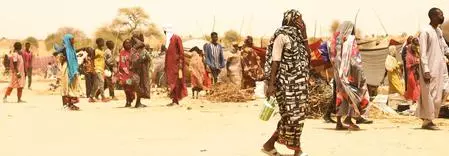

According to the International Organization for Migration (IOM), more than 36,000 people have fled Sudan’s El Fasher since Saturday amid surging violence, most of them walking to Tawila — a nearby town already hosting over 6.5 lakh displaced people. The agency’s Displacement Tracking Matrix reported that over 26,000 fled the city within just two days due to intensified fighting.
The UN Human Rights Office said it had received disturbing reports of summary executions, mass killings, rapes, attacks on aid workers, looting, abductions, and forced displacement since the paramilitary Rapid Support Forces (RSF) launched a major assault on the city last week. The RSF, which grew out of militias involved in the Darfur conflict two decades ago, has been waging a brutal war against the Sudanese Armed Forces (SAF) since April 2023.
With around 14 million people displaced out of a population of 51 million, Sudan is now facing the world’s worst humanitarian and displacement crisis, compounded by famine and outbreaks of cholera and other deadly diseases, Maktoob Media reported.
The RSF reportedly seized El Fasher, the capital of North Darfur, after a 500-day siege that led to the army’s withdrawal earlier this week. Reports from the ground describe atrocities inside the Saudi Maternity Hospital and nearby areas such as Dara Jawila and Al-Matar, where wounded patients were allegedly killed in makeshift medical facilities.
UNICEF warned that about 1.3 lakh children in El Fasher are at grave risk of serious rights violations, including abductions, killings, maiming, and sexual violence. The World Health Organization (WHO) estimated that roughly 460 patients and their attendants were killed in the hospital massacre.
Calling the allegations “extremely grave,” UN Human Rights Office spokesperson Seif Magango urged an independent and transparent investigation to ensure accountability. The office also reported receiving alarming accounts of sexual violence from humanitarian partners on the ground, while aid workers and local volunteers assisting civilians have themselves come under attack in the continuing violence.