


Egypt-Argentina match marred by refereeing favouring Argentina, Argentine fans abusing Egyptian supporters
text_fields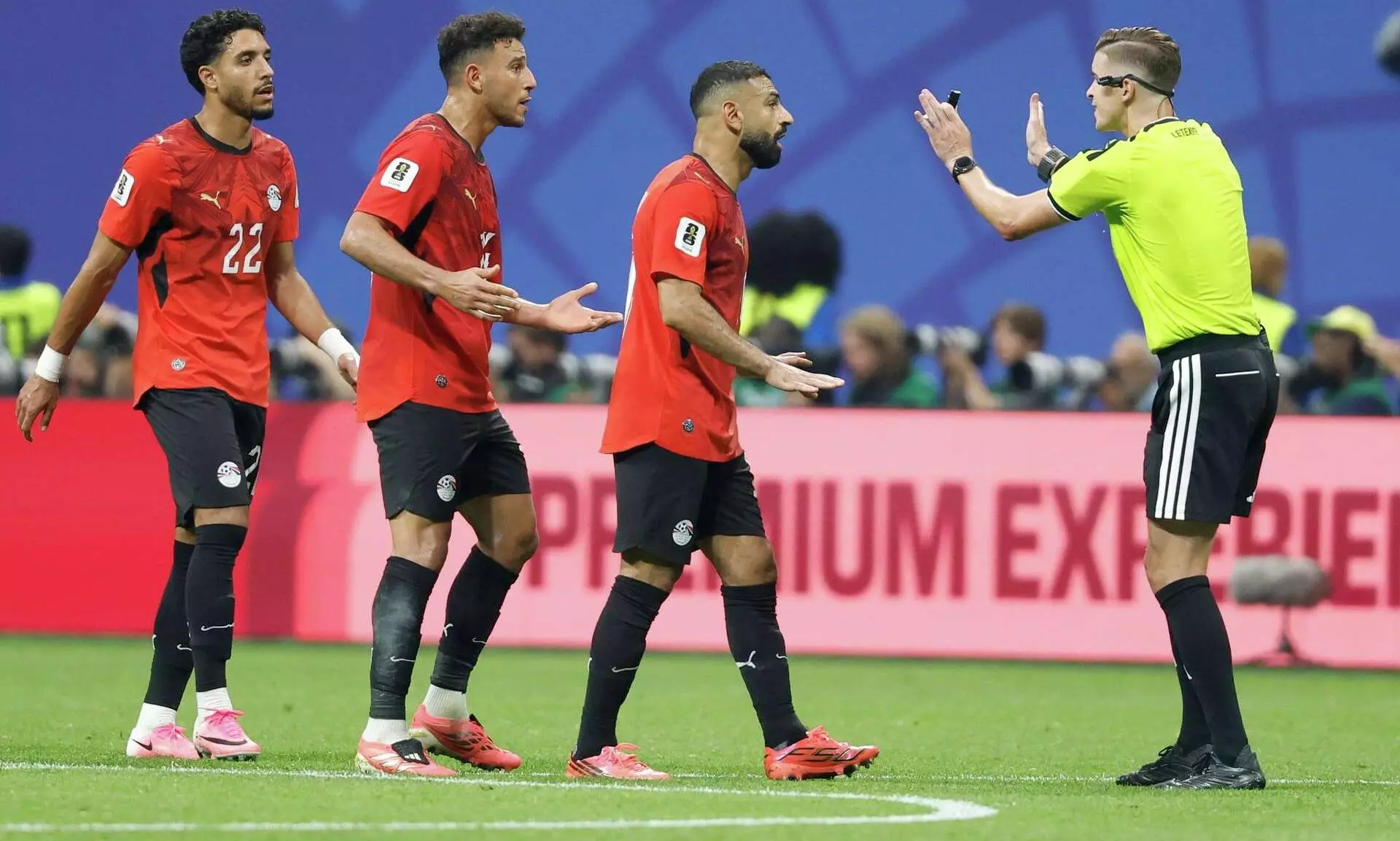

The World Cup round-of-16 football match between Egypt and Argentina has been engulfed in controversy amid allegations of biased refereeing that appeared to favour the defending champions, claims that Egyptian supporters were subjected to racial abuse inside the stadium, and criticism after Egypt coach Hossam Hassan's repeated anti-racism crossed-arms gesture was allegedly ignored by the referee.
The controversy has been further heightened by Egypt's outspoken solidarity with Palestine and wider political questions arising from the close relationship between the administrations of United States President Donald Trump and Argentine President Javier Milei.
The controversy erupted after Egypt, having established what appeared to be a commanding advantage, saw their second goal ruled out following a VAR review initiated only after play had progressed and the ball had found the net. The unusually delayed intervention left players, coaches and supporters questioning why the alleged infringement had not been identified immediately by the match officials.
Sports business analyst Simon Chadwick described the sequence of events as "distinctly unusual", observing that a similar challenge committed later by an Argentine player escaped comparable scrutiny.
While acknowledging that inconsistency in refereeing is not uncommon in football, he remarked that the circumstances surrounding the decision had inevitably fuelled more serious allegations regarding the conduct of the officials.
The disputed encounter followed another episode that had already placed FIFA under scrutiny. Earlier in the tournament, President Trump publicly disclosed that he had requested FIFA to reconsider the one-match suspension imposed upon US striker Folarin Balogun following a red card.
FIFA subsequently overturned the suspension, allowing Balogun to participate against Belgium, although the US nevertheless suffered a comprehensive 4-1 defeat. Chadwick noted that, if political influence over the tournament had become a subject of discussion, it was equally relevant that Argentine President Javier Milei enjoys an exceptionally close relationship with President Trump, who has frequently described him as his favourite world leader.
Egyptian manager Hossam Hassan emerged as one of the most outspoken critics of the officiating. Insisting that his side had been "treated unfairly", he maintained that Egypt had also been denied a legitimate penalty before Argentina scored the decisive goal. "We were better in everything except the result," Hassan lamented after the final whistle.
Further controversy surrounded Hassan's repeated use of FIFA's officially recognised anti-racism crossed-arms gesture during the match. Under FIFA's own protocol, such a signal is intended to trigger a structured response that may include suspending play while allegations are investigated. Instead, Hassan was shown a yellow card, while the match continued uninterrupted.
The political backdrop has further complicated the affair. Hassan had dedicated Egypt's earlier victory over Australia to both Egyptians and Palestinians, waving the Palestinian flag on the pitch and declaring that his "heart and soul" remained with the people of Gaza. His public support for Palestine, delivered on American soil amid the US's steadfast support for Israel.
Social media footage circulating after the Argentina match appeared to show Egyptian supporters being subjected to racist abuse, with videos allegedly depicting missiles being thrown towards Egyptian fans while others waved Israeli flags. Separate footage also appeared to show security personnel conducting searches on Egyptian supporters while allowing Argentine fans to enter without similar checks.