

















NASA launches CANVAS CubeSat to study lightning’s impact on space weather
text_fields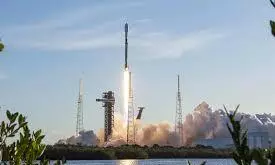

NASA has launched a small satellite mission aimed at understanding how lightning affects space weather and near-Earth environments.
The mission, known as CANVAS, short for Climatology of Anthropogenic and Natural VLF wave Activity in Space, was launched on April 7, 2026, aboard a Minotaur IV rocket from Vandenberg Space Force Base.
The 4U CubeSat is now in low Earth orbit, where it will track very-low-frequency radio waves generated by lightning and ground-based transmitters.
CANVAS is designed to measure how these signals travel through the ionosphere and into the magnetosphere, regions that play a key role in shaping space weather. The satellite carries two instruments, a three-axis magnetometer and a two-axis electric field sensor, which together capture the magnetic and electric components of the waves and determine their power and direction.
By comparing its observations with ground-based lightning data, the mission aims to build a global picture of how these radio waves propagate through space.
Scientists say the findings could improve understanding of how energy from lightning and human-made transmitters moves into space and interacts with charged particles. These interactions can influence the behaviour of electrons in the Van Allen radiation belts, which surround Earth and pose risks to satellites and astronauts.
The data collected over the mission’s planned one-year lifespan is expected to help refine space weather models, improve the protection of orbital equipment, and support astronaut safety during future missions.