


















NASA detects ammonia on Jupiter’s moon Europa
text_fields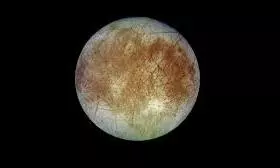

NASA scientists have identified ammonia on the surface of Jupiter’s icy moon Europa for the first time, strengthening the case that the moon could be habitable.
The discovery comes from a reanalysis of data collected during a 1997 flyby of Europa by NASA’s Galileo spacecraft.
Researchers found weak but clear spectral signatures of ammonia-bearing compounds concentrated along Europa’s dark cracks and ridges—features that criss-cross the moon’s frozen surface.
Ammonia is a nitrogen-rich compound, and nitrogen is a key building block for life as we know it. Its presence is especially significant because ammonia lowers the freezing point of water and is quickly destroyed by radiation at Europa’s surface. This suggests that the material must have been transported recently from below, likely from Europa’s vast subsurface saltwater ocean through cryovolcanic activity.
Europa is believed to contain an ocean beneath its ice shell that holds more than twice as much water as all of Earth’s oceans combined. The detection of ammonia adds to growing evidence that this hidden ocean may contain the chemical ingredients needed for life.
NASA’s upcoming Europa Clipper mission, scheduled to arrive at the moon in 2030, will study Europa’s surface and subsurface ocean in detail, searching for more clues about its chemistry and potential habitability.