


















‘Cosmic dust particle’ hits Earth’s atmosphere every 16 minutes: Isro
text_fields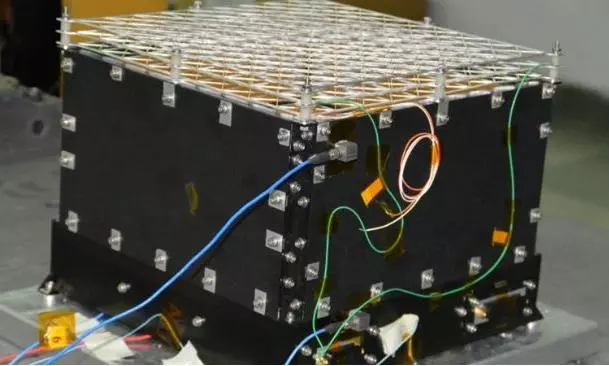

Bengaluru: The Indian Space Research Organisation (Isro) on Monday said that every 1,000 seconds an interplanetary dust particle enters Earth’s atmosphere, according to The Indian Express.
The instrument named Dust EXperiment (DEX), developed by Isro and created by the Physical Research Laboratory, helped detect ‘high-transient particles’ as part of Isro’s experiment to detect minute atmospheric particles staying around Earth.
The 3 kg instrument was launched into space onboard the XPoSat mission on January 1, 202 and detection was reported in the experimental test carried out in early 2024.
A statement released by Isro on Monday said: ‘The 140° wide-view detector of DEX successfully logged signals of orbital debris impact during January 1 – 9, 2024. While skimming the atmosphere on a 9.5° inclination, the detector registered several hits.’
Gaseous matter along with suspended solid particles, or dust from comets, meteors, asteroids, or other celestial objects primarily form Earth’s atmosphere.
Alongside supporting life on Earth, gaseous matter provides the air we breathe.
However the Interplanetary dust particles are found to be dangerous as they could interfere with the operations of spacecraft and satellites and affect quality of the space environment.
The dust influences space weather thus indirectly affecting the Earth, hence study of interplanetary dust has become important for protecting space assets.
DEX, which works on the hypervelocity principle, can capture ‘high-speed space dust impacts with only 4.5 Watts’.
It is reported that understanding interplanetary dust alongside collecting data linked to them could be valuable for India's Gaganyaan missions and future manned missions to space and the Moon.