











Will the Cockroach protest end through use of force?
text_fields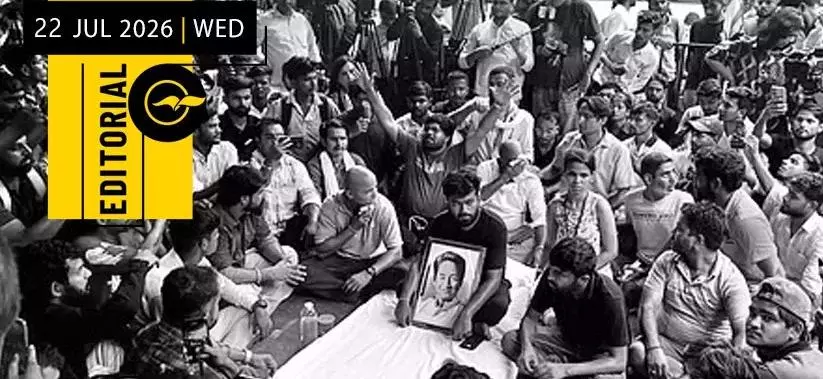

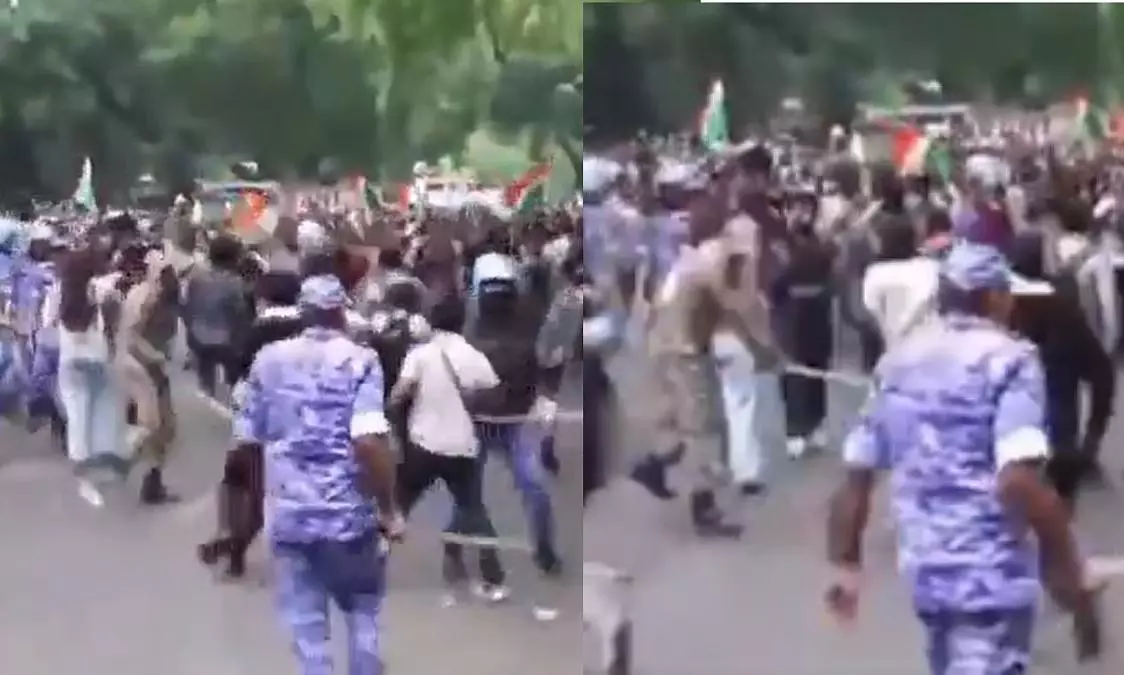
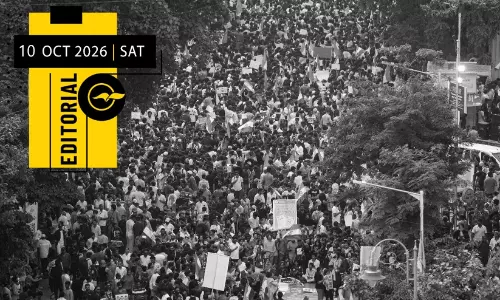
The Cockroach Janta Party’s (CJP) indefinite hunger strike being held for several days at Jantar Mantar in New Delhi, and the Parliament march demanding the resignation of Union Education Minister Dharmendra Pradhan over the cancellation of the NEET examination following the alleged question paper leak and other alleged failures, appeared to gain wider public support in recent days. The turnout of thousands of students and young people, and the inability of the central security forces to stop the march through the use of force, should serve as a wake-up call for the Narendra Modi government. However, the use of force and the detention by the Delhi Police of several opposition leaders, including Leader of the Opposition Rahul Gandhi, who had arrived in New Delhi to express solidarity with the protest, demonstrate that the Centre is learning nothing from the situation. Despite extensive security arrangements, including the deployment of thousands of personnel, the erection of barricades around Jantar Mantar, and restrictions on internet services, reports show that the protesters managed to reach the Parliament area on Monday through nearby Metro stations, leaving the security forces struggling to contain the march. Although the authorities did not resort to firing live ammunition or pellet guns, they used tear gas indiscriminately and carried out lathi charges against the demonstrators. Images showing police personnel using force against school students and teenage protesters were heart-rending. The protesters remained determined and showed no signs of backing down despite the police action. While official reports stated that around 100 police personnel were injured during hours of clashes, the Cockroach Janta Party (CJP) alleged that the violence was triggered by individuals who had infiltrated the protest with the intention of disrupting the movement.
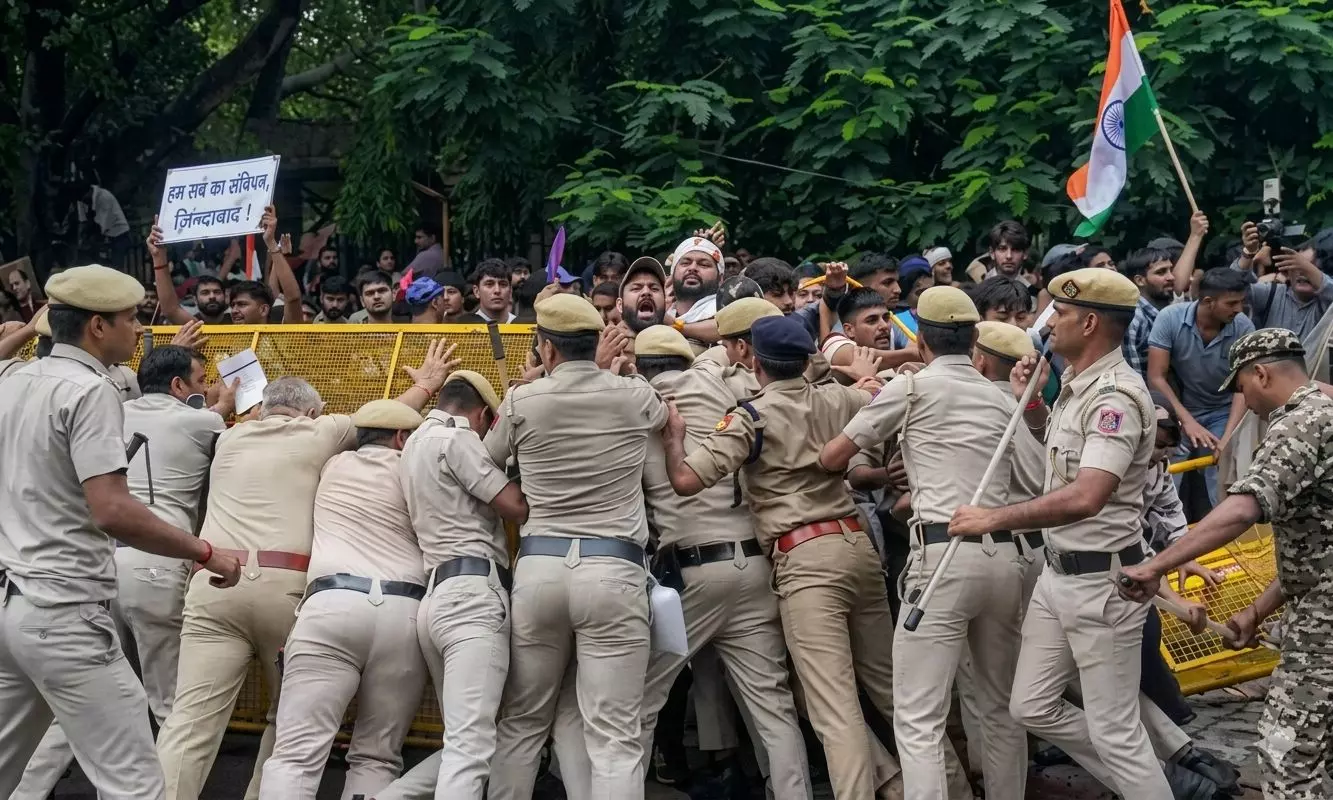
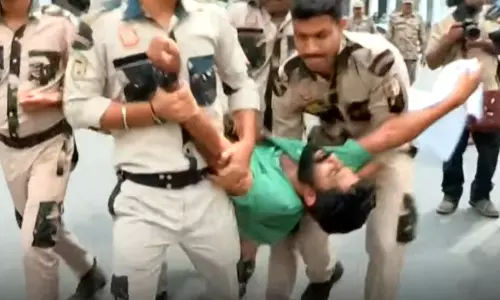
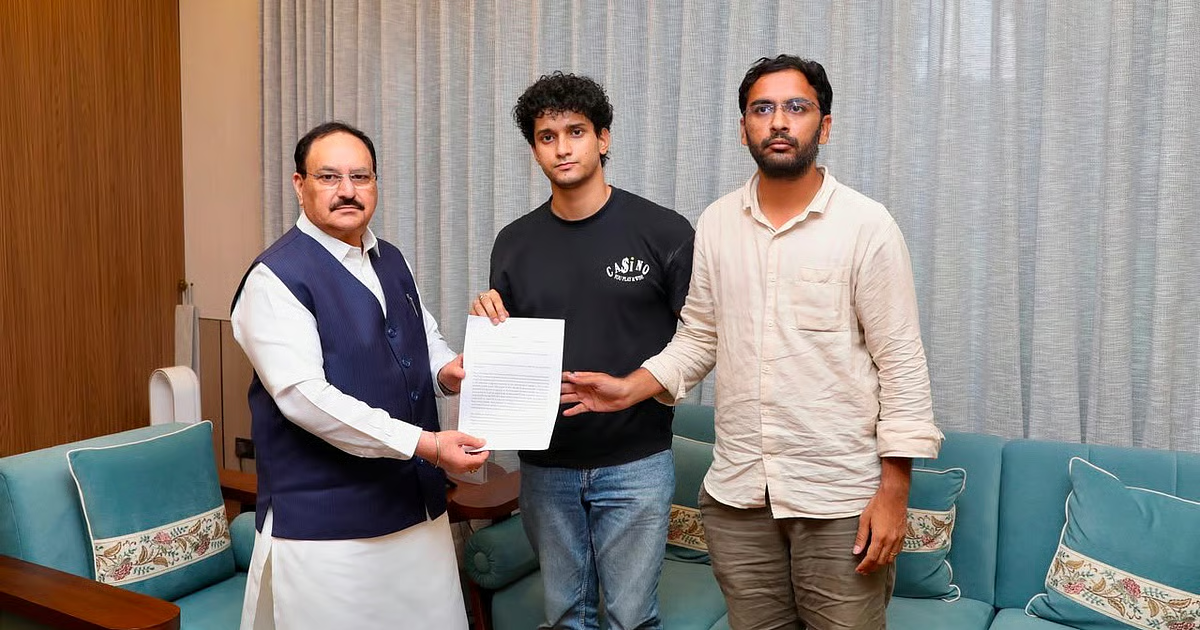
The protesters and their supporters accused the police of carrying out what they described as an unprecedented and inhumane crackdown in the national capital. They further alleged that, in addition to security personnel, hired goons also participated in the use of force against demonstrators. According to the protesters, a truckload of stones had been brought to the protest site as a deliberate provocation. This allegation cannot be dismissed outright given Delhi's experience during the protests against the Citizenship Amendment Act (CAA), where student demonstrations were caused to derail into violence. The police crackdown on the Parliament march came shortly after environmental activist Sonam Wangchuk, who had been observing an indefinite hunger strike in support of the CJP protest, was forcibly shifted to a hospital. Following the police action, Leader of the Opposition Rahul Gandhi, along with several prominent figures from the film and cultural sectors, as well as the Congress, Left parties and other political organisations, joined demonstrations in Delhi on Tuesday to express solidarity with the protesters. The central government also dispersed the protest led by Rahul Gandhi, held in solidarity with the student agitation outside the Prime Minister's residence, by forcibly detaining and removing the leaders. Union Home Minister J.P. Nadda held discussions with representatives of the Cockroach Janta Party (CJP), possibly recognising the risks associated with the government's usual approach to handling opposition protests. However, the protesters maintained that they would not withdraw their agitation unless Union Education Minister Dharmendra Pradhan resigned. In addition to demanding the minister's resignation, the CJP also called for the release of environmental and human rights activist Sonam Wangchuk and sought compensation of ₹1 crore each for the families of students who died by suicide in connection with the issue.
Union Home Minister Amit Shah and Education Minister Dharmendra Pradhan later held detailed discussions, but no breakthrough was achieved. The police action over the past two days suggested that the Narendra Modi government was unlikely to adopt a different approach toward the ongoing protests, as it had a history of responding to opposition movements with force rather than dialogue. The Bharatiya Janata Party (BJP), which rose to power after backing the nationwide anti-corruption movement led by Gandhian activist Anna Hazare against the Manmohan Singh government's alleged involvement in the 2G spectrum scam, has a moral responsibility to respond constructively to the Cockroach Janta Party's (CJP) ongoing protest, although expecting such a response from the Narendra Modi–Amit Shah leadership may be unrealistic. The government needs to take note of the recent student- and youth-led movements in neighbouring countries. Given that the hardline Hindutva movement is driven by overconfidence in its own strength and a contempt for dissenting voice, one can hope for a favourable outcome to the current crisis only with caution.