









Parliament is no king’s court
text_fields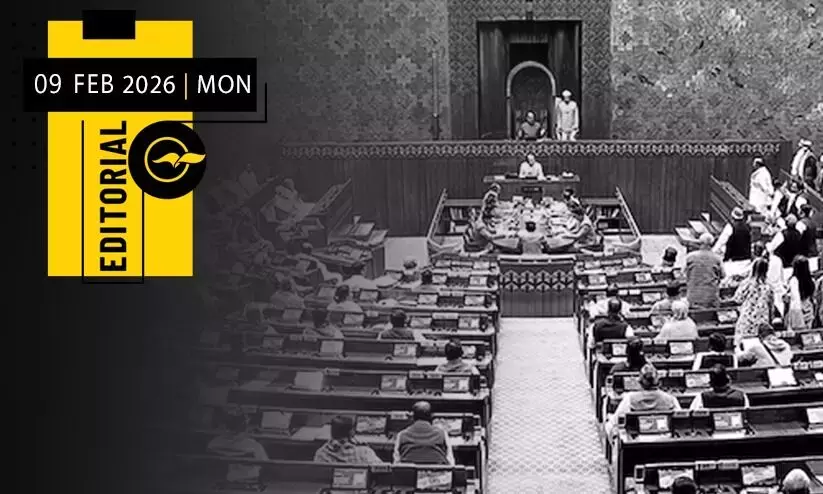

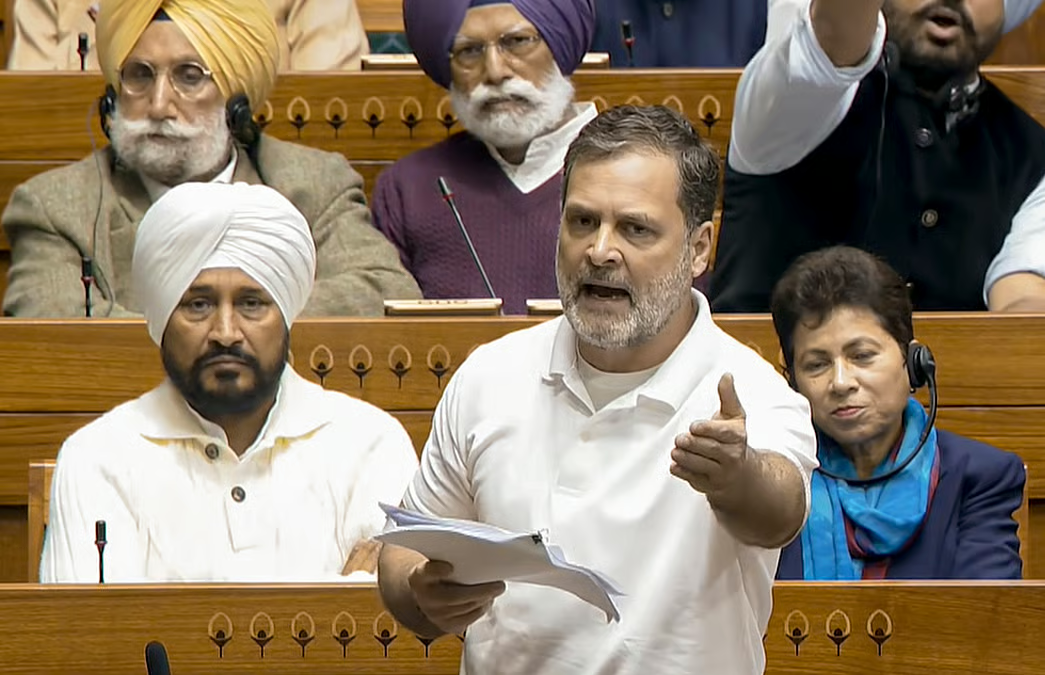
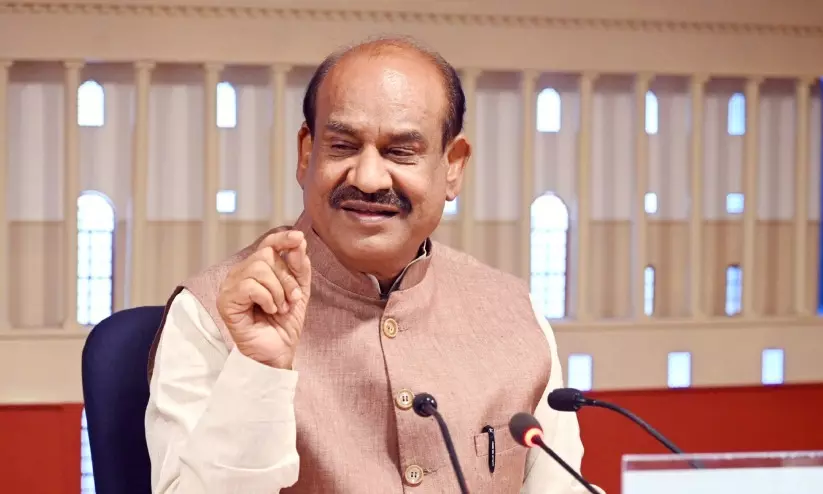
The record about Lok Sabha created by the Modi government is also a reflection of the state of Indian parliamentary democracy. The government created a rare history of ending the debate on the President's policy speech without the Prime Minister's reply. Although Speaker Om Birla said that the reason for passing the Motion of Thanks in the Lok Sabha, bypassing the Prime Minister's reply, was the opposition's aggressiveness, but to borrow his own words, the country was watching everything. Both the Lok Sabha and the Rajya Sabha witnessed a legitimate protest against the opposition leader not being allowed to speak. The government is imposing its will on Parliament by violating even the basic decorum of democracy. When the opposition protests against it, there are instances where even the Speaker, who is supposed to find a solution, behaves in a biased manner. In such cases, where the opposition is not allowed to express its opinion and highlight the government's shortcomings, it has no choice but to disrupt the proceedings of the House. It is unfortunate that the mutual animosity and the Speaker's inefficiency have increased to the extent that even the tradition of finding an amicable solution through consultations outside the House has been abandoned.
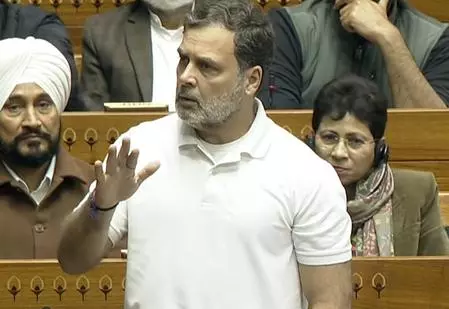
The issues that the opposition tried to raise in the budget session that began at the end of January are not trivial. They include the grievances raised by the former Army Chief about our political leadership and the India-US trade deal. If it is not to discuss such serious issues and protect the national interest, why should there be a Parliament? The experience even before the budget session was often the same. Events and figures show that the effectiveness of Parliament, the sacred forum of democratic debate and lawmaking, is decreasing day by day under the Modi government. In the past, the draft laws and policy positions prepared by the government were discussed in Parliament and, if necessary, after detailed examination and study by sub-committees, were made into laws with suitable amendments. That is parliamentary democracy. However, under the Modi regime, the people's assemblies have been transformed into kings’ courts where the government passes matters that have been decided in advance with narrow interests, with or without discussion. The opposition in the people's representative assemblies also raises the voice of the people. Real democracy works by taking the opposition into confidence. However, today, what rules is majority rule. Laws are passed, and policies are adopted unilaterally.
It was in this manner that Article 370 was removed. That is how the Farm Bill was baked in 2020. That is how budgets are approved. There are no serious discussions. Neither the ruling party nor the speakers of the houses can listen to disagreements. This unilateralism leads to Opposition ruckus. If the Leader of the Opposition, which is a constitutional position, cannot complete two sentences, then it is the Speaker and the ruling party who should also be embarrassed. The responsibility of running the House efficiently is primarily theirs. Instead, a Parliament that expels opposition members and sits them down shouting will not be a people's parliament. Two-thirds of the 2025 Monsoon Session was lost due to obstructions during the scheduled time. Is this what people are spending Rs 2.5 lakh per minute on? The Quint, an online media outlet, points out that Rs 3,300 crore was wasted due to adjournments in the House between 2014 and 2024. There is no discussion even on important issues, including the budget. 90 per cent of the proposals in the last Union Budget were passed without discussion. In the first decades of independent India, the Lok Sabha met for 120 days a year and held serious discussions. During 2019-24, the Lok Sabha met for only 55 days a year. This is still the practice. There are obstacles and bill-baking on the days of its assembly, and substantive discussions aimed at the welfare of the people are very rare. The main problem is that neither the ruling party nor the speakers of the houses are ready to listen to the opposition. This is a challenge to democracy.