













Electoral process under cloud of mistrust
text_fields

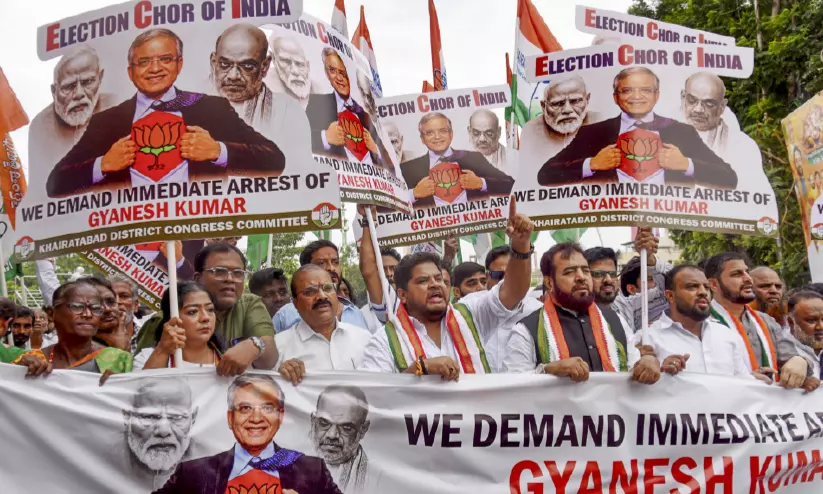
In March 2023, a Constitution Bench led by Justice K.M. Joseph delivered a landmark verdict on a Public Interest Litigation (PIL) that challenged the Central Government's absolute control over the appointment of Election Commissioners and called for an independent mechanism. Emphasizing that free and fair elections form the bedrock of democracy, the Bench ordered the enactment of new legislation to ensure that the appointment process for the Chief Election Commissioner and Election Commissioners is transparent and independent. The order further stipulated that, pending such legislation, the appointment would be made by a committee comprising the Prime Minister, the Leader of the Opposition, and the Chief Justice of India. However, totally disregarding the essence of this verdict and reducing the opposition to a mere spectator, the Modi government unilaterally passed a law in Parliament in December 2023—on the back of its numerical strength—to exclude the Chief Justice from this selection committee. Subsequent to this, in January 2024, Union Home Minister Amit Shah was nominated as a member of the selection committee. The first Chief Election Commissioner appointed by that committee is Gyanesh Kumar. And what the Indian Express newspaper exposed the other day is the ugly reality of the vote-rigging he orchestrated for his political masters and the anti-democratic practices that took place within the Commission.
A petition challenging this anti-democratic law had been admitted by the Supreme Court in 2024. It may be a coincidence that the verdict on that petition came at this particular juncture. The judgment delivered by Justice Dipankar Datta—which subjects the government's arguments to scathing scrutiny—exposes the hollowness of that law. It reveals how the Election Commission of India—an apex institution—has itself destroyed its own credibility. It is not enough for the Commission to function independently; the public must also have faith in its autonomy and transparency. What currently looms over the electoral process is not merely a shadow of doubt, but the darkness of deep mistrust. Unfortunately, since a member of the bench, Justice Satish Chandra Sharma disagreed with Justice Datta’s verdict and agreed with the Central Government's arguments, the case has once again brought it to a constitutional crisis and an indefinite delay in resolving the issue. It was this same Justice Satish Chandra Sharma who stayed the fine imposed by the Allahabad High Court on Medha Roopam—a District Magistrate and the daughter of Gyanesh Kumar—regarding an erroneous order she had issued. These events demonstrate that democracy faces its greatest challenge from its own guardians. The country is currently witnessing authoritarian tendencies that are subjecting constitutional institutions to internal deterioration, one by one.
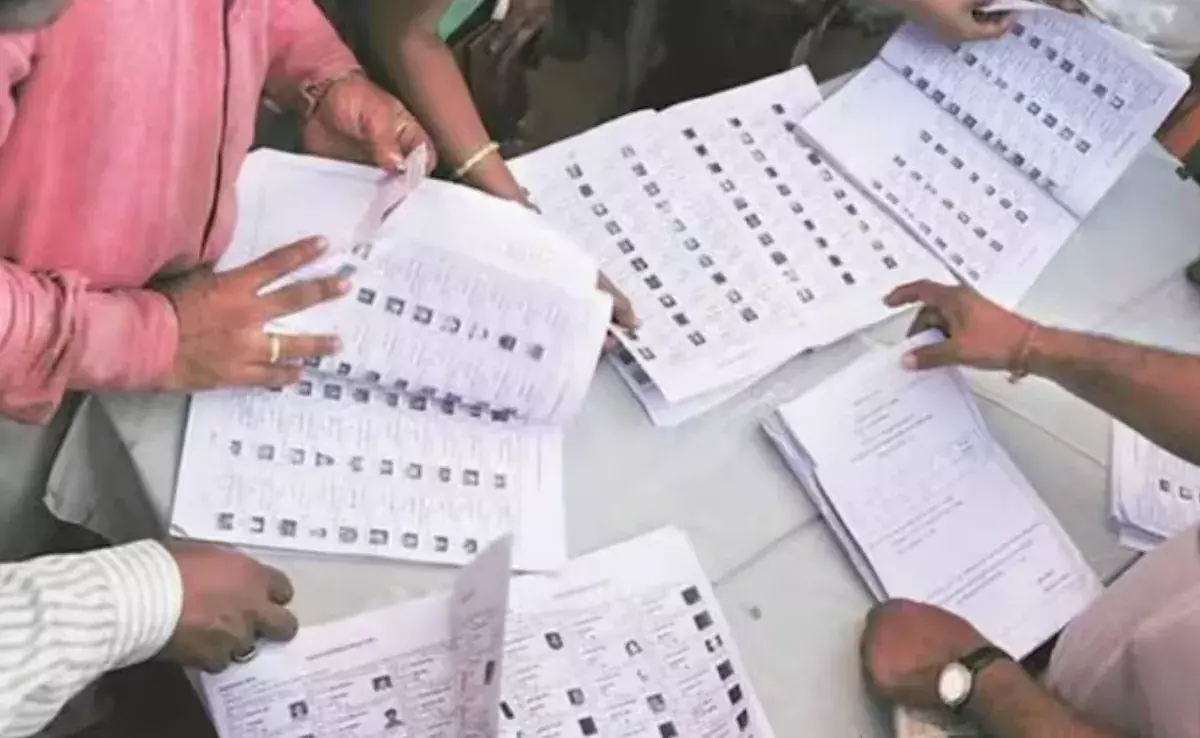
The allegations raised by Commissioners Sukhbir Singh Sandhu and Vivek Joshi against Gyanesh Kumar validate the claims made by opposition leaders—including Rahul Gandhi—regarding the 'vote theft' and the denial of voting rights through the SIR process. The 14 notes of dissent the two Commissioners raised over a ten-month period serve as a warning that the institutions safeguarding democracy are totally collapsing. It is a serious lapse that their criticisms, specifically regarding unlawful changes to Form 6 and the unilateral centralization of the database used to add or remove voters, were ignored. This results in the denial of voting rights to 138 million citizens. It also lends credence to allegations that election results in Bengal, Maharashtra, and Bihar were subverted. Furthermore, even the outcome of the last Lok Sabha election has come under greater suspicion. The country's democratic future hinges on how other constitutional bodies, political parties, the media, civil society movements, and the public confront and overcome this grave crisis—a situation marked by the abuse of power for self-interest in flagrant disregard of constitutional principles.