














Denying justice citing law
text_fields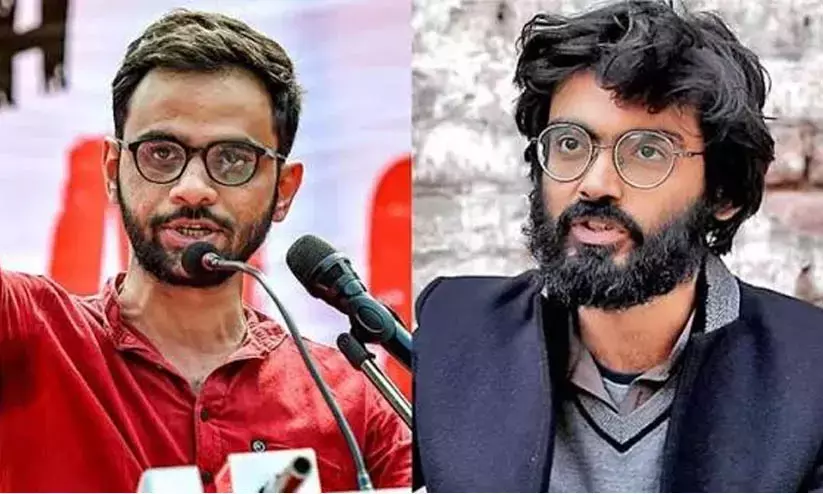

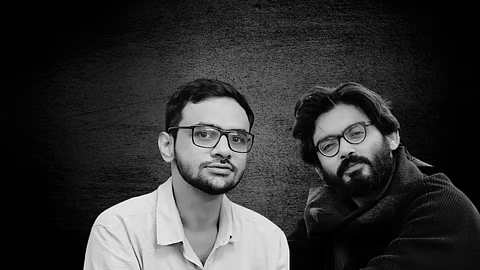
The court has once again denied bail to two student leaders who have been in pre-trial detention for almost six years. A Delhi court denied bail to Umar Khalid and Sharjeel Imam in the ‘Delhi riots conspiracy’ case not because there was any lack of clarity that denying bail to them would be unfair; rather, it said that bail could not be granted in light of an earlier order of the Supreme Court. Judges including the Supreme Court have been repeatedly saying that ‘bail is the law, not jail’; a two-judge bench of the Supreme Court itself pointed out that indefinite detention is not right even under the UAPA; a larger bench comprising the Chief Justice should consider the bail issue referred due to its seriousness and give a decision; the Supreme Court, which should have resolved the bail issue as soon as possible before the trial dragged on, has not resolved it till date. Meanwhile, we have also seen the court itself impose new conditions on bail. The Supreme Court last time said that no bail application will be considered until a year has passed since the bail application was rejected or the witness examination has been completed. It is difficult to understand the rationale of saying that bail is the law and then placing new obstacles on it. This is denying the right to personal liberty and a fair trial under Article 21 of the Constitution. In the ‘riot conspiracy case’, the trial is being dragged on indefinitely.

Only after the trial can it be decided whether those in prison are guilty or not. So, because of the delay in the judicial process, two young men who may have been proven innocent are being kept in prison for a long time. This may be the law, but it is not justice. Law emanates from power. It is the judiciary that must ensure that it is fair. The student leaders were protesting against the Modi government's controversial Citizenship Amendment Act. After Hindutva organisations entered the scene against that protest, riots broke out in North-East Delhi. As a result, the Delhi Police registered a UAPA case and imprisoned the protesters. Umar Khalid and others have been denied bail because they are accused in a UAPA case. The slapping of the UAPA against a popular protest was a political decision to suppress dissent. At the same time, the UAPA law sets limits for the courts in terms of bail. This means that the imposition of the UAPA, by a biased decision of either the political leadership or the police, results in an indefinite prison sentence.
That is, the executive (by imposing the UAPA section) begins punishing those who disagree even before the judiciary begins the trial to determine the culprits. The court has not even begun to consider whether those who have served six years in prison in the Delhi ‘riot conspiracy’ case are actually culprits. The “benefit” of the UAPA section, which is imposed at the discretion of the police, is that it effectively gives the executive the power to determine and punish the culprits. This makes a mockery of the rule of law and the administration of justice. If those who have been in prison for years are finally found innocent, the government or the judiciary will not be able to correct the mistake they have made. There are people who have been acquitted after spending more than two decades in jail under the UAPA. This has happened many times. Yet we prefer to place the politicised law above justice. The accused cannot be blamed for the delay in the trial. The ruling establishment is interested in power, not justice. It is the courts that must ensure that justice is done. If the courts themselves feel legally constrained in resolving the injustice of not granting bail to under-trial prisoners for years, that is also a confession: a confession that the citizens of free India are destined to be victims of the excessive power of the government and the slow pace of the judiciary.