









When Umar Khalid, Sharjeel Imam seek bail once again
text_fields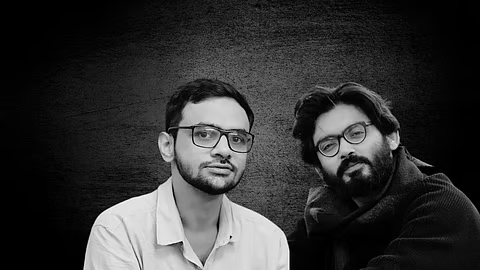

Umar Khalid and Sharjeel Imam, who are in jail after being accused in connection with the 2020 Delhi riots, applied for bail last week before Additional Sessions Judge Sumedh Saini at the Delhi Karkardooma Court. Both student leaders had played an active role in the anti-CAA and anti-NRC protests held in Delhi and various parts of the country in 2020. They were named as accused in connection with the riots that took place in northeast Delhi, which were allegedly following certain external interventions aimed at diffusing the protests. Although the two accused had approached various courts several times seeking bail, both of them were denied bail. Now raising yet another question mark before the judicial system, they have once again filed a fresh bail petition before the Delhi court. The petition will be considered on July 4.
When the Supreme Court delivered a verdict in another case this January, it had stated that regardless of how serious the charges levelled may be, the citizens’ right to a speedy trial continues to remain intact. The axiomatic phenomenon where the legal process and the delay itself become a punishment has come into play here as well. Two days after the said remarks of the said court, another bench of the apex court itself, in a verdict delivered in the case, denied bail to Umar Khalid and Sharjeel Imam. Having already spent nearly six years in jail without a trial, this delay itself should have been a sufficient ground for granting them bail. During this period, Umar and Sharjeel had approached various courts several times seeking bail. However, even on occasions when the lack of substance in the allegations became evident, the courts stopped short of adopting a stance favourable to the accused. When the apex court granted bail to five other accused persons in the same case, bail was denied to these two on the ground that their roles were different.
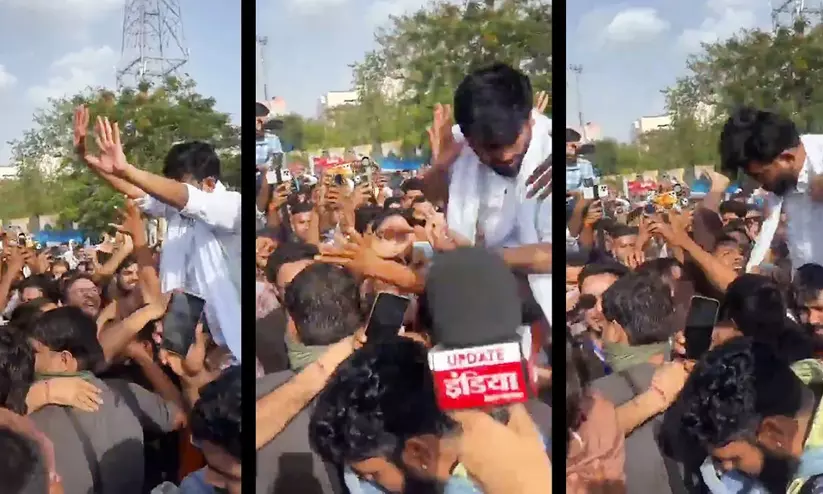
Umar Khalid is a person who was either cleared of charges such as stone-pelting during protest demonstrations or granted bail in those cases. However, he remains in custody over the allegation of a “larger conspiracy” in FIR 59/2020 registered under the Unlawful Activities (Prevention) Act (UAPA). In that case, during the bail hearings, the judge had observed that there were inconsistencies in the witness statements and that the offences themselves were not so serious. However, ultimately, the verdict arrived at the conclusion that the prima facie case would still stand.
Many observers have pointed out the methodology followed in UAPA cases: first, assume that there was a conspiracy. Then, present even ordinary political activities as evidence of that conspiracy. Thus, the usual forms of protest adopted by all political movements, including the Bharatiya Janata Party (BJP), become acts of terrorism when it comes to Umar Khalid. A speech delivered by Umar Khalid in Amravati on February 17, 2020, is cited as an example. Although the speech spoke about non-violent protests, countering hatred with love, and upholding the Constitution even at the face of bullets, the prosecution’s focus fell reportedly on a clip that was edited and exaggerated by the BJP IT Cell and amplified by Republic TV — the implications of which are evident. It is as a result of all this that, when the Supreme Court granted bail to five other accused persons in January this year, it treated these two differently. The court held that everyone’s role was not the same and that Umar Khalid and Sharjeel Imam were in the driving seat of the protest movement. The bench stated that although the indefinite delay violates the liberty guaranteed under Article 21, the bail application required a more careful examination.
In UAPA cases, judges rely on the bail-related provisions of the Act. In other words, for the time being, the court only has to examine whether the prosecution has established a prima facie case. A detailed examination is required only later. The court has also accepted a broad definition of terrorism, stating that it need not necessarily involve the use of explosives or weapons; even speeches and creating obstructions on the streets can have the potential to cause danger. In short, if the executive decides to shackle someone, then levelling such allegations — and taking its own time to prove them — is enough to keep the accused in prison for an indefinitely long period. This is an exact case in the phenomenon where the process itself becomes the punishment. In a nation of those who wish to see civil liberties being upheld, such provisions, which should never be allowed under any circumstances, must be resisted and defeated; otherwise, the democratic structure of the country cannot remain secure.