














Why some children's deaths shake the world and others don't
text_fields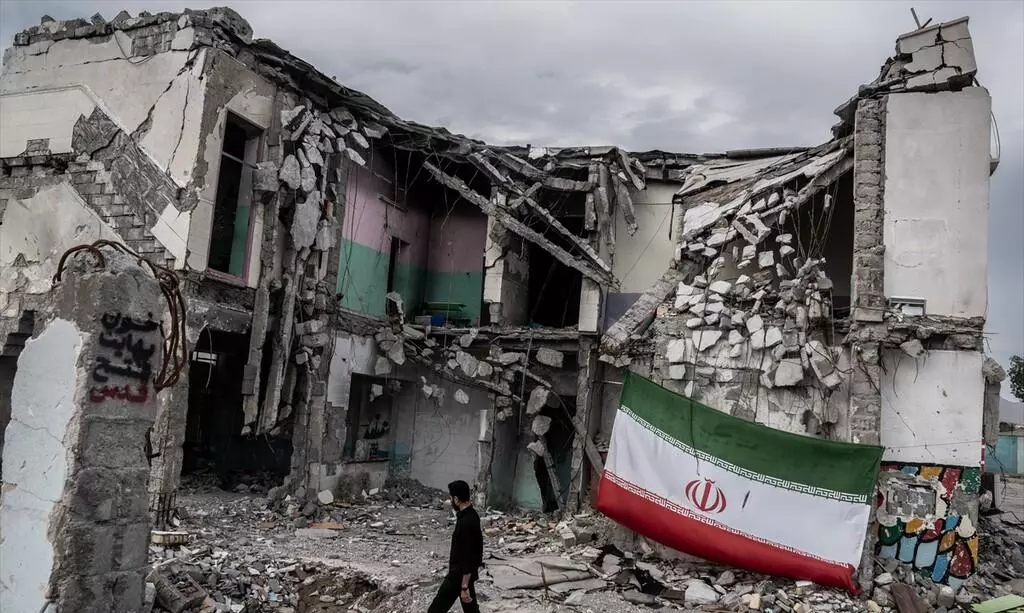

When a school is bombed and children are killed, the world usually stops. Images dominate front pages. Political leaders issue solemn statements. The victims’ names and photographs circulate widely as the public mourns lives cut tragically short.
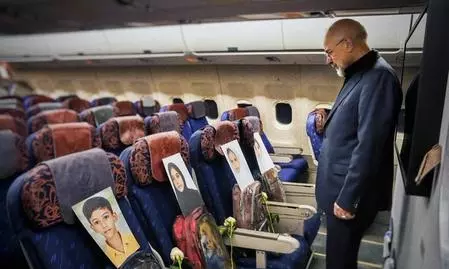
U.S. missiles struck a girls’ elementary school in the southern Iranian city of Minab during the opening phase of U.S.-Israeli strikes on Iran. According to reports cited by United Nations experts, about 180 children and five staff members were killed in the attack. Within days, at least three additional schools were reportedly struck, and UNICEF later reported that among the more than 1,300 people killed in the attacks across Iran, at least 181 were children.
The scale of the tragedy should have shocked the world.
Yet across much of the Western media landscape, the deaths of these Iranian schoolchildren passed with strikingly little sustained attention.
A media analysis examining the front pages of major U.S. newspapers in the days following the Minab school strike found that the attack did not appear prominently on many front pages, despite the scale of the casualties. Instead, it was often buried inside broader coverage of military developments and geopolitical escalation.
The pattern extends beyond the United States.
In Canada, coverage of the strike has also raised questions about framing and accountability. A CBC visual investigation suggested the school may have been damaged by a precision strike targeting a nearby military complex. But independent investigations tell a more complicated story.
Satellite imagery and geolocated video analysis conducted by Al Jazeera’s Digital Investigations Unit identified two distinct plumes of smoke rising simultaneously—one from the adjacent military compound and another from the school building itself, indicating the school was struck directly rather than hit by debris from a nearby attack.
The investigation also noted that while the site had once been associated with a military facility—something referenced in earlier reporting cited by The New York Times—structural changes made years earlier had physically separated the school from the adjacent base. Satellite imagery shows walls and internal divisions separating the two areas, suggesting the school had functioned independently for nearly a decade.
Such distinctions matter. Under international humanitarian law, schools are protected civilian sites, and attacks that strike them directly raise profound legal and moral questions.
When coverage frames a school bombing primarily through the lens of nearby military infrastructure, it risks obscuring the central fact: children were killed in their classrooms.
The broader issue, however, is not only about how one investigation was framed. It is about how easily the suffering of certain civilians can fade into the background of geopolitical narratives.
Some Canadian editorial boards appeared more focused on endorsing the strategic logic of the strikes than on the human cost. Commentaries in major newspapers framed the attacks largely through the lens of confronting Iran’s government or regional influence, while giving little attention to the children killed in the opening strikes.
The result is an uncomfortable question: would the deaths of more than 180 schoolchildren have received the same muted attention if they had occurred in Europe or North America?
History suggests otherwise.
In 1996, during an interview on the American television program “60 Minutes,” journalist Lesley Stahl confronted then-U.S. Ambassador to the United Nations Madeleine Albright with reports that sanctions imposed on Iraq had contributed to the deaths of half a million children.
Stahl asked whether the policy had been worth the cost.
“I think this is a very hard choice,” Albright replied. “But the price—we think the price is worth it.”
Albright later expressed regret for the remark. Yet the moment remains powerful because it revealed something often left unsaid in foreign policy debates: civilian suffering can be framed as an acceptable cost.
Nearly three decades later, echoes of that same moral logic still surface in public discourse.
Following the strike on the Minab school, one U.S. commentator suggested during a televised debate that the girls killed in the attack might be “better off dead than alive in a burqa.” The remark provoked outrage, but it also illustrated how easily empathy can disappear when victims belong to societies portrayed as culturally alien or politically hostile.
Scholars call this dynamic “othering.” When entire populations are framed primarily through the lens of ideological conflict or cultural difference, their humanity becomes abstract. Civilian casualties become statistics rather than individuals with names, families and futures.
Media narratives play a powerful role in shaping these perceptions. When victims resemble “us,” their stories often dominate headlines and evoke global solidarity. When they are portrayed as distant or adversarial, their deaths are more likely to be filtered through the language of strategy and geopolitics.
The result is an unspoken hierarchy of grief.
Some children’s deaths become global tragedies. Others barely make news.
This disparity matters because international humanitarian law is built on a simple premise: civilian lives have equal value. The rules protecting schools, hospitals and children in war only function if they are applied universally.
The United States, Canada and Europe have long positioned themselves as defenders of international law and the protection of civilians. Those principles require consistency. If outrage depends on nationality or political alignment, the moral framework intended to limit the brutality of war begins to erode.
The bombing of a school filled with children should provoke the same moral outrage wherever it occurs.
If it does not, we should ask why.
Until every child’s life is valued equally—whether in Sandy Hook, Toronto, Kyiv, Gaza or Minab—the promise that civilians deserve equal protection from the horrors of violence will remain painfully incomplete.
(Courtesy: Washington Report on Middle East Affairs)
[Faisal Kutty, J.D., LL.M. is a lawyer, law professor and regular contributor to The Toronto Star and Newsweek. He is affiliate faculty at the Rutgers University Center for Security, Race and Rights and Associate Professor of Law Emeritus at Valparaiso University. You can follow him on X @faisalkutty]