










When trust had no religion
text_fields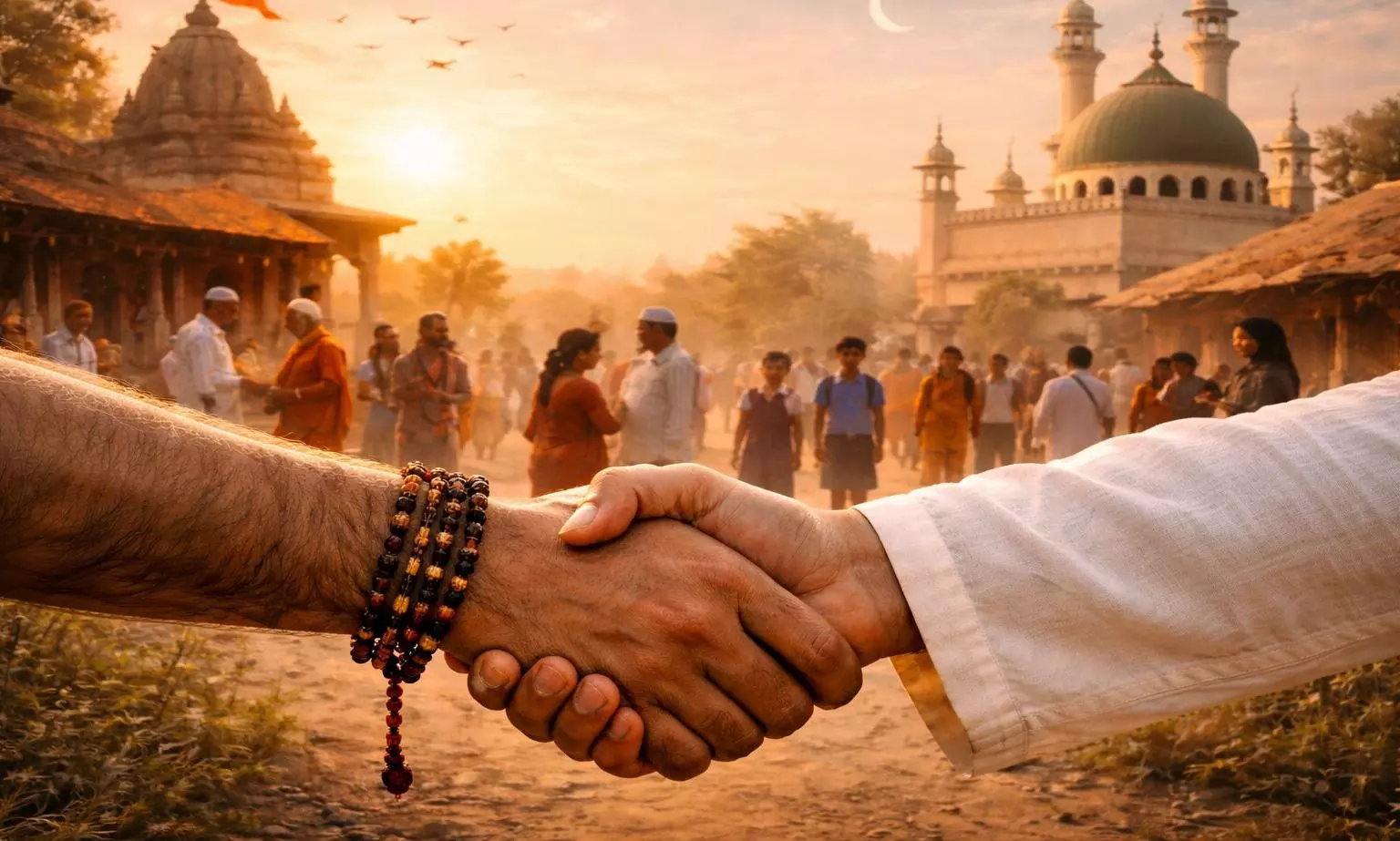
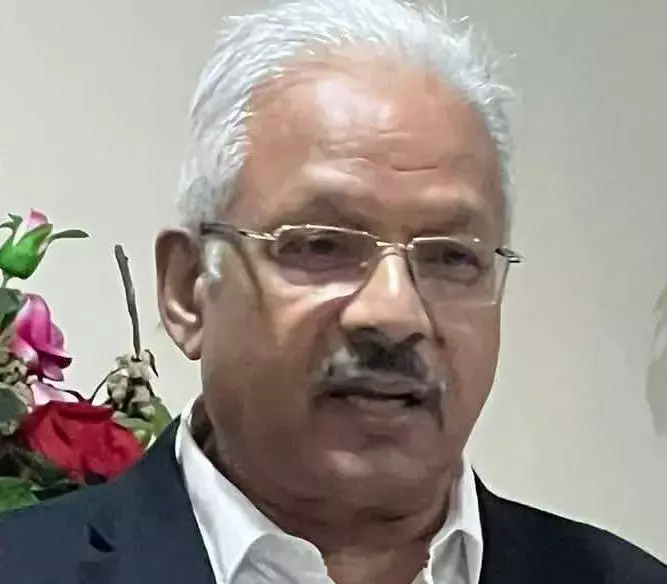
Some stories surprise us because they are unusual. Others surprise us because they remind us of how far we have fallen. Four years ago, a story about the Suffragan Metropolitan of the Mar Thoma Syrian Church, Joseph Mar Barnabas, made news.
The report said that the bishop had allowed his cook of nearly 25 years, Mohammed Kausal, to offer his Islamic prayers inside the chapel at the bishop’s residence. He also arranged an iftar so that Kausal could break his Ramadan fast in the traditional manner. The bishop never interfered with his cook’s faith, nor did he feel threatened by it. For his part, Kausal attended the morning prayers at the chapel with quiet dignity.
What should have been seen as an act of humanity became a matter of controversy. Some members of the church used harsh and even abusive language against the bishop. They accused him of turning a chapel into a mosque. Few bothered to ask why this arrangement began at all. It started during the Covid period, when mosques and churches were closed, and movement was restricted. The chapel became a space of trust and accommodation, not theological confusion.
I have known Kausal for as long as the bishop has known him, perhaps longer. His father worked for years in the Delhi Diocesan office in New Delhi. He was deeply religious, but never insecure. In those days, religion did not need to be worn like armour. People were judged by how they lived, not by what they believed.
This memory came back to me while reading “Cache: Inspiring Stories Preserved”, a new book by Rev Rency Thomas George. The book was released on the occasion of the Maramon Convention, one of the largest Christian gatherings in the world, which concludes on February 15. The author heads the Mar Thoma Church Museum at Thiruvalla, and that curatorial sensibility is visible throughout the book. These are stories preserved not just as history, but as moral reminders.
One such reminder comes from the life of Juhanon Mar Thoma Metropolitan, a figure who occupies a special place in the history of the church. He was a man of faith, but also of courage. During the Emergency, he wrote to Prime Minister Indira Gandhi saying that the suspension of democratic rights was unacceptable and must be withdrawn.
This letter angered her younger son, Sanjay Gandhi—described at the time as an extra-constitutional authority—so deeply that the Metropolitan could have been arrested. Only the diplomatic handling of the matter by Home Minister K. Karunakaran prevented that from happening.
But long before the Emergency, in 1937, Juhanon Metropolitan was the bishop of the Kollam diocese. Those were days without convoys or sirens. He travelled in a horse cart. The cart was driven by a young Muslim man named Ismael, who also took care of the horse and cooked for the bishop.
One day, while travelling along a forest road, a wild tusker suddenly charged at the cart. The horse panicked and nearly lost control. Ismael could have jumped off and saved himself. Instead, he held the reins, steadied the horse, and placed himself between the charging elephant and the bishop. After a tense moment, the elephant retreated. Disaster was narrowly averted.
Rev Rency writes: “A Christian bishop and a Muslim coachman travelled together, relied on one another, and faced danger side by side. In that moment of crisis, what mattered was not identity, but character.” The book records that this was not the only occasion when Ismael protected the bishop. For Juhanon Metropolitan or Barnabas Thirumeni, the faith of the person serving them was never a matter of concern. I wish the faithful who criticised Barnabas Thirumeni had known this story.
This spirit was not confined to church leaders. It existed in Indian homes as well. Rahul Bajaj, the founder of Bajaj Auto, was known not just for his business acumen but also for his values. He and his wife, Rupa Bajaj, had two sons. Rajiv Bajaj, now the Managing Director of Bajaj Auto, once shared a story from his childhood.
Rajiv and his younger brother had to travel from Mumbai to Pune. Their parents entrusted the journey to their family driver, Syed Hussain. Rajiv, seated in the front, urged Hussain to drive faster. Hussain did not respond. When Rajiv repeated the request, Hussain calmly said, “Son, you may take risks. But your father entrusted me with the responsibility of bringing you back safely. I cannot take any risk.”
Rajiv Bajaj shared this incident to underline a simple truth: his parents trusted their driver completely. His religion was irrelevant. Rajiv summed it up with one line that stays with you: “Trust had no religion back then.”
And then we come to the present.
Recently, I spoke to a driver in Delhi. He is a Muslim from Uttar Pradesh who once worked as a driver in Saudi Arabia. On returning to India, he bought a car and registered it with Rapido, an app-based taxi service. When I booked his car, he made an unusual request. He asked me not to cancel the ride. Usually, it is the drivers who cancel rides when they realise that a trip is not convenient.
I asked him why he felt the need to say that. His answer was painful in its simplicity. When a passenger books a ride, the driver’s name and vehicle number appear on the mobile phone screen. Seeing his Muslim name, some passengers cancel immediately. “For every cancellation, the company fines me Rs 10,” he said. “I earn very little. Every day I lose Rs 40 or Rs 50 only because of my name.”
This is not an exception. It is a sign of the times. Islamophobia is no longer whispered. It is spoken openly, sometimes proudly. When the Chief Minister of Assam can publicly urge people to pay “Miyas” less, prejudice moves from the street to the stage. Hate no longer feels ashamed.
At such a moment, these stories from the past acquire urgency. They remind us that there was a time when Muslims were trusted with lives, with children, and with responsibilities that mattered. I wish the Chief Minister knew that when Lal Krishna Advani set out on his Rath Yatra from Somnath to Ayodhya, and when that yatra was eventually stopped in Bihar, the man driving the rath was a Muslim—Salim Makkani.
Once, a Muslim stood firm before a charging elephant to save a Christian bishop. Once, a Muslim driver refused to speed because the safety of his employer’s children mattered more than obedience. Today, a Muslim driver pleads not to be judged by his name on a mobile screen.
We often say that something is broken in our society. The truth is harsher. Something has been deliberately unlearned. And the silence that greets these stories now suggests that many are no longer even sure why they should feel disturbed.