












Who controls free speech in America? Many - if it's on Palestine
text_fields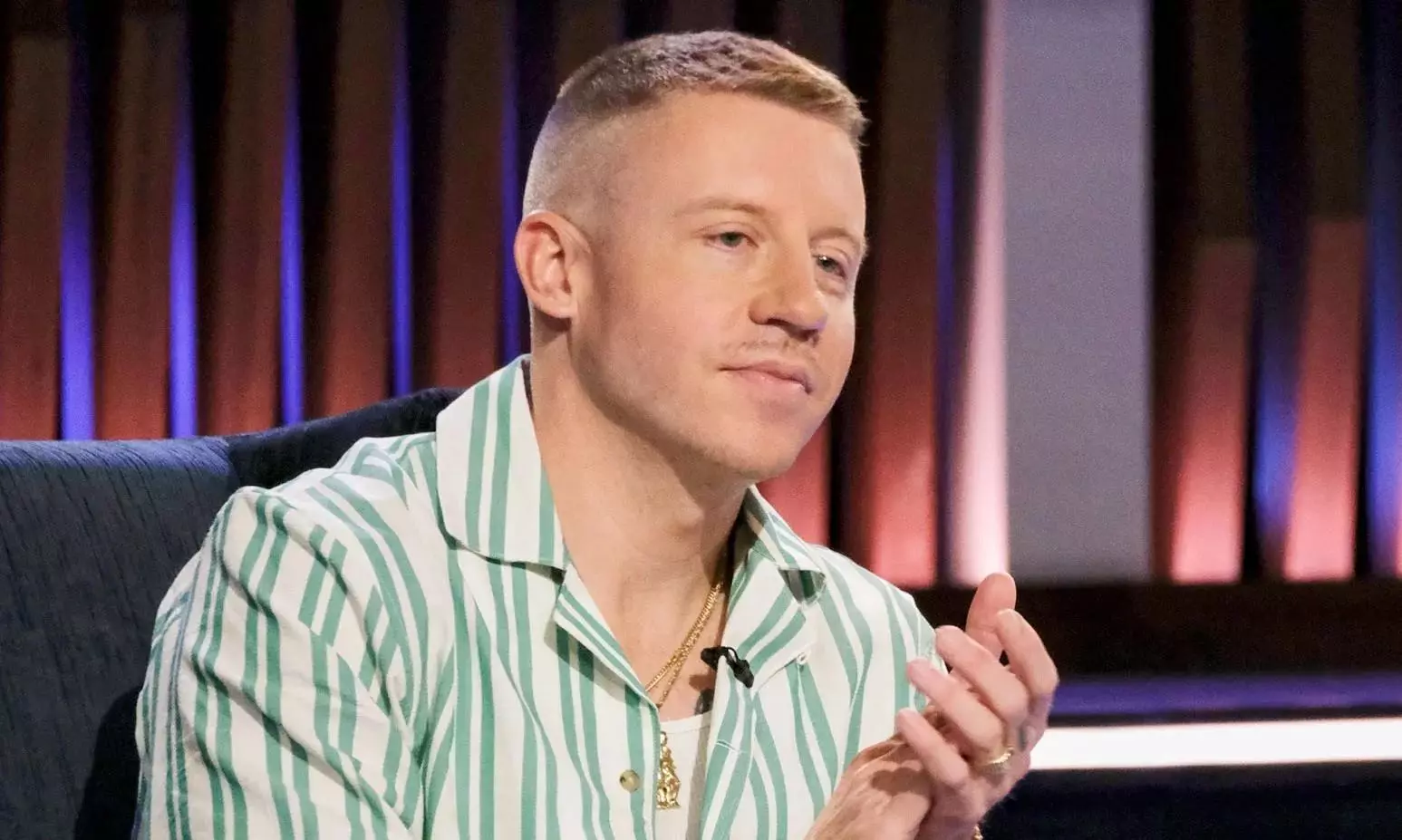
Macklemore (file photo)
Grammy-winning American rapper Macklemore has been dropped from the remaining U.S. dates he was scheduled to play on Ed Sheeran’s tour after speaking about Israel and Palestine.
At MetLife Stadium, Macklemore declared “Free Palestine”, condemned Israel’s conduct in Gaza and told Palestinians that they had not been forgotten. Tour promoter Messina Touring Group later said venues refused to host shows with him on the lineup.
Robert Kraft confirmed Macklemore, born Benjamin Hammond Haggerty, could not perform at his Gillette Stadium, while Sheeran says he tried unsuccessfully to resolve the dispute with Kraft and other venues.
Doesn’t this violate his constitutional right to free speech in America? No. The First Amendment restricts government, not private individuals. But that answers only the constitutional question. It doesn’t answer the democratic one.
Challenging prevailing ideas
Free expression matters because democracy depends on people being able to challenge prevailing ideas, criticize powerful institutions and advocate unpopular causes. If government cannot silence lawful political speech, but people with enough money and control over major platforms can exclude that speech or make it professionally or economically costly, should we really be satisfied that free speech is secure?
“Free speech for me, consequences for you” is too easy an answer. Of course speech can have consequences and private actors have rights of their own. But when people control access to jobs, universities, technology platforms, media, funding or some of America’s largest cultural stages, we should ask what that concentration of private power does to democratic debate. Think of the outsized influence of ultra-rich Americans like Elon Musk, (owner of X), and Jeff Bezos (owner of the Washington Post).
American law already recognizes in other contexts that concentrated or co-ordinated private economic power can become a matter of public concern. Why should we be less concerned when private power shapes democratic discourse?
Kraft’s position deserves to be taken seriously. He points not simply to “Free Palestine,” but to what he considers a history of antisemitic rhetoric and imagery. In 2014, Macklemore performed wearing a dark wig, beard and large prosthetic nose, prompting accusations that the costume invoked antisemitic stereotypes. He denied that intent but acknowledged how it could be perceived and apologized.
Antisemitism is real and dangerous. Advocacy for Palestinians doesn’t excuse it.
But look at what Macklemore actually said at MetLife. Addressing his “Jewish brothers and sisters,” he said criticism of Israel, apartheid and genocide was not criticism of them. His message, he said, was that all human beings should be treated with “dignity, respect and equality.”
None of that places Macklemore beyond criticism or requires agreement with him. But when speech like this contributes to making an artist unacceptable at major American venues, it is reasonable to ask where the boundary between antisemitism and criticism of Israel is being drawn — and who has the power to draw it.
That question has become harder to ignore. Artists Finneas, Aaron Rowe, Beoga and Lukas Graham have now withdrawn from Sheeran’s tour. The Danish band Lukas Graham captured the larger issue: “Money doesn’t give you the right to own the conversation.”
Legally, ownership can confer considerable control over a platform. Kraft doesn’t surrender his property, speech or associational rights because Macklemore wants to perform at his stadium.
But rights and power aren’t the same question.
One owner can decide who performs at his stadium. Other owners can do the same. A promoter can respond to those decisions. Each may be exercising a lawful private right. Collectively, however, those decisions can determine whether an artist reaches audiences in stadiums across the country.
Controlling access
The concern isn’t simply that Macklemore lost eight performances. It is the message such episodes can send: some lawful political positions may carry a price imposed not by government, but by those controlling access to economic and cultural opportunity.
That matters beyond Macklemore, Kraft or Palestine. A democratic society needs more than government restraint. It needs space for disagreement that isn’t effectively rationed according to wealth, ownership or institutional power.
Robert Kraft is not Congress. Gillette Stadium is not the government. Macklemore had no constitutional right to its stage.
But democracy requires us to ask a harder question: How free is political expression when a relatively small number of private actors, such as stadium owners, have enough economic power to determine which lawful views become costly to express?
The U.S. Constitution may not answer that question. Society still has to.
[Courtesy: The Toronto Star]
(Faisal Kutty is a Toronto-based lawyer and regular contributor to The Toronto Star. His articles also appear in Newsweek, Aljazeera, Zeteo, and Middle East Eye. You can follow him on X @faisalkutty)