

















Economic D-Day or D-Day of US-Iran war?
text_fields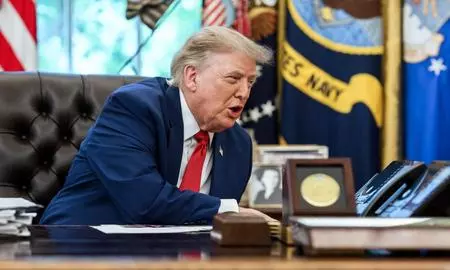

When all other options failed to bring Iran to heel, President Trump has now played his final card: economic warfare. In a recent lengthy social media post, he described his proposed economic measures as the most crushing operation ever taken against a country. He also warned countries and entities that assist Iran financially or commercially. Trump called for an immediate halt to oil smuggling, swap lines, cash transfers, exchange houses, ship registries, and front companies supporting Iran. He termed this move an “Economic D-Day.” The message is clear: the goal is to choke Iran’s economy and force the country to agree to a deal.
This latest statement from the US President highlights two key points. First, the US is tired of the war with Iran. More precisely, the White House has realized it is impossible to defeat Iran militarily due to geographical and political realities. It took the US 20 years to learn this lesson with the Taliban, in the process recognizing that a military defeat was inevitable. Now, it is rethinking its strategy: turning to financial warfare. This approach will likely be fatal for Iran, but the economic embargo's ripple effects will spill over to other countries.
Buoyed by the successful removal of Venezuelan President Nicolás Maduro, the US, with Israel's help, launched a military campaign against Iran last February. The goal was to topple the Iranian regime and install a puppet government. However, the 40-day operation failed to achieve any of its objectives, except for the assassination of key Iranian leaders, including the spiritual head, Ayatollah Khamenei.
A resilient Iran fought back, causing significant embarrassment to the US and Israel. US military installations across the Middle East were hit, some suffering irreparable damage. Iran even targeted Israel, breaking aerial barriers, disrupting air traffic, spiking oil prices, and terrifying oil-rich Gulf countries. Iranian retaliatory strikes not only damaged US bases but shattered the perceived reliability of US forces. This forced Arab countries to urge the US to seek a ceasefire, ending the 40-day conflict.
Despite the ceasefire, the US resumed strikes, citing violations. Meanwhile, Trump and his war team boasted that Iran was decimated—with its military, navy, and missile capabilities destroyed, and its political structure shattered. In reality, the US and Israel failed to dismantle Iran’s missile capabilities or its ability to fight. While they inflicted damage on Iran’s conventional forces, a total surrender remains a distant denouement.
Iran took a strategic step by closing the crucial Strait of Hormuz for the first time in history. This move shook the world economy and escalated tensions beyond control. The Strait of Hormuz is a vital waterway for global oil transportation, and Iran’s leverage over it is significant. Despite the US blockade of Iranian ports, Iran retains control over the Strait. Notably, no countries, not even US allies, have stepped forward to assist the US.
General Dan Caine, Chairman of the Joint Chiefs of Staff, admitted that air power alone cannot achieve their goals and it has reached its limit. Admiral Brad Cooper echoed this sentiment, advising a pause in bombing near the Strait of Hormuz. Additionally, the US ammunition stockpile is worryingly low. The overall situation has reached a tipping point.
Caught in the war’s web, Trump is now focusing on economic pressure—strangulating Iran’s economy through sanctions and embargoes. While the details are yet to be announced, it is clear the US is planning the toughest sanctions ever on entities doing business with Iran, restricting Iranian oil exports, targeting smuggling networks, shipping, financial transactions, and punishing countries that assist Iran commercially.
These measures will undoubtedly shake Iran’s already weakened economy, which has suffered under decades of sanctions. However, Iran has proven resilient, developing drones and ballistic missiles despite restrictions. The country has even exported drones to allied nations, showing its ability to adapt to economic constraints imposed by the US. Iran will likely seek alternate ways to bypass US restrictions.
At the same time, any sanctions on Iran will impact the global economy. China, the largest buyer of Iranian oil, would be hit hard by restrictions. This could provoke retaliatory measures from China. As an escalation of his economic tactics, Trump has of late threatened Iran's trading partners also of punitive action that can stifle Iran's economy.
Iran may again close the Strait of Hormuz, potentially triggering an energy crisis and global oil price hikes. An economic blockade on Iran will not just affect the country but could lead to a broader energy emergency worldwide.