



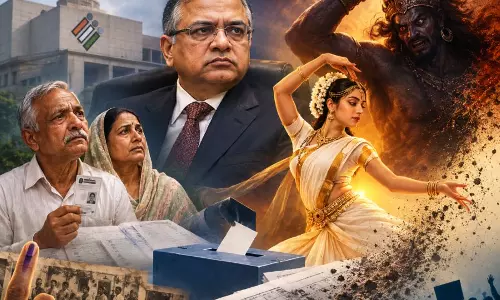









Bangla polls: will Jamaat turn a dark horse?
text_fields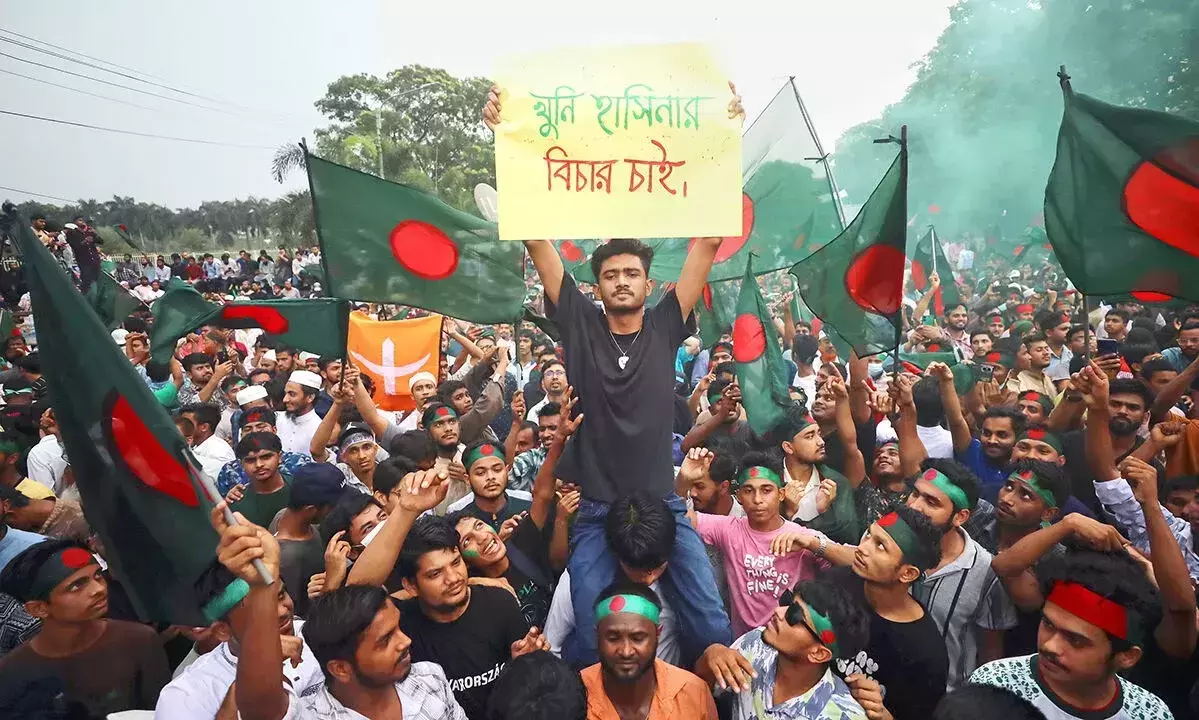

What would have gone unnoticed as a routine general election in Bangladesh has now garnered much attention and curiosity in global politics. The post-uprising Parliament election scheduled for February 12th has immense significance in many respects, as the country is all set to adopt a new dispensation. One thing is unmistakably clear: a population of 175 million people is looking for a change that was ushered in last year.
Hitherto, Bangladesh has been under either the Awami League, a legacy party founded by Sheikh Mujibur Rahman, the founding father of the nation, or the Bangladesh Nationalist Party (BNP)led by former President Ziaur Rahman and later by his daughter, Khaleda Zia. After 55 years of independence from Pakistan, the Muslim majority nation is on the brink of what will most probably be a paradigm shift.What happened in Bangladesh last year was nothing short of a political earthquake. The student unrest that started for a better quota and employment turned into a mass movement and nationwide protest that culminated in the fall of the government. The authoritarian Prime Minister, Sheikh Hasina, was forced to flee to India where she still lives. It was truly a watershed moment in Bangladesh.
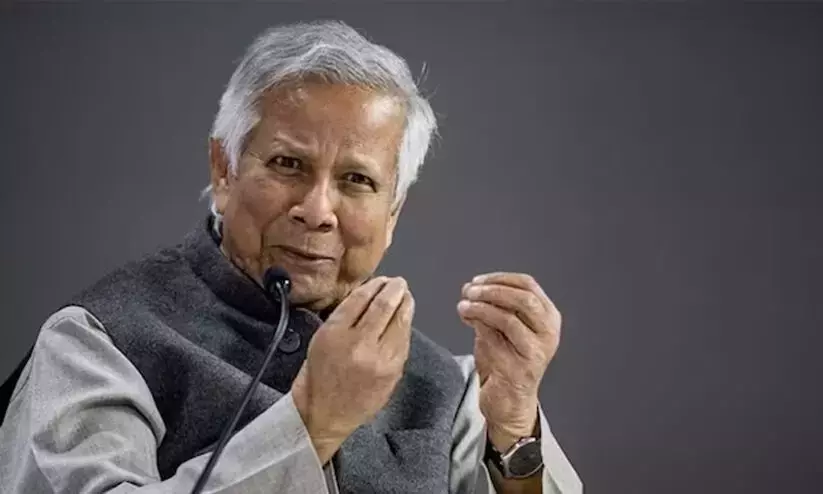
An interim government was formed under the leadership of Nobel laureate, Prof. Muhammad Yunus. As he had announced earlier, the transitional government declared the general election on February 12. The major political shift in the history of Bangladesh is that the Awami League was banned from contesting, and its leaders were arrested, and the rest of them went into hiding. What the Awami League did to its political opponents backfired; call it poetic justice and you may not be much off the mark.

The political vacuum created by the absence of the Awami League is soon being taken over by other parties. Among them are the BNP, and the Jamaat e Islami-National Citizens Party (NCP) alliance, which are the more notable contenders. Though BNP, the age-old party, is ahead and widely seen as poised to win the election, the Jamaat-NCP alliance has emerged as a formiable force. If the pre-poll surveys are anything to go by, the 11-party alliance is not so far behind. If the poll outcome is a hung parliament, Jamaat will become a decisive voice.
In that case, it would be a rebirth for Jamaat, which was banned by Sheikh Hasina, and its leaders were either hanged or disappeared mysteriously. The organisation bemoans that it lost 11 of its leaders including two of its former amirs (chiefs), a general secretary.
Jamaat, the Islamist organisation formed in British undivided India by Maulana Maudoodi, in Lahore in erstwhile West Pakistan, is an organisation advocating total Islam. Following partition in 1947, the organisation became two fully independent bodies, one in India and other in Pakistan. After the birth of Bangladesh, it again became two separate outfits one in Pakistan and the other in Bangladesh. Jamaat was part of the BNP government from 2001 to 2006. But when in 2009, Sheikh Hasina came back to power, the Jamaat had to face a brutal crackdown.
The organisation had opposed the independence of Bangladesh in 1971 as it preferred a united Pakistan, which was against the policies of Sheikh Mujibur Rahman. Later, his daughter, Sheikh Hasina followed suit. Her government formed a war tribunal, which many saw as akin to kangaroo courts, to try the anti-independence leaders, hanged many of Jamaat leaders and banned the organisation.
The ban was revoked by the interim government, and its leaders were released. Now the political landscape is entirely changed. Jamaat allied with the agitating students and formed an alliance. This has created an alternative political force, and the alliance has grown to a potential challenge to BNP. True Jamaat has got a victim’s appeal because its leaders were behind bars for 15 years. Apart from this, the organisation has more welfare schemes on its agenda and offers a non-corrupt administration, factors that are sure to make it more appealing.
Islami Chhatra Shibir, the student wing of Jamaat, was able to win many campus elections, which increased their hope and morale in the upcoming election. But at the same time, the re-emergence of Jamaat has raised eyebrows of liberals who fear that the country would become more theocratic, which again is not preferred by neighbour, India either. Indeed, India would love to see a BNP government in power, rather than a Jamaat-NCP alliance.
One thing is evident. The people are fed up with the traditional parties that follow almost the same policies and programmes. No improvement is in the air in the worst unemployment scenario and rampant corruption - the very reason that pushed the students into the streets. The country had no reprieve or a different choice for decades. That's how it was managed. The students' rebellion has broken that fortress, and a new track is opened.
This time, Bangladeshi diaspora is also authorised to vote, for the first time. That is also decisive to the 300 Parliament seats. It's estimated that there are 12 to 15 million expatriates. They can vote or mail their votes. The erstwhile mass unrest was also able to attract overseas support in toppling the Hasina regime. Only time can tell if a similar support can help any side win power.