


















The story of an island that conquered tuberculosis
text_fields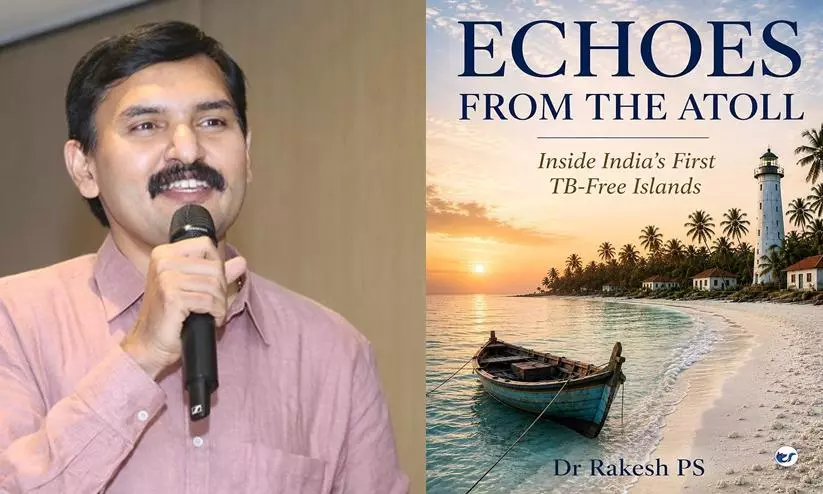

Despite modern medicine conquering much of the deadliest epidemics of the world, one contagious disease that continues to defy humanity is Tuberculosis (TB). While India's declaration to make the country TB-free by 2025 has fallen behind the target, a small island community in the Arabian Sea is making history by becoming a model for the world. Lakshadweep has become the first union territory in India to be declared TB-free, and has created history in the global health community.
This journey was not a cakewalk. This is a story of an unrelenting move which finally led to success. The hard work of many healthcare professionals is the reason behind this incredible voyage. Among them, the person who deserves special mention is Dr P S Rakesh, a Malayali who formulated the strategy as a representative of the World Health Organization (WHO). In his new book, Echoes from the Atolls, Dr Rakesh explains how the islanders achieved what many thought was impossible.
In this interview with Subair P. Khader, Dr Rakesh reflects on Lakshadweep's journey towards TB elimination, the challenges encountered, the lessons learned, and the story behind his book.
How did you become involved in the activities on the Lakshadweep?
The World Health Organization has a Technical Support Network that assists the Government of India in implementing the National Tuberculosis Elimination Programme. I came to Lakshadweep as a medical consultant within that network. My responsibility was to provide technical support to the Government of Kerala and the Lakshadweep Administration for TB elimination activities.
What led to your focus on tuberculosis within the health sector? Was this decision intentional, or did it occur by chance?
After finishing my studies in Community Medicine at CMC Vellore, I began my career focusing on infectious disease control. Seeking to make a more impactful contribution at the national level, I later joined the National Tuberculosis Control Programme. The concept of TB elimination extends far beyond simply eradicating the disease; it encompasses addressing underlying social determinants such as poverty, malnutrition, tobacco and alcohol addiction, unequal healthcare access, and poorly managed diabetes. Essentially, eliminating TB is intertwined with achieving broader social development, which has made my work in this field highly fulfilling and meaningful.
Could you describe your journey as a process shaped by joint contributions and teamwork?
One of the major reasons for the mission's success was the leadership of Dr Shamsudheen, then Director of the National Health Mission in Lakshadweep, and Dr Mohammed Jaleel, the TB Officer. Since they were islanders themselves, they understood the local realities thoroughly. Another strength was that the doctors, health workers, and ASHA workers in every island's primary health centre were all local residents. They knew the community and its people intimately.
The primary healthcare system was another key factor. We developed a locally customised strategy instead of simply copying an urban or national model. We carefully identified what would work best for Lakshadweep and prepared a strategy document accordingly. The Lakshadweep Administration officially endorsed it in 2018 and took ownership of its implementation.
Public participation was equally important. The women in Lakshadweep are educated and empowered. They can independently decide to undergo tests or visit hospitals without seeking permission from anyone. The matrilineal tradition still exists there. When ASHA workers visited homes, they received wholehearted cooperation.
If we had followed the usual approach of having only one machine for multiple islands, this achievement would never have been possible. Every island needed its own TB testing machine. Transporting sputum samples across the Arabian Sea was impractical, so with central government support, Truenat machines were installed on every island. Although this went against standard population-based norms, the intervention was tailored according to the geographical realities and local needs. Eventually, each island became capable of conducting its own sputum testing.
Lakshadweep is a region with around ten inhabited islands. How were the operations carried out?
The TB program itself had only four staff members: Malik Mustafa Khan, Rauf, Tahir, and Shameena. It would have been impossible for just these four people to cover all ten islands.
Therefore, the TB program was fully integrated into the existing primary healthcare system. Medical officers, field staff, and ASHA workers across every island jointly carried out the activities. The TB program's primary responsibility was coordination, and because that coordination succeeded, they were able to reach every individual.
In 2018, the Lakshadweep Administration launched the Lakshadweep Strategy Document at a health fair held on Kadmat Island, attended by around 4,000 people. Government officials, public representatives, and the local community all witnessed the launch. As far as I remember, after Kerala, Lakshadweep was the only place in India at that time to prepare and release its own independent TB strategy document. It became an excellent example of effective governance and healthcare administration. Since the officials themselves were islanders, many of the strategies and documents were prepared after days of discussions held informally on the seashore.
Challenges faced during the mission
The primary obstacle was the challenging geography of the region, with approximately 12,000 families dispersed across ten small islands in the Arabian Sea. Accessing these islands proved difficult, particularly during the five-month monsoon season when travel became almost impossible. The distances between islands further complicated matters, as advanced sputum sample testing often required transporting specimens to other locations, a process that could take weeks. In regions like Lakshadweep, standard population-based norms, such as one testing machine for every 100,000 people, were impractical due to logistical challenges. Relying on a single machine for the entire population would have made sample transportation across all ten islands exceedingly challenging.
Ships and vessels were often unavailable when needed. On several occasions, I travelled from Amini Island to Kadmat Island in fishing boats.
Public cooperation
Public involvement played a pivotal role in the campaign, as the initiative was not regarded solely as a health department effort but evolved into a people's movement against tuberculosis. Contributions from the public, administration, healthcare professionals, and the National Health Mission collectively turned it into a community-focused endeavour. To enhance coordination, an Island-Level Task Force was established on all ten islands, consisting of 10–15 members. These task forces were composed of a diverse group, including government officials, religious and social leaders, representatives from youth clubs, self-help groups, and women's organisations. They regularly reviewed activities and provided the necessary support. It truly became a program by the people, for the people.
When the health department encountered challenges, task forces intervened, supported by the active involvement of village and island panchayat representatives, who held significant sway within their communities. If individuals discontinued their treatment, panchayat members took the initiative to visit their homes, persuading them to resume treatment and fostering a spirit of cooperation. Lakshadweep has set an inspiring example for the nation, demonstrating what a true people's movement against TB can achieve.
Special initiatives carried out on the islands
ASHA workers played a crucial role in combating tuberculosis by conducting systematic visits to every household, identifying individuals with TB symptoms, and collecting their samples for testing. Advanced machinery installed on each island facilitated accurate diagnosis, enabling those affected to promptly receive treatment and recover. This rigorous process was repeated annually without fail, leading to a steady decline in cases and eventually minimising new occurrences. A major factor in this success was the establishment of sustainable systems, particularly through task forces. Rather than imposing external solutions, plans were collaboratively developed with the islanders, incorporating their input to ensure the community took active ownership of the initiative.
Which types of TB were more common?
Lakshadweep has traditionally had a low TB incidence. The good ventilation and abundant sunlight reduce community transmission. However, transmission often occurred within households. Initially, TB was more common among elderly people and those with diabetes. Continuous active case detection over several years significantly reduced these cases. Extra-pulmonary TB was usually diagnosed in private hospitals in Kochi, and those cases were also reported and included in the official data.
What is the current situation after being declared TB-free? Do the numbers provide reassurance?
The designation of being TB-free does not imply complete eradication of the bacteria but rather signifies progress in reducing its impact on individuals and communities. The primary goal has been to prevent deaths, ensure children are not orphaned due to tuberculosis, eliminate discrimination linked to the illness, and protect families from facing devastating financial losses because of the disease.
Since 2017, under the leadership of the Lakshadweep Administration, healthcare workers and ASHA workers have conducted annual active screening by visiting every household. This enabled early detection and timely treatment, reducing transmission significantly.
While the national average TB incidence is around 200 cases per 100,000 population, Lakshadweep's current rate has fallen below 20 per 100,000.
How did you join the World Health Organization?
After completing my studies in Community Medicine at CMC Vellore, I gained hands-on experience working on infectious disease programs in Kerala before transitioning to a faculty position at Amrita Institute of Medical Sciences. During this time, I collaborated with Dr Shibu Balakrishnan, who served as the WHO Regional Team Lead and later National Professional Officer, to explore strategies for creating a TB-free region. Together, we developed a comprehensive strategy document for Kerala, in response to the state government’s request. Around 2014–15, when guidelines for eliminating TB in high-burden areas were yet to be established, Dr Balakrishnan encouraged me to join the WHO technical support network, allowing me to contribute more actively to efforts addressing this critical health challenge. I applied and eventually took responsibility for supporting both Kerala and Lakshadweep.
About the book
Echoes from the Atolls chronicles a journey that began as a mission to eliminate tuberculosis (TB) in Lakshadweep but gradually evolved into a profound connection with the islands and their people. The book offers insights into the resilience of the islanders and their collective efforts to overcome geographical challenges in the fight against TB, presenting a model that could inspire other regions. While TB elimination remains its central theme, the narrative also explores the islands' development, the emotional struggles accompanying change, and the enduring relationships forged throughout the journey. Written from the perspective of both a public health expert and an ordinary traveller who visited Lakshadweep on fourteen occasions, the book provides a deeply personal account of one of India's most remarkable public health success stories.
About the author
Dr P. S. Rakesh is a public health specialist with more than 15 years of experience in tuberculosis (TB) control and elimination. He has worked with international health organisations, including the World Health Organization (WHO), and currently serves as a consultant for TB elimination activities with the United Nations Stop TB Partnership and the Global Fund. He also provides technical assistance to several countries in strengthening their TB elimination programmes.
In addition to his work in global public health, Dr Rakesh is a Visiting Scientist in Cardiovascular Health at Harvard University. He continues to contribute to TB elimination efforts through research, technical support, and programme development. Originally from Kizhakkekara in Kottarakkara, Kollam district, he currently resides in Vazhakkala, Palarivattom, Kochi.