

















Dreadful insect spreads across farm lands, scientists doubt climate change
text_fields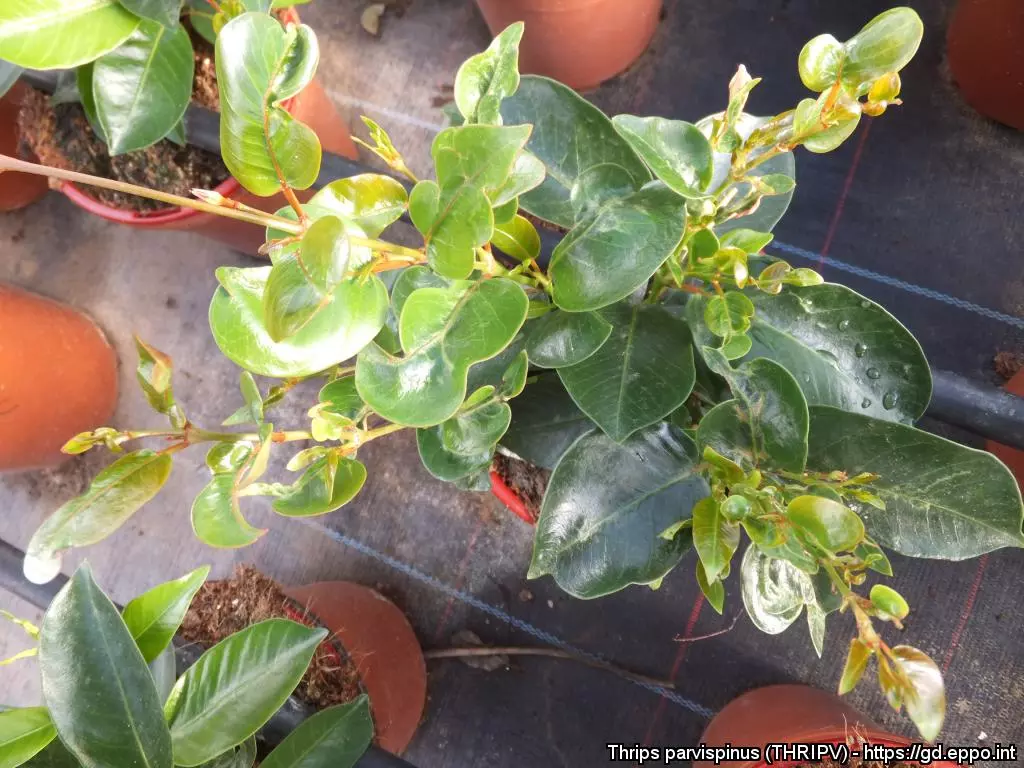

By K.S. Harikrishnan
A notoriously destructive and invasive pest, Thrips parvispinus, twines around Indian farm lands, causing potential damage to crops. Agriculture scientists are very cautious about the alien insect, which were first seen in Indonesia, and warn that unless successful quarantine measures are put in place, the spread and subsequent depredations of cultivated crops are inevitable.
The population of the insect increased alarmingly in the farming areas of states of Andhra Pradesh, Chhattisgarh, Karnataka, Kerala and Tamil Nadu, and affected the crops seriously within a short duration of four years. Recently, it spread to Maharashtra, Gujarath and West Bengal.
It was first reported on Carica papaya (Caricaceae) in Bengaluru in 2015, and subsequently made severe damage on chilli crop and noticed on different crops including cotton, bengal gram, green gram, tomato etc.
According to Dr R. R. Rachana, scientist at National Bureau of Agricultural Insect Resources, Bengaluru, told that T. parvispinus being an invasive polyphagous species, if it is not managed in a timely manner, is capable of causing serious threat to several agriculturally important crops and also can replace native Thrips species in chilli ecosystem.
"The adaptability of the Thrips to feed and breed in diverse agro-ecosystems is a peculiar one and makes it worrying among entomologists. It causes large-scale shedding of flowers, malformation of fruits and fruit drop in chillies, leading to severe yield loss. As far as the economic growth of a country is concerned, the unending spread of the insect will make a heavy blow to the revenue earned from farm production", said she.
Rachana, who conducted a research study on the spread of T. parvispinus, has expressed doubt about the link between climatic change and the alarming rise of pest. "Scientists believe strong chances of sudden changes of weather. Before having a conclusion, we want to verify the climatic data", added she.
Records show that the species is common across South East Asia to northern Australia. It did serious damage in plantations of pawpaw in Hawaii, and to various food crops in South East Asia and greenhouse Gardenia plants in Greece.
Entomologists point out that the Thrips is one of the largest genera of the insect order Thysanoptera in the family Thripidae, with 301 species worldwide, of which 44 species are reported from India.
"A number of species of this genus are causing damage directly by feeding and egg laying or indirectly by vectoring different pathogenic tospoviruses on economically important crops," said K. Sireesha, a senior Scientist at Dr Y.S.R. Horticultural University, Andhra Pradesh.
Scientists said that farmers are using fungicides and pesticides in excessive quantities without realizing that it is helping the insect.
Commenting on tackling the pest infestation, K.V. Raghavendra, scientist at National Research Centre for Integrated Pest Management, under the Ministry of Agriculture & Farmers' Welfare, New Delhi, said that farmers might adopt bio-insecticide instead of chemical insecticide.
"Integrated Pest Management strategies, comprising cultural methods, mechanical methods, biological control methods, judicious spraying of botanical based insecticides and label claim insecticides can play a major role in resisting the menace," he told.
Answering to queries about no systematic research having been done to gain control over the infestation, Raghavendra said that the outbreak of the pest was visible only during fag end of October, 2021.
"Many things need to be studied in detail. Bio-ecology of the area of invasion, population dynamics of the pest vis-à-vis weather factors, identification and conservation of native bio-controlagents in the chilli ecosystem, bio-assay of insecticides and screening of germplasm are to be considered before reaching final words".
Farmers were worried that the yield took a hit when they expected good earnings from crops. Chilli growing belts of Andra, Telangana and Karnataka are affected severely.
Andhra Pradesh Horticulture officials estimated a loss of Rs 1 Lakh per acre during the current cropping season.
Aruna, a farmer at Periyapatna Taluk, Karnataka and Singa Reddy, a villager in Guntur district, A P wanted compensation from the government to overcome the loss of income.
"Pest attack devastated chilli crops when the crops have a huge demand in domestic and international markets," they lamented.
A P and Telangana totally account for over 67% of the country's Chilli production during the 2020-21 season. Red Chilli production has been estimated at a record 19.88 Lakh tonnes compared with 19.14 Lakh tonnes the previous year.
(The author is Thiruvananthapuram–based science writer and researcher)