









Top UN Court orders US to ease Iran sanctions
text_fields
The top UN court on October 3 ordered the United States to ease sanctions it reimposed on Iran after withdrawing from the 2015 nuclear accord between Tehran and world powers earlier this year.
Washington slapped a first round of punitive measures on Iran in August after pulling out in May from the Iran nuclear deal aimed at curbing Tehran's nuclear ambitions.
Iran challenged the move in a case filed in July at the International Court of Justice (ICJ).
In a preliminary ruling in the case, the ICJ said that exports of "humanitarian" goods such as medicines and medical devices, food, and agricultural commodities" should be allowed, as well as aviation safety equipment.
Announcing the decision, the court's president, Judge Abdulqawi Ahmed Yusuf, said U.S. sanctions on goods "required for humanitarian needs...may have a serious detrimental impact on the health and lives of individuals on the territory of Iran."
Sanctions on aircraft spare parts, equipment, and associated services have the "potential to endanger civil aviation safety in Iran and the lives of its users," he also said.
The ruling is a decision on so-called provisional measures ahead of a final decision on the matter, which may take several years, according to experts.
Iranian Foreign Minister Mohammad Javad Zarif called the court decision "another failure for sanctions-addicted” U.S. government and “victory for rule of law."
The U.S. ambassador to the Netherlands, Peter Hoekstra, said it was "a meritless case over which the court has no jurisdiction."
He added that the ruling did not go as far as Iran had requested, saying the court “issued a narrow decision on a very limited range of sectors."
During the court hearings in August, Iran’s lawyers accused the United States of "economic aggression" and argued that the U.S. sanctions breach a 1955 friendship treaty between Washington and Tehran.
U.S. lawyers responded that the reimposition of the sanctions was legal and a national security measure that cannot be challenged at the UN court.
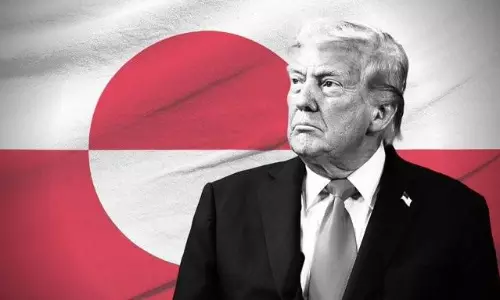
Iran's economy plunged into a downward spiral with the national currency, the rial, hitting record lows, following U.S. President Donald Trump’s decision to pull the United States from the 2015 nuclear deal.
The ICJ rules on disputes between UN member states. Its decisions are binding and cannot be appealed, but it has no mechanism to enforce them.
Both Washington and Tehran have ignored ICJ decisions in the past.